Why We Still Shoot Film in the Digital Age
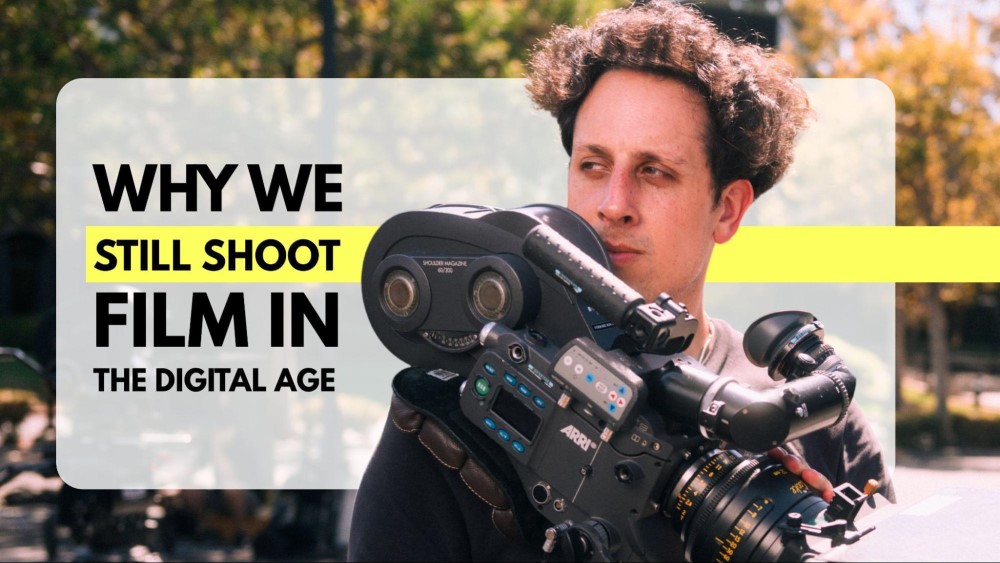
In an industry obsessed with the latest sensors, 8K resolution, and AI-driven workflows, a quiet but powerful movement is growing. It’s a return to the chemical, the tactile, and the analog. Filmmakers, from studio auteurs like Christopher Nolan to independent visionaries, are increasingly choosing to shoot on motion picture film.
Why? In 2025, when digital cameras are more accessible and capable than ever, why go back to a technology that is over a century old?
The answer isn’t just nostalgia. It’s about a fundamental difference in process, philosophy, and ultimately, the emotional resonance of the image. Shooting on film changes how you see, how you work, and how your audience feels.
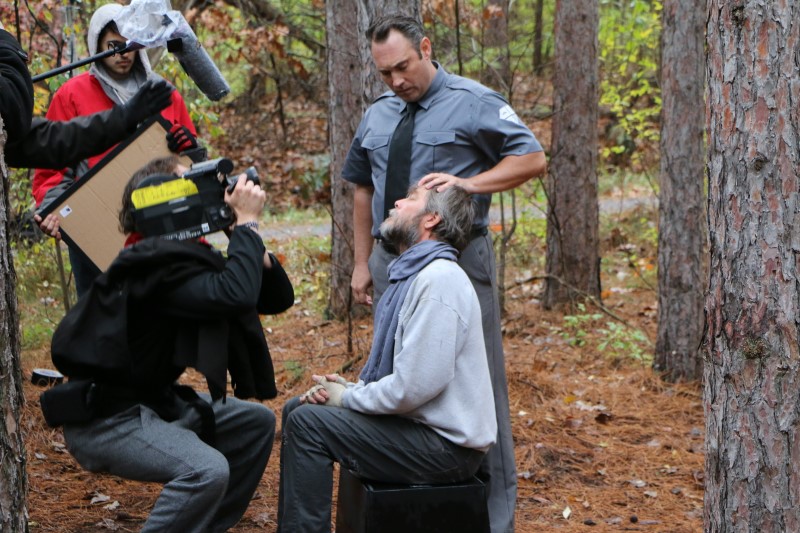
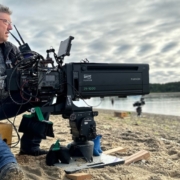
Behind the scenes of Kiss Me Goodbye | Courtesy of Brendan Sweeney
In this spotlight, we explore the enduring relevance of celluloid through the lens of filmmaker Brendan Sweeney. His journey — from the digital revolution to a deep commitment to 16mm — illustrates why film remains the gold standard for storytelling.
THE DIGITAL REVOLUTION AND THE FEAR OF LOSS:
To understand the resurgence of film, we have to look back at the moment it almost disappeared. Brendan Sweeney’s journey began right as the industry was undergoing a seismic shift.
“I knew I wanted to be a filmmaker after I saw The Fellowship of the Ring,” Brendan recalls. “I loved the way movies made me feel… the manipulative feeling of filmmaking.”
But as he entered film school, the landscape was changing. The “Digital Revolution,” spearheaded by cameras like the Canon 5D and the RED One, was in full swing.
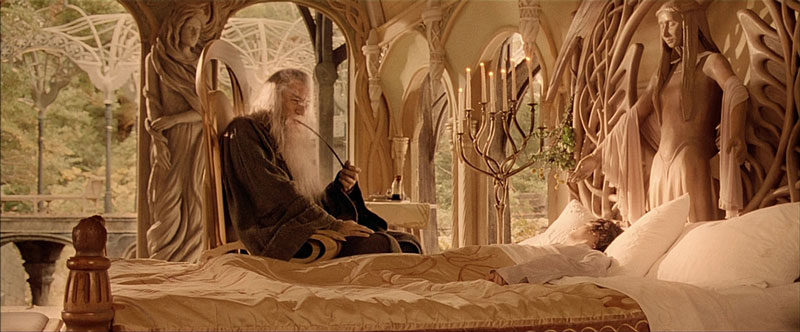
The Lord of the Rings: The Fellowship of the Ring | New Line Cinema
For a young filmmaker, this created a sense of urgency.
“I remember thinking… if I want to be a director like all of my heroes — Kubrick, Cimino — something inside me told me that I need to be able to learn how to shoot on film before it’s gone.”
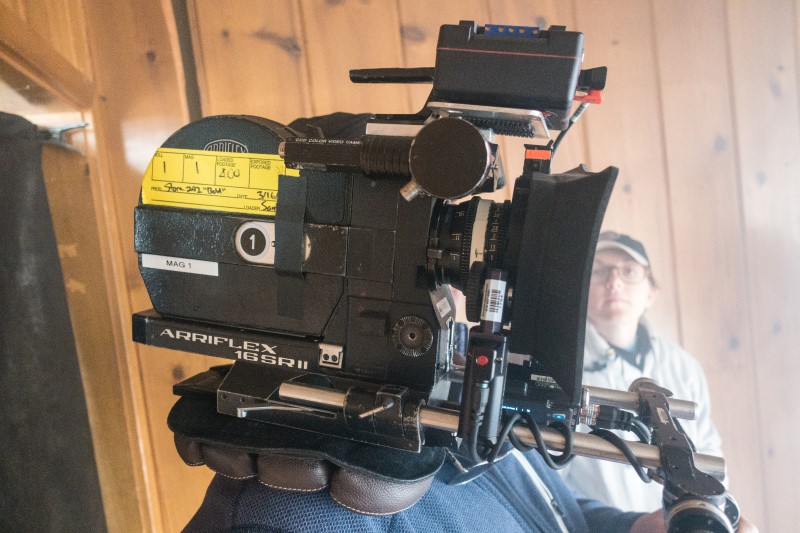
“Harriett” the Arriflex SR2 Film Camera | Courtesy of Brendan Sweeney
Brendan had realized that the masters of cinema had all been forged in the discipline of celluloid. To truly understand the craft, one had to understand its original medium. So, while universities were liquidating their film equipment, Brendan went against the grain. He bought an Arriflex SR2 camera for $1,100 — a steal for a piece of cinema history — and committed to learning the “dead” language of film.
THE BRENDAN SWEENEY PHILOSOPHY OF FILM:
The most profound difference between film and digital isn’t resolution or dynamic range; it’s the process.
On a digital set, the monitor is king. We shoot, we check playback, we tweak, we shoot again. We can “fix it in post.”
Film strips away that safety net.
“With a film test, or just shooting film in general, it’s your mind,” Brendan explains. “It’s using your mind to craft something.”
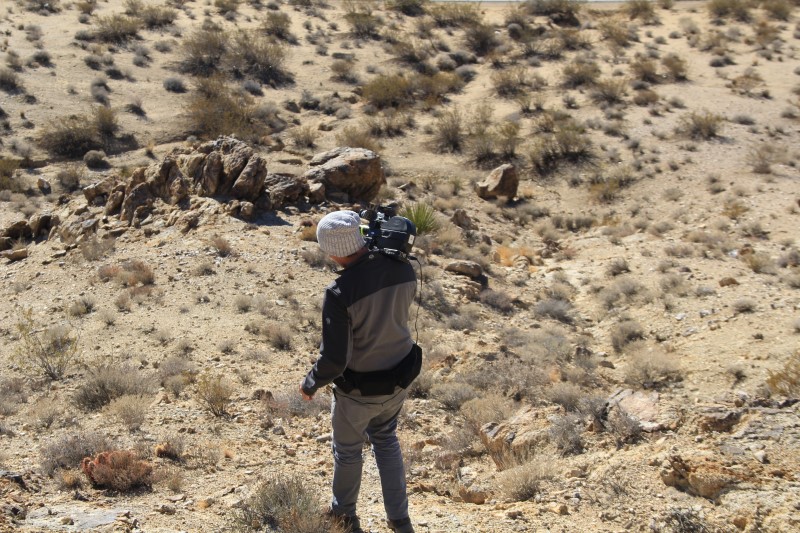
Brendan filming in the desert | Courtesy of Brendan Sweeney
Without a high-definition monitor to rely on, the filmmaker must trust their knowledge of exposure, lighting ratios, and lenses. You have to visualize the image in your head before you capture it. This forces a level of intentionality that digital rarely demands.
“The film matters, the f-stop matters… you have to think through every detail.”
This heightened state of focus trickles down to the entire crew. When the camera rolls, everyone knows that money is physically running through the gate. The stakes are higher, the focus is sharper, and the resulting energy on set is palpable. It creates “analog, adrenaline-fueled moments” where the entire team is synchronized in pursuit of a perfect take.
WHY FILM FEELS DIFFERENT:
Technically, digital sensors have come a long way in emulating film. But there is an aesthetic quality to celluloid — a “soul” — that is incredibly difficult to replicate with 1s and 0s.
In his short film Kiss Me Goodbye, Brendan chose to shoot on Orwo N74 Plus, a black and white stock, to evoke a timeless, Twilight Zone-esque atmosphere.
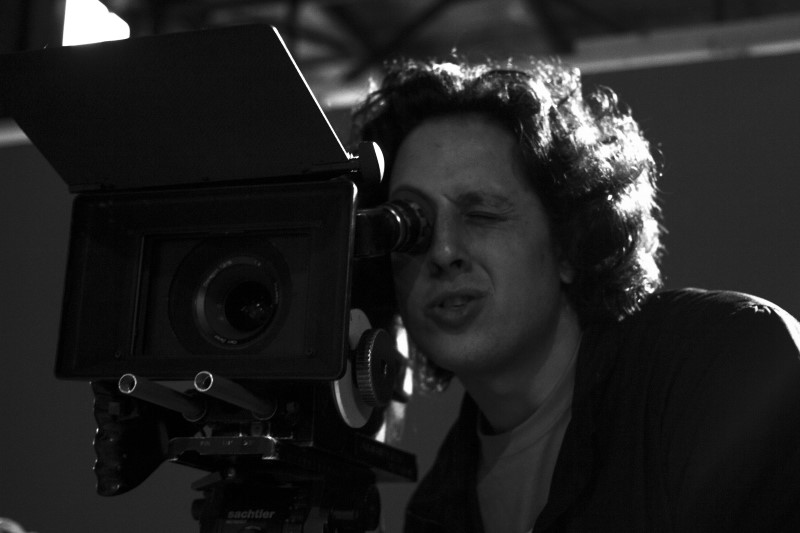
Behind the scenes of Kiss Me Goodbye | Courtesy of Brendan Sweeney
“There’s really something about shooting a movie in black and white versus color,” he notes.
The grain structure, the way it highlights bloom rather than clip, and the organic texture of the image create a separation from reality that feels more dreamlike and cinematic.
Even in color, film has a distinct signature. The video below is Brendan’s first-ever film test, using Kodak VISION3 500T 7219 & 250D 7207. While yes, the light is certainly hot, you can see the glowy, velvety nature of 16mm film.
In a test shot in the California desert using Kodak Vision3 250D and ORWO N74 Plus, the results were immediate.
“It just looks like 16mm beauty,” Brendan says. “The shadows are definitely cool, but the environment’s warm, which is a cool duality.”
Digital images can often feel clinical or hyper-real, adding a whole other technical obstacle to counteract. Film, with its chemical imperfections and organic grain, often feels more human. It softens the edges of reality, allowing the audience to project themselves into the story more easily.
It is, as Brendan puts it, “a medium that takes precision, but it’s also a medium that’s extremely forgiving.”
THE “STORE 242” EXPERIMENT: MIXING MEDIA
The true test of a film’s relevance is how it stands up against modern digital workflows. For a fashion commercial for the boutique Store 242, Brendan and cinematographer Shane Hurlbut, ASC devised a concept that used both formats to tell a story.
The concept was a dress “birthing out into the world.” For the gritty, industrial interiors, they shot on 16mm Kodak 250D with Zeiss Super Speed lenses. The grain and texture of the film captured the raw, confined energy of the space.
“The sheer level of detail here… was really awesome,” Brendan notes.
As the character escapes into the open desert, the production switched to a RED Weapon Dragon 6K digital camera. The contrast was intentional: the “pristine, crystal clear” digital image represented the open, modern world, while the film represented the textured, organic origin.
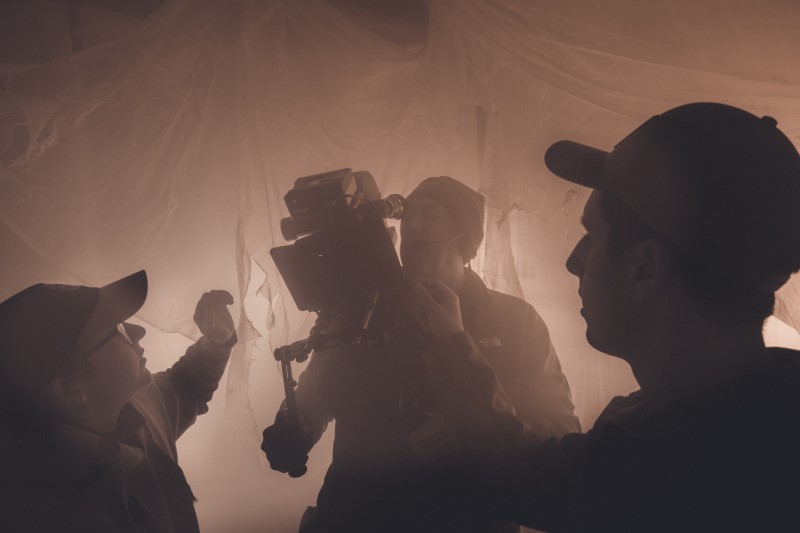
Brendan behind the scenes with Shane Hurlbut, ASC | Courtesy of Brenday Sweeney
This project highlighted how film could be used for more than just a “look”. It’s a storytelling tool. It also proved that even veteran DPs like Shane Hurlbut, who had championed the digital revolution, still found immense value and joy in returning to the discipline of film.
THE FUTURE IS ANALOG (AND DIGITAL):
So, is film better than digital? It’s the wrong question. They are different brushes for different paintings.
“There’s places where digital is better than film, and vice versa,” Brendan acknowledges. “There’s things that digital can do that film could never do.”
 |
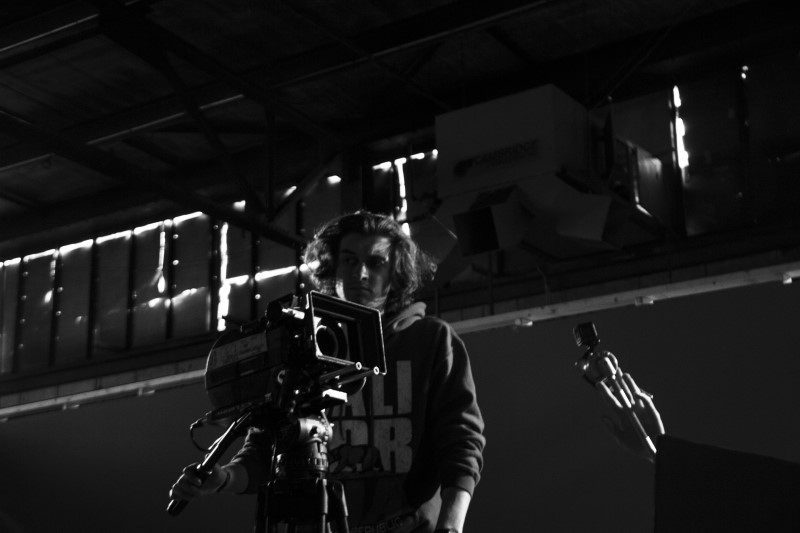 |
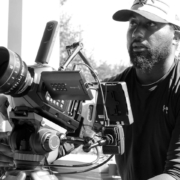
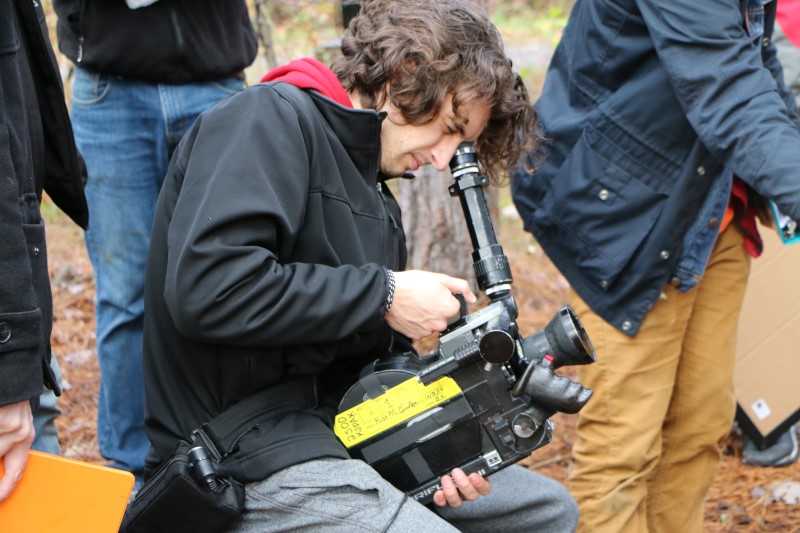
DP Stefano Ceccarelli behind the scenes of Kiss Me Goodbye | Courtesy of Brendan Sweeney
High frame rates, low-light sensitivity, and immediate workflows are undeniable advantages of digital cinema.
However, for narrative storytelling — for capturing the human condition — film remains the “preferred” medium for many.
“If it’s a grounded and modern-day piece, I still think film brings a certain level of quality and craftsmanship to it that maybe is not found in some other places,” Brendan says.
HOW TO START SHOOTING FILM TODAY:
If you are an indie filmmaker inspired to shoot film, the barrier to entry is lower than you think. You don’t need to buy an Arriflex SR2.
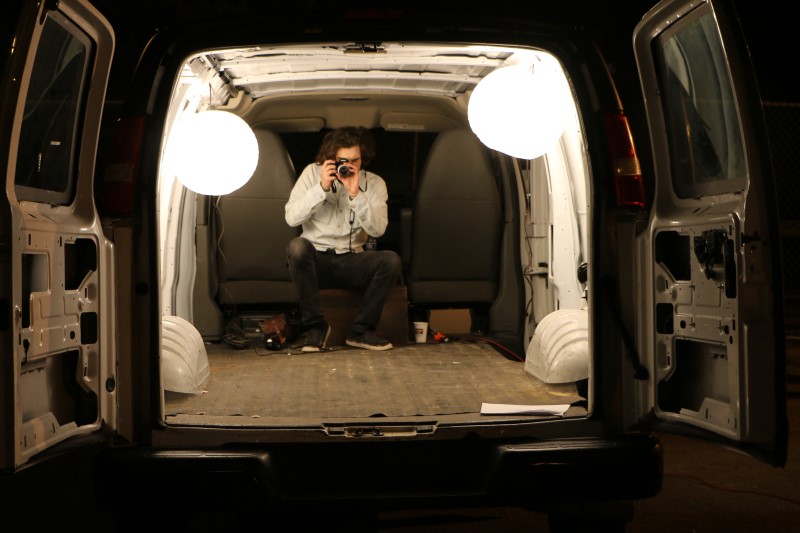
Stefano Ceccarelli shooting stills photography | Courtesy of Brendan Sweeney
| 1. | START WITH PHOTOGRAPHY | Buy a 35mm still camera. Learn to expose manually without a screen. Understand ISO, aperture, and shutter speed intimately. |
| 2. | TRY SUPER 8 | Pick up a cheap Super 8 camera. Companies like Pro8mm offer bundles that include the film cartridge, processing, and digital scanning, making the workflow simple and accessible. |
| 3. | VISIT A RENTAL HOUSE | If you’re in a major city, go to a camera rental house. Ask to see their film cameras. Build relationships. The film community is passionate and eager to help those who want to keep the medium alive. |
| 4. | JUST DO IT | Don’t be afraid of the technology. “You have to train yourself to realize these tools are meant to be used,” Brendan advises. |
THE BOTTOM LINE:
Shooting on film in the digital era is a choice to prioritize craft over convenience. It’s a commitment to a process that demands more from you but gives back something intangible and beautiful in return.
Whether you are shooting a student short or a feature film, choosing celluloid is a powerful declaration that the way you make a film matters just as much as the story you tell.
As Brendan concludes, “Now that I move into other projects, film is just something that I want to continue to shoot, because when you look at the results… it’s just incredible.”
STOP IMITATING THE LOOK, MASTER THE SOURCE.
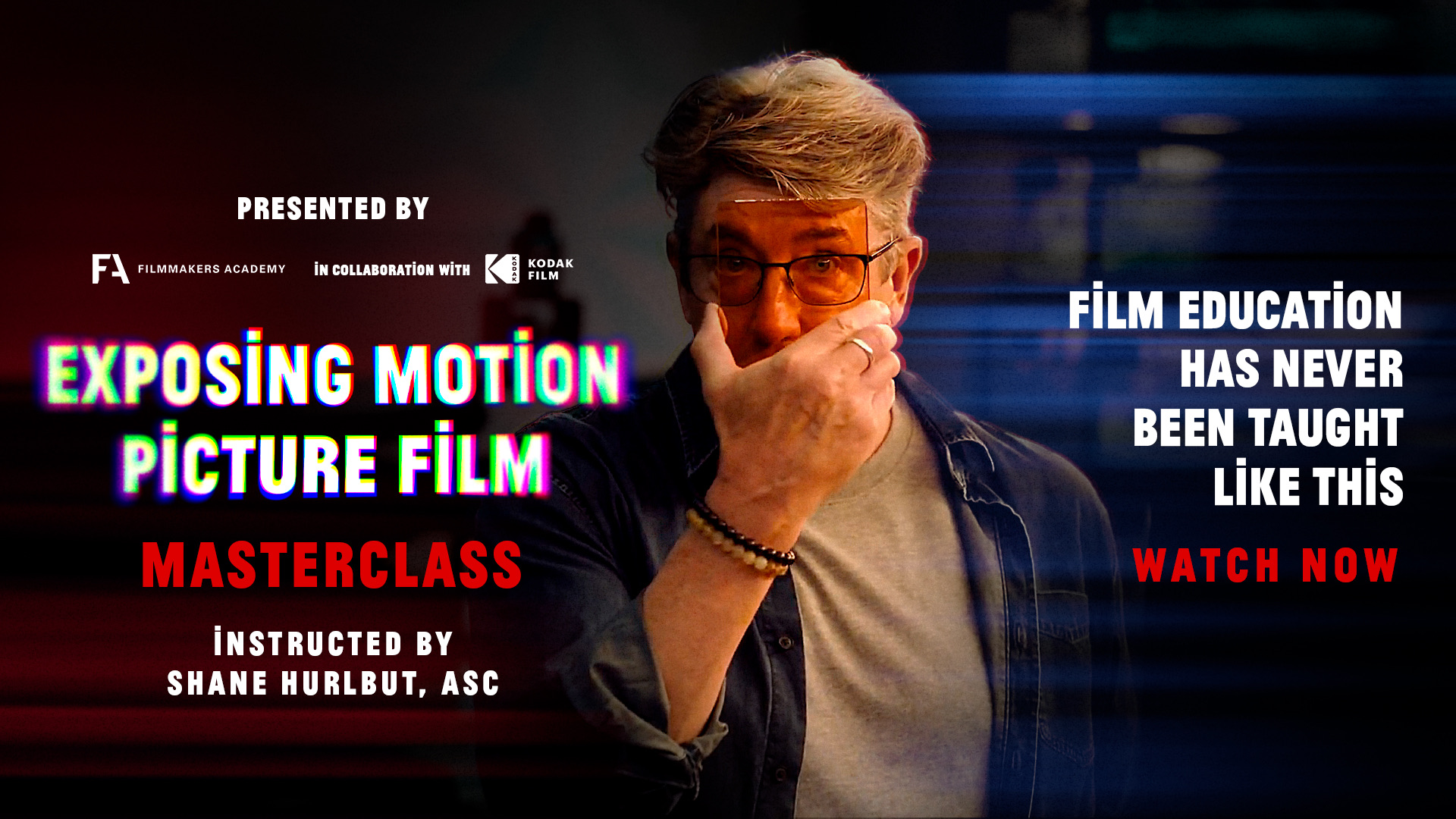
In an age of digital “fixes,” the true craft of exposing celluloid has become a rare skill. To bridge this gap, Filmmakers Academy has partnered with KODAK to launch the definitive Exposing Motion Picture Film Masterclass.
Taught by Shane Hurlbut, ASC, this course offers a comprehensive, “brick-and-mortar” education that demystifies the entire analog process. Drawing from his experience shooting over 23 feature films on 35mm and 16mm, Shane teaches you to stop relying on a monitor and start trusting your eye, transforming you from a digital operator into a true artisan of light and chemistry.
This masterclass covers everything from the unique personalities of Kodak’s Vision3 stocks to the precise science of using light meters and glass filters. You’ll learn to control contrast in-camera, master filter factors, and handle complex lighting scenarios without a digital safety net.
LIMITED-TIME OFFER:This exclusive training is available as a standalone masterclass or included with a Premium Annual Membership. It’s time to stop chasing the “film look” and start learning the source. |