2025’s Standout Movies Shot on Film
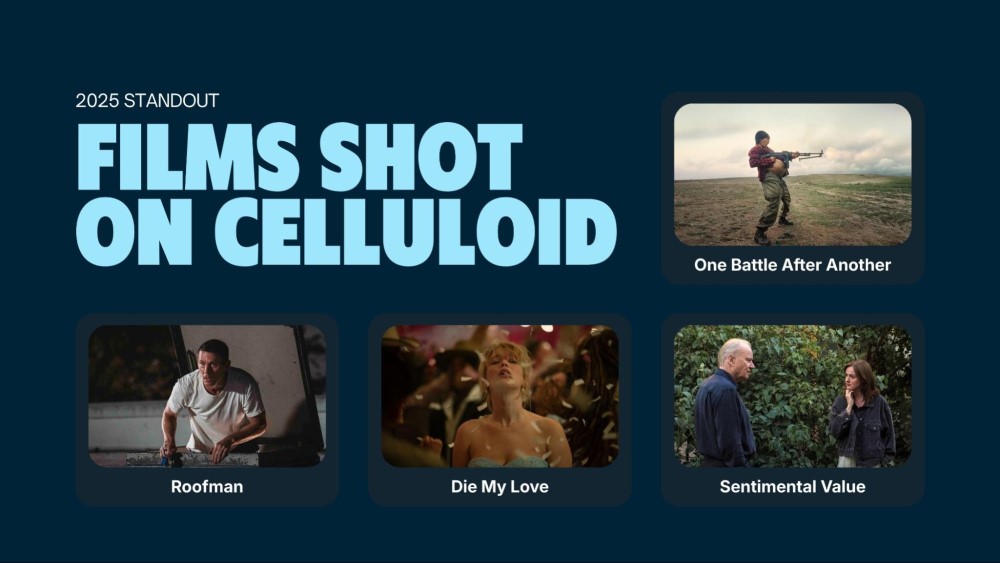
For the first time in the digital era, 2025 has proven to be a year of resurgence for the organic, unpredictable, and deeply human texture of celluloid. The numbers tell the story. Kodak surges in 2025, selling as much film since 2014 when motion picture film took a downturn due to the digital revolution. The shifting wind marks a win for proponents of celluloid like Christopher Nolan and Martin Scorsese. Although its staying power remains to be seen.
Nevertheless, Filmmakers are no longer choosing film simply for nostalgia. They are seeking the “film look” — that indefinable magic of grain, color depth, and highlight roll-off that digital still struggles to emulate. From massive summer blockbusters to intimate indie dramas, directors are returning to the chemical process to give their stories a heartbeat.
LIGHT. METER. EXPOSE. FILM.
Before we dive into the films that defined this analog renaissance, there’s one question every filmmaker asks:
How do I actually do it?
Shooting film is a discipline. One that requires moving beyond the monitor and trusting your craft. Learn the process with this masterclass in collaboration with Kodak.
THE FILMS THAT DEFINED 2025’S ANALOG LOOK
From VistaVision epics to 16mm horror, here are the standout films of 2025 that proved celluloid is back and better than ever.
ONE BATTLE AFTER ANOTHER
|
Paul Thomas Anderson continues to be a champion of large-format filmmaking. For his adaptation of Vineland, he didn’t just shoot on film; he revived the legendary VistaVision format.
By running 35mm film horizontally through the camera, Anderson and DP Michael Bauman achieved a negative size double that of standard 35mm. The result is an image with breathtaking resolution and clarity that still retains the organic grain structure of film, perfectly suiting the film’s epic, sprawling narrative.
SINNERS
|
Ryan Coogler returned to his roots while simultaneously pushing the envelope. Sinners utilizes a fascinating hybrid approach. To capture the gritty, period-specific texture of the 1930s South, huge portions of the film were shot on IMAX 65mm for unparalleled scope and immersion.
However, for flashbacks and moments of raw intimacy, the team utilized 16mm, creating a stark visual contrast that highlights the versatility of the analog medium.
BUGONIA
|
Known for his bold visual experiments, Yorgos Lanthimos teamed up again with Robbie Ryan to create a unique look for Bugonia. They utilized VistaVision cameras to capture a distinct, high-resolution image that feels both modern and timeless.
The choice of film stock emphasizes the film’s surreal atmosphere, with the rich color reproduction of celluloid grounding the absurdity in a tangible reality.
DIE MY LOVE
|
Lynne Ramsay’s psychological drama required a visual language that mirrored its protagonist’s fractured mind. To achieve this “hyper-real” look, the team shot day exteriors on Kodak Ektachrome 100D, a color reversal stock known for its intense saturation and high contrast.
For night scenes and darker interiors, they switched to Vision3 negative stocks, creating a disorienting but beautiful clash of textures that digital simply could not replicate.
JURASSIC WORLD REBIRTH
|
In a surprising and welcome move for a VFX-heavy blockbuster, director Gareth Edwards chose to shoot the latest Jurassic World installment on 35mm film. Working with veteran DP John Mathieson, the choice was made to give the dinosaur epic a gritty, grounded reality reminiscent of the original 1993 classic.
The film grain helps integrate the CGI creatures into the live-action plates, creating a more cohesive and believable world.
JIMMY & STIGGS
|
Indie horror maverick Joe Begos proves you don’t need a blockbuster budget to shoot film. Jimmy & Stiggs was shot entirely on 16mm, embracing the format’s grain and “imperfections” to create a raw, grindhouse aesthetic.
The handheld camerawork and vibrant lighting choices play into the strengths of 16mm, giving the film a punk-rock energy that feels dangerous and alive.
THE SMASHING MACHINE
|
For this biographical drama about MMA fighter Mark Kerr, Benny Safdie utilized 35mm film to capture the raw physicality and sweat-drenched intensity of the sport.
The texture of the film stock adds a layer of period authenticity to the late 90s/early 2000s setting, avoiding the overly polished look of modern digital sports movies.
MATERIALISTS
|
Following the success of Past Lives, Celine Song continues her commitment to the analog image with Materialists. Shot on 35mm, the film uses the medium’s natural color response to capture the nuances of romantic tension and the vibrant energy of New York City. The softness and warmth of film perfectly complement Song’s character-driven storytelling.
THE PHOENICIAN SCHEME
|
Wes Anderson is perhaps modern cinema’s most staunch defender of film. For his latest project, he partnered with Bruno Delbonnel to capture his signature symmetrical compositions and pastel color palettes on 35mm. The result is a film that feels like a moving storybook, with the film grain adding a tactile quality to the meticulously designed sets and costumes.
ROOFMAN
|
Derek Cianfrance has always been a filmmaker deeply invested in emotional realism, from Blue Valentine to The Place Beyond the Pines. For Roofman, a crime drama based on the true story of Jeffrey Manchester—an eccentric robber who lived secretly inside a Toys “R” Us—Cianfrance reunited with DP Andrij Parekh to capture the story on 35mm film.
The choice of celluloid grounds the sometimes absurd, larger-than-life elements of the plot in a tangible, gritty reality. It lends a texture to the mundane spaces of retail stores and fast-food restaurants, transforming them into a cinematic stage for a character study that balances crime, comedy, and pathos.
SENTIMENTAL VALUE
|
Joachim Trier returns with Sentimental Value, a film that explores memory, family, and the power of art to reconcile the past. Shot on 35mm by Kasper Tuxen, the film uses the medium’s inherent warmth and organic quality to underscore its themes.
The story follows a filmmaker (Stellan Skarsgård) attempting to reconnect with his estranged daughters by casting one in his autobiographical film. The use of film stock acts as a visual bridge between the past and present, blurring the lines between reality and the fiction being created within the story. It creates a “memory palace” aesthetic where every frame feels weighted with history and emotion.
SPLITSVILLE
|
Michael Angelo Covino’s sophomore feature, Splitsville, is a raucous comedy about open marriages and friendship gone wrong. To capture the chaotic, improvisational energy of the ensemble cast (which includes Dakota Johnson and Adria Arjona), Covino and DP Adam Newport-Berra chose to shoot on 16mm.
This format perfectly complements the film’s “unromantic comedy” tone, recalling the texture of 70s screwball classics. The grain and agility of 16mm allow the camera to be a participant in the messy, hilarious, and often physical interactions, giving the film a raw, immediate vitality that a polished digital image would have smoothed over.
THE THEFT OF THE CARAVAGGIO
|
For his debut feature, Joshua Cassar Gaspar took on the mystery of a real-life 1984 art heist in Malta. The Theft of the Caravaggio is a fictionalized thriller shot entirely on location and exclusively on 35mm film. Gaspar and cinematographer Daniel Cawthorne aimed to capture a “poetic quality of motion” that they felt digital could not replicate, citing early 2000s classics like A Beautiful Mind as inspiration. The use of celluloid provides a rich, textured aesthetic that elevates the film’s noir-ish atmosphere, using natural light and deep shadows to create a visual world where reality and illusion constantly blur.
STOP IMITATING THE LOOK, MASTER THE SOURCE.
In an age of digital “fixes,” the true craft of exposing celluloid has become a rare skill. To bridge this gap, Filmmakers Academy has partnered with KODAK to launch the definitive Exposing Motion Picture Film Masterclass.
Taught by Shane Hurlbut, ASC, this course offers a comprehensive, “brick-and-mortar” education that demystifies the entire analog process. Drawing from his experience shooting over 23 feature films on 35mm and 16mm, Shane teaches you to stop relying on a monitor and start trusting your eye, transforming you from a digital operator into a true artisan of light and chemistry.
This masterclass covers everything from the unique personalities of Kodak’s Vision3 stocks to the precise science of using light meters and glass filters. You’ll learn to control contrast in-camera, master filter factors, and handle complex lighting scenarios without a digital safety net.
LIMITED-TIME OFFER:This exclusive training is available as a standalone masterclass or included with a Premium Annual Membership. It’s time to stop chasing the “film look” and start learning the source. |
THE BOTTOM LINE:
2025 has made one thing clear: film is not a relic of the past; it is a vital, living medium for the future. Whether it’s the immersive scale of IMAX or the gritty intimacy of 16mm, film makers are rediscovering that the “soul” of cinema often lies in the silver halide crystals of a physical strip of film.
As we move forward, the choice between digital and film is no longer about “old vs. new,” but about choosing the right canvas for the art.
This video is proudly lit exclusively by Nanlux-Nanlite Lights and sponsored by B&H and Hollyland.