The Look of Die My Love
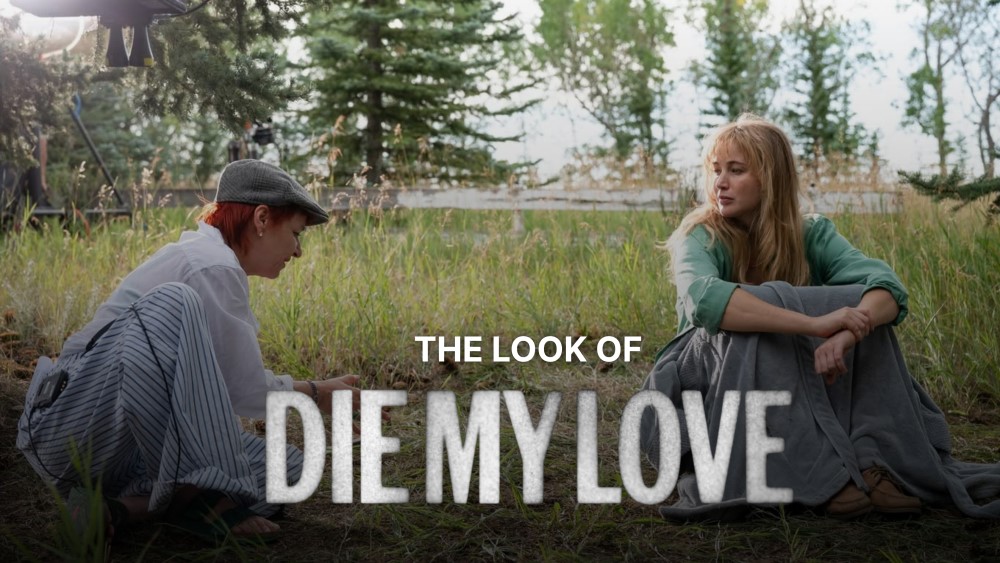
“I’m stuck between wanting to do something and not wanting to do anything at all.”
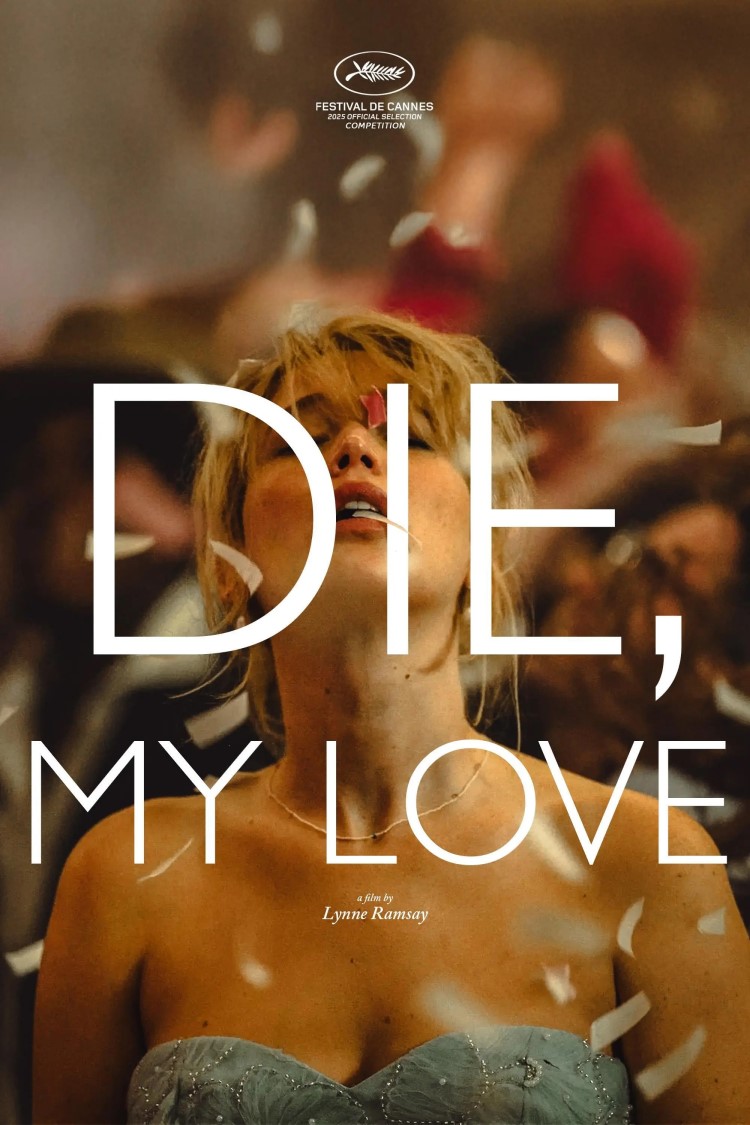
What if the only thing more terrifying than a monster in the dark is the crushing, hollow weight of a life you’re supposed to want? This is the paralyzing, intimate territory of director Lynne Ramsay. More than any of her previous work, this film dives deep into the psychological trauma of its characters, where the horror starts in the interior and inevitably splashes out into the physical world. Adapted from the novel by Ariana Harwicz, Die My Love is a raw examination of depression, modern anxiety, and the desperate, carnal desire for anything beyond the profound isolation of marriage and motherhood.
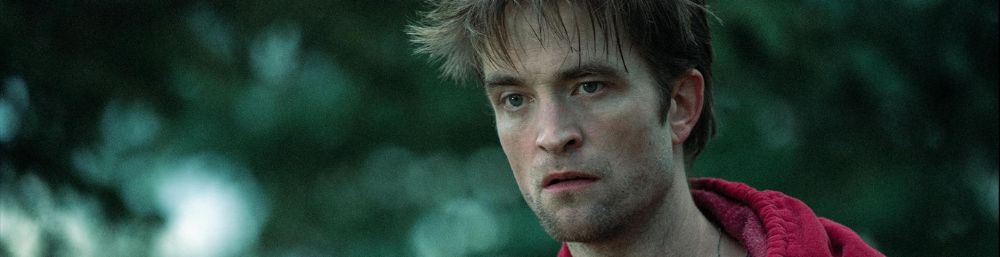
We are introduced to Grace (Jennifer Lawrence) and Jackson (Robert Pattinson) in a rush of youthful, all-consuming sexual desire. This passion is the entire basis of their relationship. But when they move from New York to an abandoned house in the vast emptiness of Montana to have a baby, the reality of responsibility lands with a thud.
(SPOILERS AHEAD!)
Beware: This is not a traditional narrative. It is a series of visceral, sensory experiences. We watch Grace descend, and we, like the other characters, are led to assume it’s postpartum depression. But Ramsay hints at deeper, older cracks. Is this madness the result of a childhood she can’t remember, orphaned by a plane crash at ten? Or is it the simpler, more horrifying realization that she and Jackson, outside of their physical connection, have nothing in common?
| PRO TIP: Bookmark this page so you can easily refer back to it later. |
Carnel Desires & The Bottomless Hole
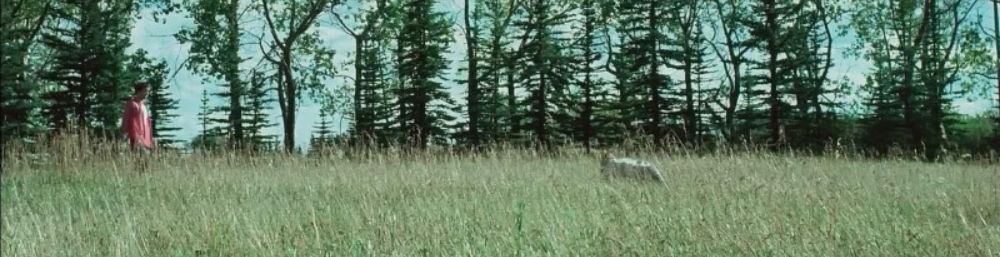
As Grace struggles to find any purpose, she retreats into the only thing that ever felt real: her carnal desires. These manifest in haunting, surreal visions. A mysterious black horse appears, an animal they later crash into. A mysterious motorcyclist begins to visit her for nightly trysts — a figure who may be a real lover, or a complete phantom of her imagination.
The horror is compounded by Jackson’s ineffectual attempts to help. He is clueless. Just like when he brings home a chaotic, untrained dog that Grace refuses even to acknowledge. He leaves their child alone in his crib to take her on a drive. Even after Grace is committed and returns from a mental hospital, he furnishes the house to feel more like a “home,” but it’s a hollow gesture. It’s a devastating realization that no amount of new furniture can fill an irreconcilable internal void.
What culminates from this profound isolation? When the loud music of youth finally stops, what happens when you are forced to be alone with your thoughts — and what if there are no real thoughts to contend with? What if the only thing to face is an enormous, bottomless hole, an abyss that can feel the entire world but can never, ever be satiated?
This is the great horror of life…
This is The Look of Die My Love.
CONTENTS:
|
♀ DIE MY LOVE TECH SPECS ♂
|
♀ THE WORLD OF DIE MY LOVE ♂
THE ISOLATING WONDER OF THE FRONTIER
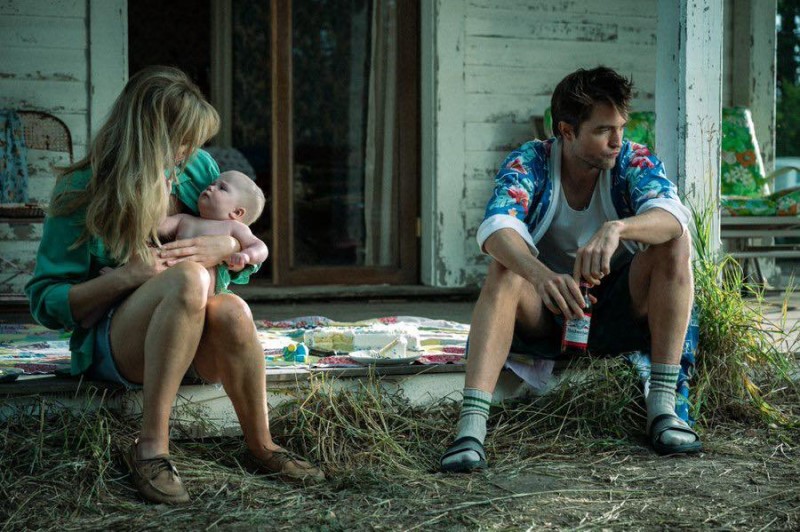
Where the novel was set in rural France, Lynne Ramsay’s adaptation intentionally changes the location to the vast, empty countryside of Montana. This crucial move places the characters into the heart of an American frontier that feels both whimsically beautiful and profoundly isolating. The protagonists are immediately framed as outsiders, a youthful couple completely out of place in this rural wonderland and dangerously unprepared for their new circumstances as parents.
Die My Love | Black Label Media
Ramsay establishes this voyeuristic and unsettling tone from the opening. The camera lingers in a static wide shot down a hallway, forcing us to observe the characters as they examine their new home. It feels like watching a play. By refusing to give us close-ups, Ramsay denies us access to their micro-expressions or any clear signs of uncertainty. Instead, they appear, at first glance, like any newly married couple (though we later learn they are not) choosing their first home.
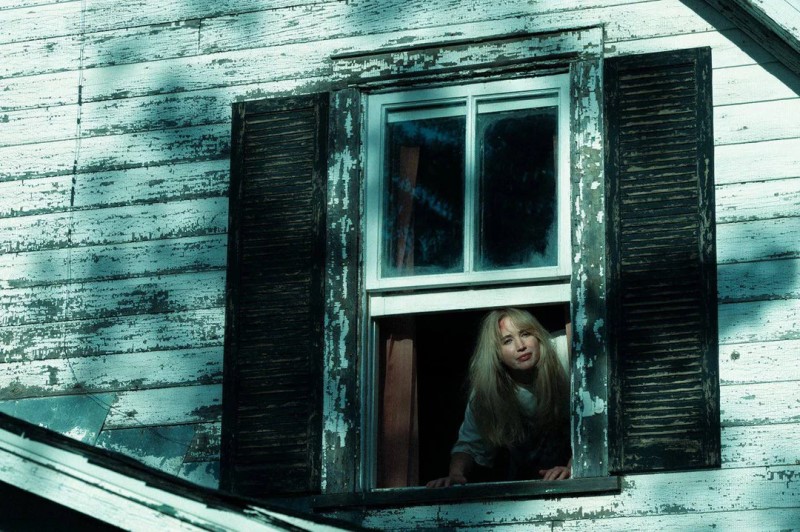
The house itself is a character, a tomb they’ve inherited. It belonged to Jackson’s deceased uncle, who committed suicide within its walls. It’s a chilling detail that immediately foreshadows the tragedy to come. Even after the young couple moves in, they do little to fix the place up. The house remains in a state of disrepair, a stark visual metaphor for their own unwillingness, or inability, to build a stable home or relationship.
A SICKNESS IN THE BLOODLINE
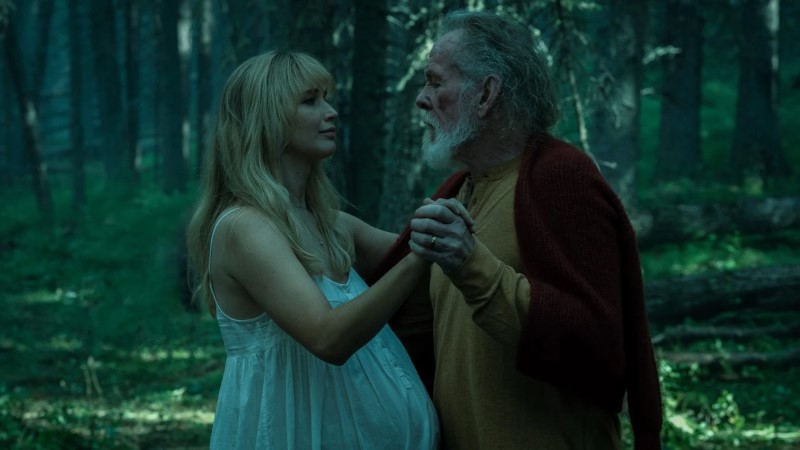
This exploration of madness is not limited to Grace. The film suggests a deeper, perhaps inherited, fragility in Jackson’s family. His elderly father, Harry (Nick Nolte), appears to be suffering from dementia. During what should be a happy housewarming party, he sits apart from everyone, confused and disconnected. His confusion soon turns to aggression as he causes a scene, yelling for everyone to leave his brother’s house.
Die My Love | Black Label Media
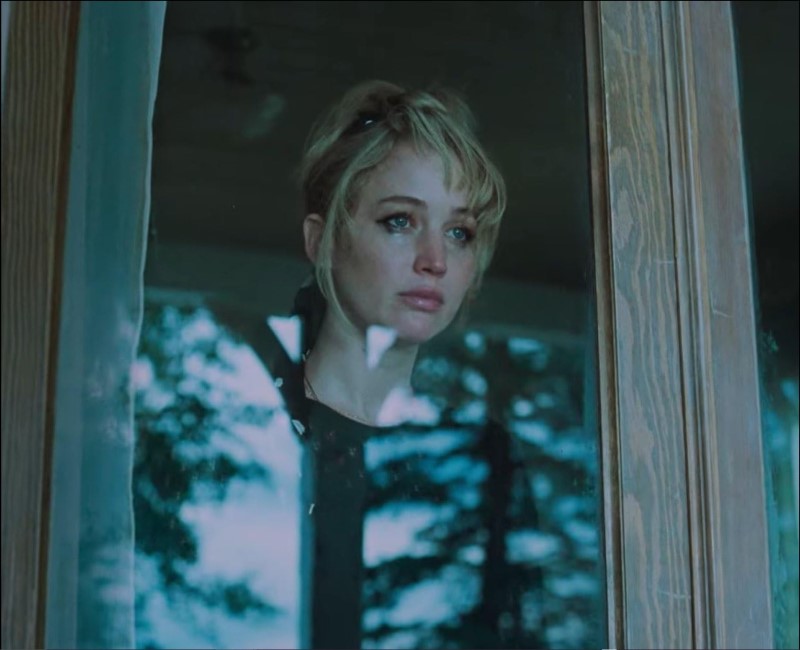
This culminates in one of the film’s first truly surreal moments. Later that night, the old man wanders outside, and the pregnant Grace follows him. There, in the cold Montana air, an unspoken understanding seems to pass between them. They end up dancing, a strange, silent, and deeply human moment of connection that acts as a prelude to his death in the very next scene. It’s a touching, haunting sequence that links Grace’s psychological state not just to her own desires, but to the generational sorrow of the very family she has married into.
Die My Love | Black Label Media
THE SOBRIETY OF DAY, THE DESIRE OF NIGHT
The film’s visual language is built on a stark divide. Throughout the story, the carnal, primal side of Grace unleashes itself almost exclusively under the veil of night. The use of film stock (a bold choice by Ramsay and DP Seamus McGarvey) supplants the texture of this veil, creating a velvet, grainy, and fantastical impression that perfectly supports the surreal tone.
While her isolation and anxieties are exposed under the harsh, analytical light of day, the nighttime sets her free. She is alone, unbound, and able to pursue the black horse that appears to her, a phantom representing her wild, uncertain, and dangerous desires. These surrealistic nighttime sequences are set in the wilderness — on lonely roads or just outside the flimsy security of a home. It is only in the dark that she truly partakes in the acts she craves.
THE SPELL OF NIGHT
Grace is not the only one haunted by the darkness. After Harry’s passing, her mother-in-law, Pam (Sissy Spacek), is caught under the spell of her own loss and mourning. She, too, becomes a nocturnal figure, sleepwalking down a lonely street and clutching a shotgun for a protection she can’t articulate.
The shotgun becomes a terrifying plot point. When Grace checks on Pam during the day, a startled Pam nearly blows her head off, thinking she’s an intruder. This intense encounter, however, gives way to a moment of attempted connection. Pam asks Grace how she’s doing. In response, Grace completely shuts down, a reaction that becomes a painful, recurring part of the narrative. She is triggered anytime anyone brings up her role as a mother.
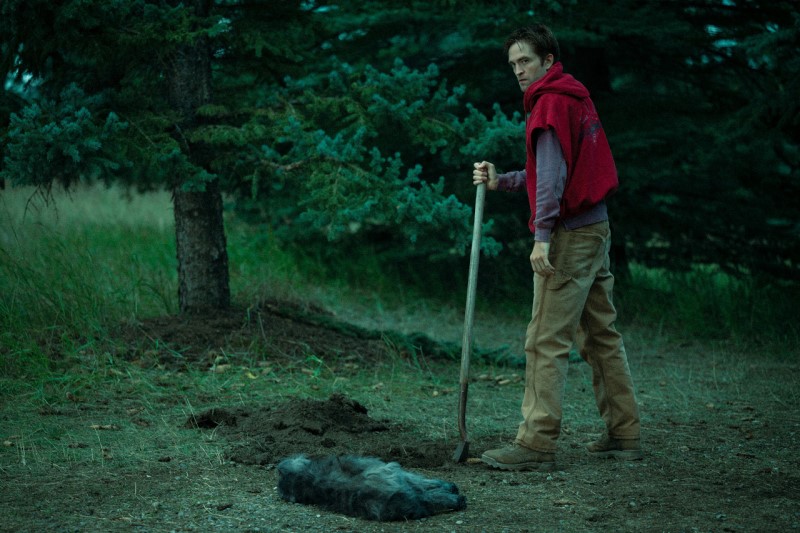
Consequently, Grace’s own suppressed violence finally erupts. After the family gets into a car accident by striking the mysterious black horse, their new dog is badly injured. That night, as the dog whines ceaselessly, Grace’s sanity frays. She demands that Jackson put the dog down. He refuses, saying he’ll go to the vet in the morning. Unable to bear the sound any longer, Grace walks to Pam’s, retrieves the shotgun from her sleeping mother-in-law’s grip, walks back home, and shoots the dog.
Die My Love | Black Label Media
THE BLUR BETWEEN FANTASY AND REALITY
Grace’s nightly desires blur the line between fantasy and a sordid reality. The mysterious motorcyclist who visits her for carnal trysts seems like another phantom. But later, Grace spots him with his family at a grocery store. When he sees her, a spark of a shared secret in his eyes confirms their connection is real.
His wife, sensing the intrusion, brushes Grace off. This only deepens Grace’s obsession. Later, she wanders to his family’s home, waits for him to come out, and they sneak into a nearby toolshed. This desperate, tangible act confirms her desires are not just in her head, cementing her choice to retreat from her domestic prison into a world of pure, carnal impulse.
ISOLATION VS THE PUBLIC
Ramsay forces Grace and Jackson into public settings only a few times, and these moments are intentionally jarring. In these bright, loud, “normal” places, Jackson tries to acquiesce to social norms, while Grace’s isolation becomes even more pronounced. She is utterly incapable of connecting with anyone.
At a children’s party, surrounded by happy families, she is combative and detached. This culminates in a shocking scene where she makes a spectacle of herself, stripping down to her underwear and hopping into a pool full of kids.
This destructive public behavior climaxes at their own wedding reception. At first, the event is filled with fun, drinking, and laughter. But as Grace becomes increasingly drunk, her carnal side takes over. She is seen walking on all fours, like an animal, on the dance floor.
When she is finally left alone in the honeymoon suite, she pops a bottle of champagne and convinces the man at the front desk to come up to her room. In a final act of self-destruction, she places her baby into a stroller and walks in a trance down the road.
♀ DIE MY LOVE PRODUCTION DESIGN ♂
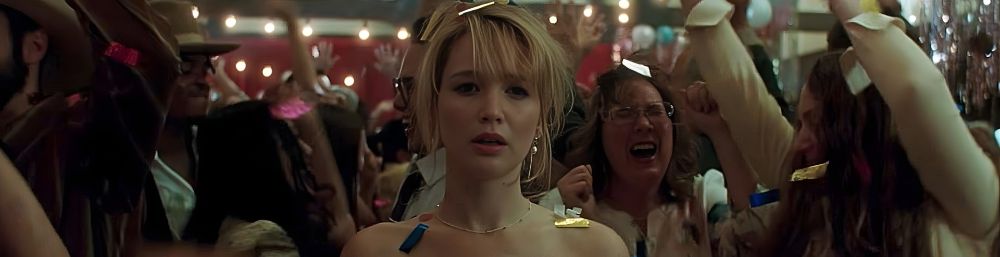
The production design of Die My Love, led by Tim Grimes, is central to the film’s suffocating, psychological horror. It joins a long tradition of “haunted house” movies where the horror isn’t from ghosts, but from the trauma and madness of its occupants. As Samantha Bergeson of ELLE Decor notes, the aging house is a direct “reflection of the frustrations” of the characters who live “alongside their own personal ghosts.”
FINDING A “PLAYGROUND” FOR MADNESS
While the Ariana Harwicz novel was set in rural France, Lynne Ramsay relocated the action to the “middle-of-nowhere Montana” (per ABC Arts), specifically shooting in Calgary.
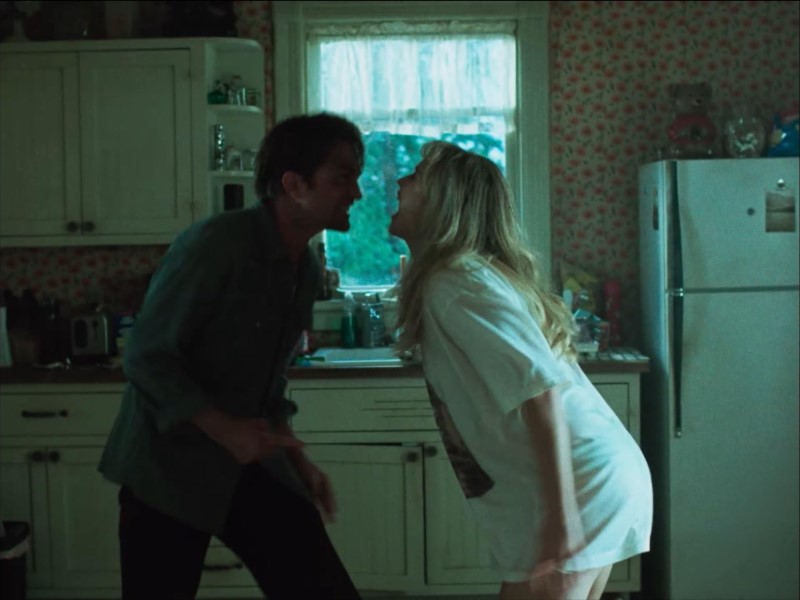
Production designer Tim Grimes “fell in love” with a dilapidated farmhouse during the location scout. Although it was in disrepair and had to be rebuilt from the ground up, Grimes knew it was the perfect “playground” for Ramsay to explore the story’s themes.
Die My Love | Black Label Media
Grimes’s goal was to “make it a little bit surreal and a little bit of a storybook quality” without being overt.
“You don’t want the audience to notice what you’ve done either,” he told ELLE Decor, “You don’t want to be screaming out, ‘We decorated this house!’”
This approach extended to the house’s narrative DNA. The home was inherited from Jackson’s uncle, who had committed suicide there, immediately layering the space with a history of death and grief before Grace and Jackson even arrive.
CONTRAST: THE NONCONFORMIST HOME VS. THE “BORING” WORLD
Grimes overtly emphasized the stark contrast between the fly-ridden, eclectically decorated farmhouse and the “absolutely boring” and “cookie-cutter” spec houses of the neighboring suburban world. This choice fueled the farmhouse’s design, making it as nonconformist and individualized as its inhabitants.
Die My Love | Black Label Media
This contrast makes the film’s ending all the more tragic. After Grace’s stay in a mental hospital, Jackson attempts to “fix” their lives by redecorating the house in the same generic, IKEA-esque mold they once stood against. As ELLE Decor points out, this “exorcism” of their past trauma doesn’t work, proving that the house is only as haunted as its occupants.
THE WALLPAPER OF CONFINEMENT
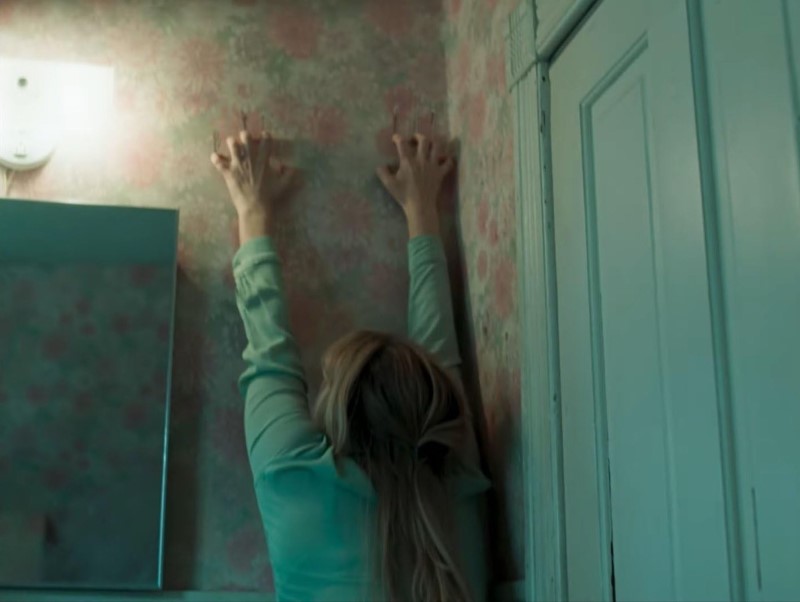
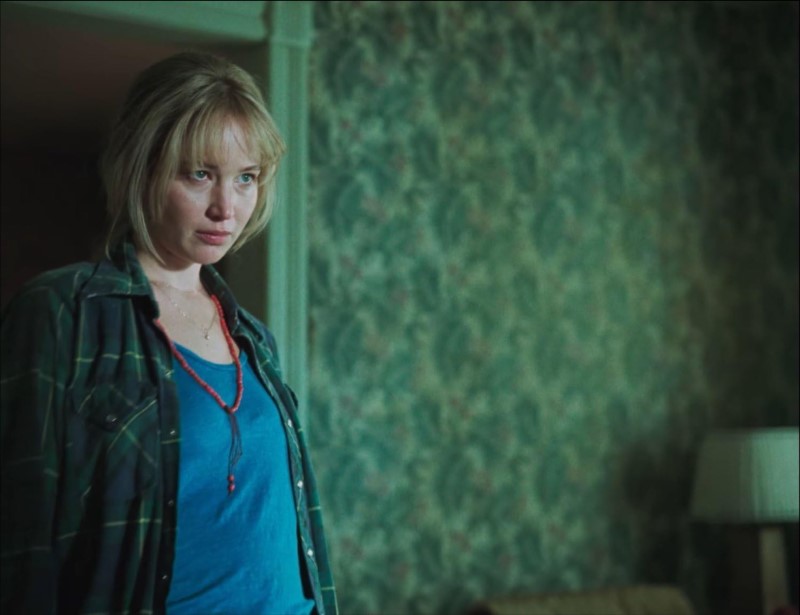
A key element of this “surreal” design is the now-viral bathroom wallpaper. In one of the film’s most intense clips, Grace claws away at the walls, a physical attempt “to shed the confinement of being a housewife and mother.” This fern palm-patterned wallpaper, sourced from Astek in Los Angeles, was a specific and contested choice.
Die My Love | Black Label Media
“Everyone was like, ‘That’s not a country house wallpaper,’ and I was like, ‘I disagree,’” Grimes stated.
His artistic instinct was validated in an art-mirroring-life moment when the team found a similar wallpaper “under layers of wallpaper in that house” during the rebuild.
Die My Love | Black Label Media
♀ DIE MY LOVE CINEMATOGRAPHY ♂
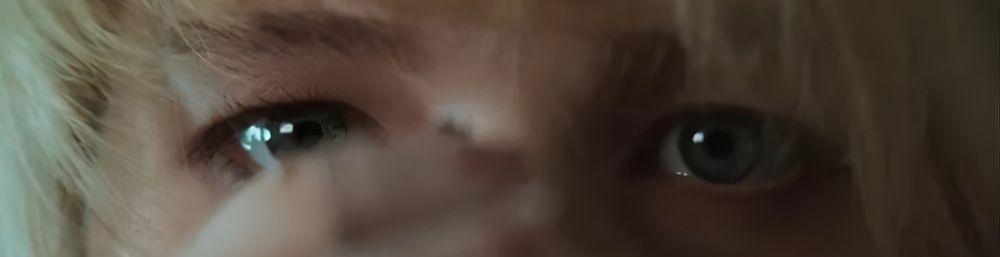
The visual language of Die My Love is a masterful and unsettling “pictorial depiction of a breakdown,” as cinematographer Seamus McGarvey, ASC, BSC describes it. Reuniting with director Lynne Ramsay after their collaboration on We Need to Talk About Kevin, McGarvey knew the camera would be central to the narrative.
“When you embark on a film with Lynne… you know that the camera is going to be central,” he shares.
Courtesy of Seamus McGarvey
The goal was to craft a film that stepped away from simple realism and embraced the emotional, often skewed, perception of its protagonist, Grace. The result is a haunting, poetic, and technically daring visual experience.
THE RETURN TO 35MM EKTACHROME
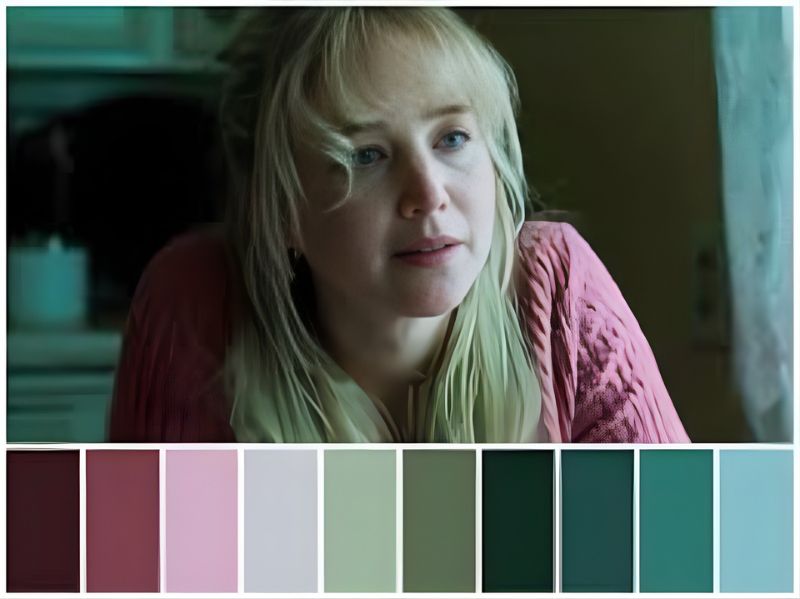
To capture this “skewed perspective of the truth,” McGarvey and Ramsay made the bold choice to shoot on film. McGarvey’s initial suggestion was to use Kodak Ektachrome 100D, a color reversal film stock that Ramsay had previously used on Morvern Callar.
“We didn’t want it to feel like a realist film,” McGarvey explains, and Ektachrome, with its “unique photographic signature,” was the perfect tool to embody Grace’s inner world.
colorpalette.cinema
This choice presented significant technical challenges. With a low exposure index of 100D, the day interiors were a constant battle.
“We needed to pump a lot of light into the sets,” McGarvey acknowledges. However, this limitation became a creative benefit, as the “decisiveness of the impact of strong sources gave it a particular look.”
Shooting on film also brought a sense of risk and commitment that Ramsay, a frugal director who knows exactly what she wants, thrives on.
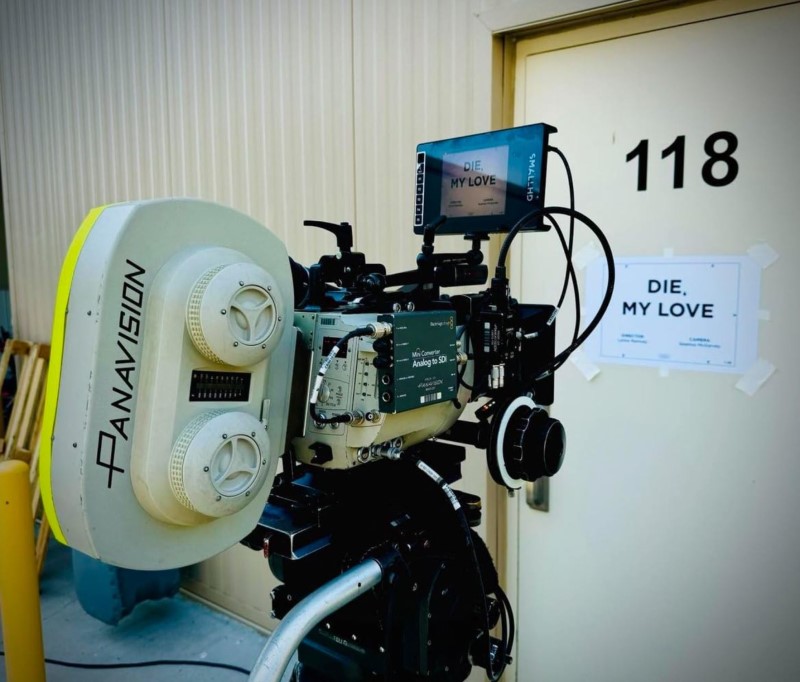
Photo by Seamus McGarvey
“There is a mystery to film,” McGarvey muses. “You don’t know that it’s definitely there. There’s something really special about that because you’ve taken a step into the dark, literally.”
THE SURREALITY OF DAY-FOR-NIGHT
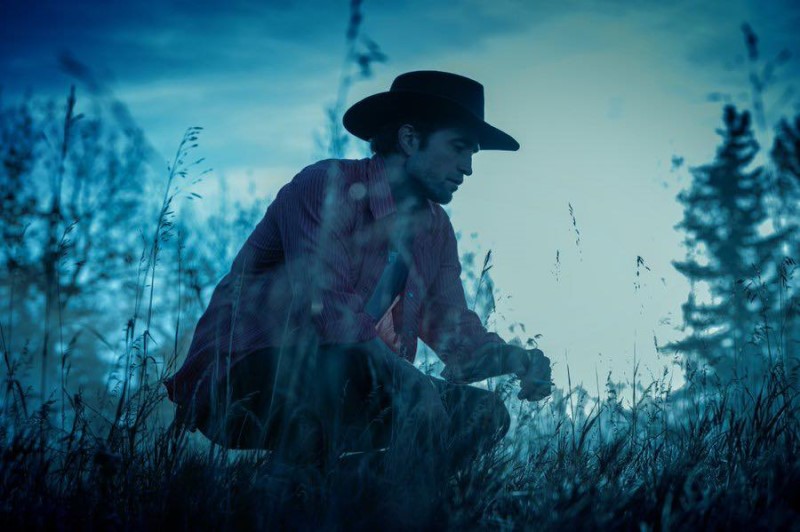
The low sensitivity of Ektachrome reversal stock made it impossible to use for the film’s many night scenes. This led to another key stylistic decision: shooting all night exteriors as day-for-night.
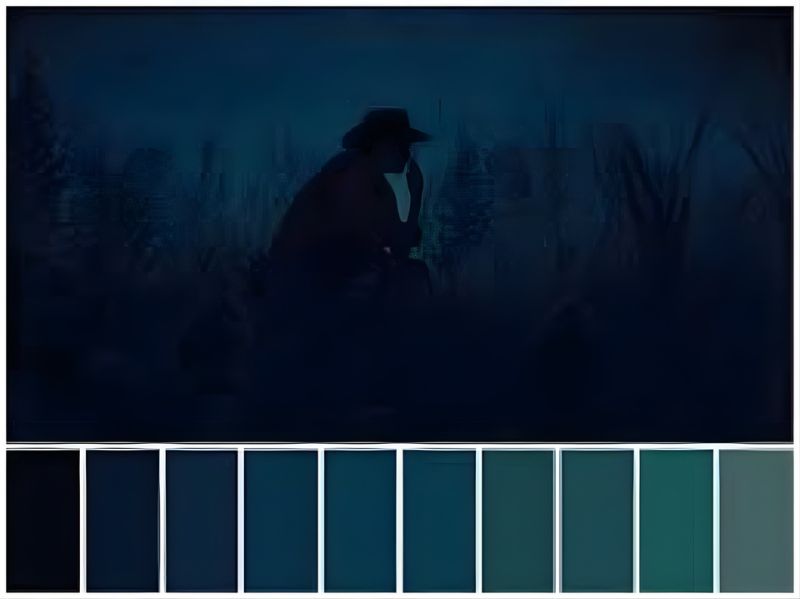
colorpalette.cinema
McGarvey explains that this choice “gave a sense of surreality to the night work because it doesn’t look real… There’s an absolutely avowed sense of artifice.”
 |
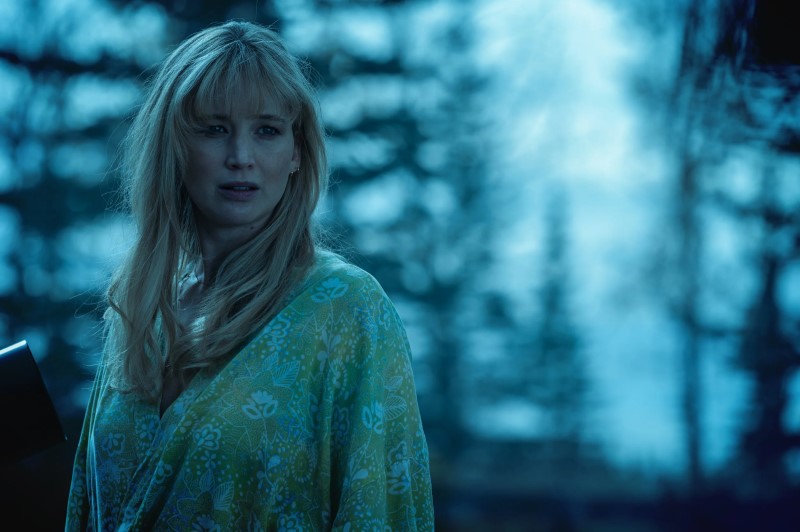 |
For these scenes, the team switched to Kodak Vision3 negative film stocks (200T or 500T) to get a proper exposure in the shady forest environments.
“We exposed it normally but printed down in the timing,” he says. The result was a lower-contrast, dream-like, and “twilight unreal” image that perfectly suited the film’s psychological state.
FRAMING CLAUSTROPHOBIA: THE ACADEMY ASPECT RATIO
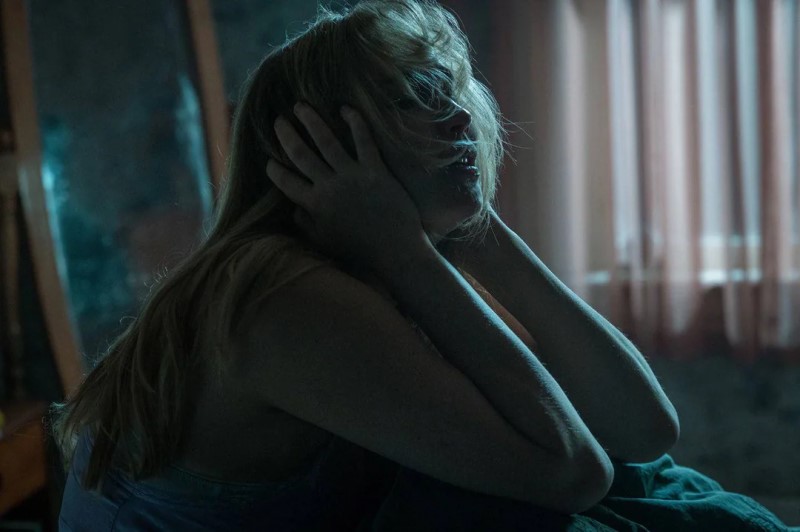
One of the most defining visual choices was the film’s 1.33:1 Academy aspect ratio. Ramsay and McGarvey felt the location itself dictated this “boxy” format.
“When we saw the location, I wanted to see the whole door rather than cut it off,” Ramsay recalls. “It’s quite a portrait film anyhow, and so it felt like the location dictated the Academy frame.”
Die My Love | Black Label Media
This choice proved essential for the film’s themes.
“This film was about portraits, and it was about claustrophobia, and it was about people in a little boxy house,” McGarvey says.
The 1.33:1 aspect ratio perfectly “fitted the house” and created a sense of confinement. It also allowed for powerful compositions, “putting people in the bottom or the edges of frame” to visually enhance their isolation.
LENSES FOR A FRACTURED MINDSTATE
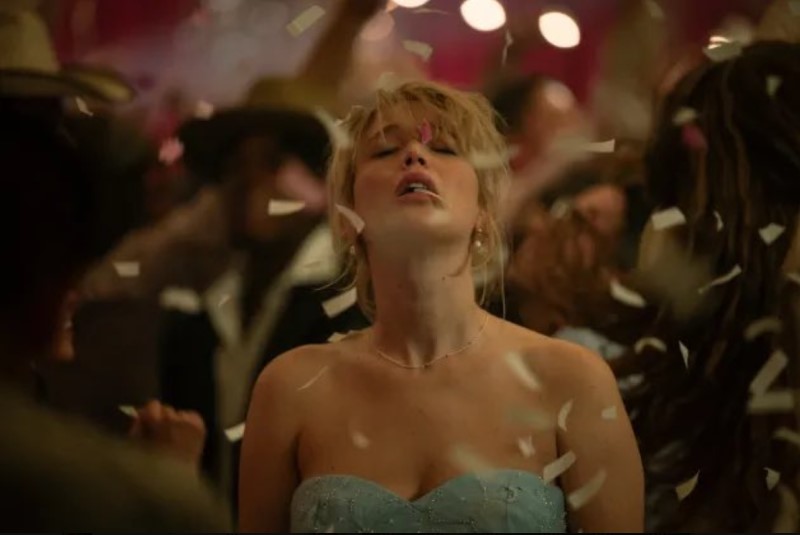
To further enhance the skewed perspective, McGarvey turned to specific, character-driven lenses, supplied by Panavision in Calgary. The primary set was the PVintage primes — modern-mechanic updates of legacy Super Speeds and Ultra Speeds — which McGarvey describes as “really beautiful.”
Die My Love | Black Label Media
For Grace’s most intense psychological “moments in her head,” he employed two Petzval lenses (a 58mm and an 85mm). These specialty lenses are known for their unique, “swirly bokeh around the edges.”
This optical distortion created a visible, signature effect that mirrored Grace’s mental unraveling, especially in scenes with dappled backgrounds like trees.
THE CAMERA AS A COMMUNING FORCE
The camera in Die My Love is rarely a passive observer.
“There’s a lot of silence in the film,” McGarvey notes, “and I think that cinematography is uniquely served to depict those kinds of ideas.”
Courtesy of Chris Chow
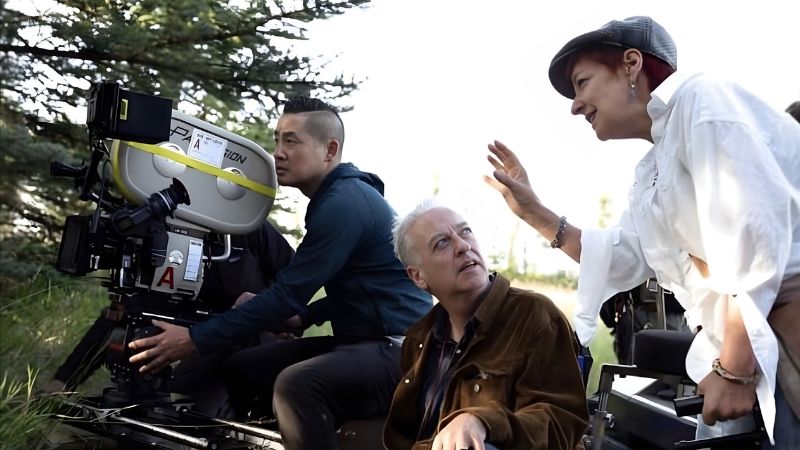
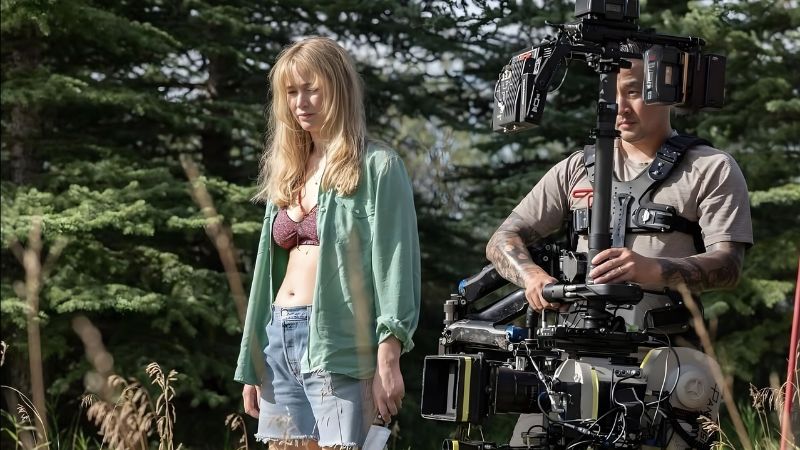
To achieve this, the team relied heavily on the “second to none” handheld and Steadicam work of operator Chris Chow. This mobility was essential for working with actors of the caliber of Jennifer Lawrence and Robert Pattinson.
“You’ve got to give them some leeway because they always offer up surprises and beautiful moments of happenstance,” McGarvey says.
This nimble approach proved critical for Ramsay, who famously follows her instincts.
“If she’s not feeling the spirit of the shot, she’ll abandon it immediately,” McGarvey shares. “That is why her films kind of have this peculiar ring to them, because they’re unequivocally filtered through her director’s mind and heart.”
This combination of instinctive direction and responsive camerawork created a final film that McGarvey describes as “defiantly a piece of poetic cinema.”

Become a member of Filmmakers Academy to master the art of cinematography!
♀ DIE MY LOVE COSTUME DESIGN ♂

The costume design of Die My Love, led by Catherine George, was an element that director Lynne Ramsay was “across every inch” of, working closely with her team to build the film’s specific visual world (ABC Arts).
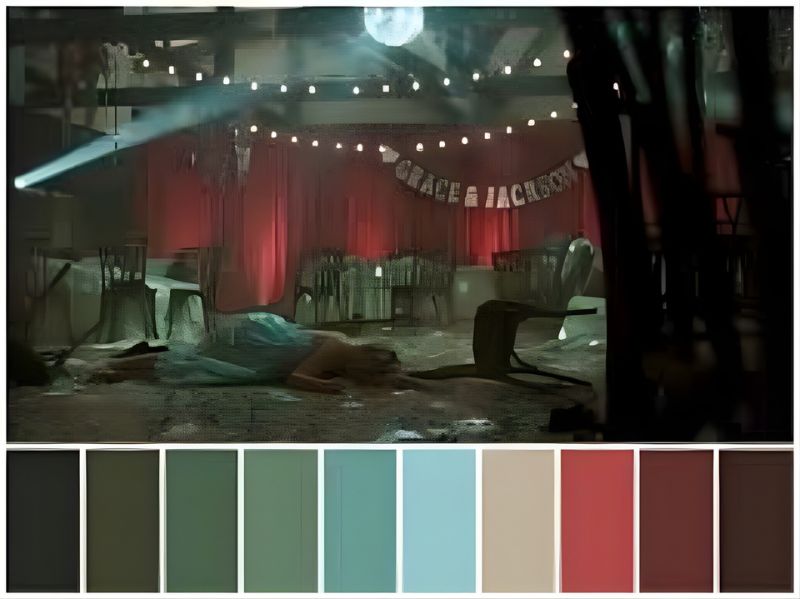
The approach was less about creating standout “costumes” and more about finding a precise visual palette that could track the characters’ emotional states.
As Ramsay explained to ABC Arts, “We were looking at color palettes for different moods.”
colorpalette.cinema
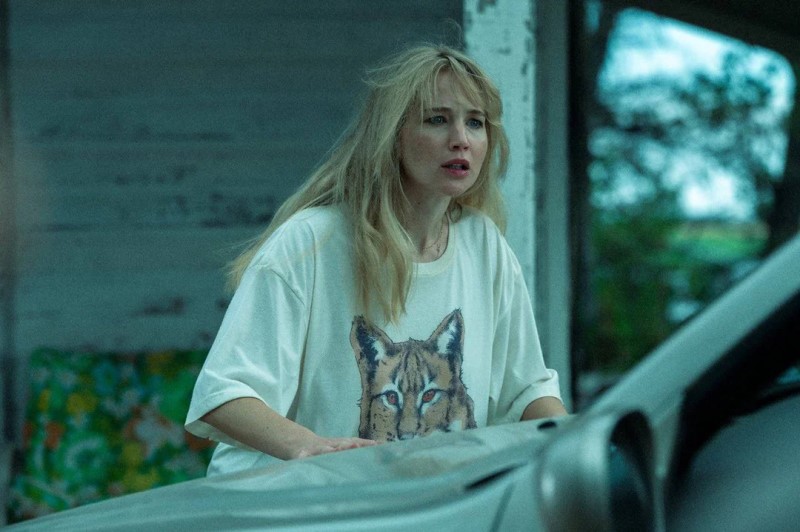
Grace’s main costume in the film is a perfect encapsulation of this philosophy. At her wedding, she wears a “powder-blue dress… with its slightly 50s feel” (ABC Arts). This choice is highly symbolic. Ramsay notes that this look represents Grace “at the beginning,” when she is “bright and hopeful.”
This initial, distinct identity then deliberately erodes as the film’s suffocating world closes in. As Grace’s psychological state fractures and she becomes lost in the isolation of motherhood and her unraveling marriage, her wardrobe reflects this internal collapse.
 |
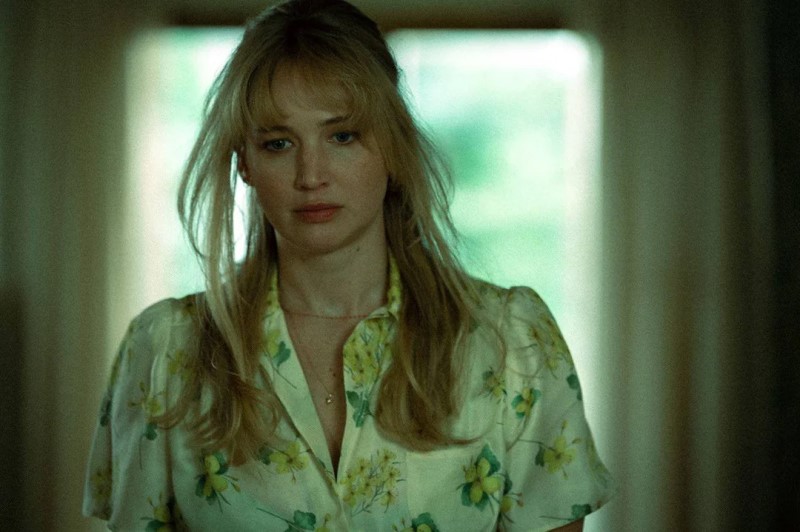 |
Ramsay notes that Grace eventually “starts dressing like everyone else,” a visual cue showing she has shed her bright, hopeful individuality and is conforming to a suffocating world.
This subtle but powerful transformation in her clothing is a key part of the film’s visual language, tracing her journey from a “punk rocker” who is “setting the world on fire” to a woman who feels “eradicated from her own space” (ABC Arts, The Film Stage).
♀ WATCH DIE MY LOVE ♂
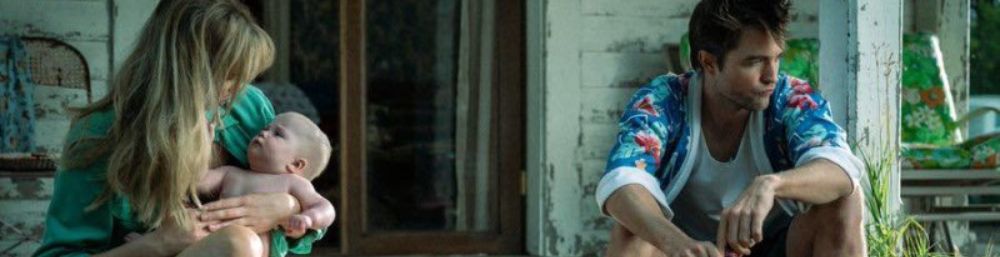
Die My Love is a visceral, poetic, and uncompromising cinematic experience. It showcases a team of artists — Lynne Ramsay, Seamus McGarvey, Tim Grimes, and Catherine George, along with a fearless cast — working at the absolute peak of their craft.
From its claustrophobic Academy-ratio framing and surreal day-for-night sequences to its psychologically-charged production design, this film demands that audiences see, feel, and study it.
Now that you’ve explored the incredible detail and artistry that went into every frame, it’s time to witness the final, haunting result.
Die My Love is currently playing in theaters and will soon arrive on major streaming services and for digital purchase.
Feeling inspired by the incredible level of artistry in Lynne Ramsay’s film? The techniques used to create such powerful, psychologically-driven masterpieces are at the very core of what we teach at Filmmakers Academy.
If you’re ready to move beyond the technical and start mastering the skills of visual storytelling, cinematography, and directing, our All Access membership is your next step.
JOIN OUR ALL ACCESS MEMBERSHIP TO LEARN FROM INDUSTRY PROFESSIONALS!
WORKS CITED:
Bergeson, Samantha. “Two New Movies, Die My Love and Sentimental Value, Redefine the Haunted House Genre.” Yahoo! Entertainment, 8 Nov. 2025, www.yahoo.com/entertainment/movies/articles/two-movies-die-love-sentimental-150000659.html.
Bradshaw, Peter. “Die My Love review – Jennifer Lawrence excels in intensely sensual study of a woman in meltdown.” The Guardian, 17 May 2025, www.theguardian.com/film/2025/may/17/die-my-love-review-jennifer-lawrence-excels-in-intensely-sensual-study-of-a-woman-in-meltdown.
Feldberg, Isaac. “‘You’re Living Intrusive Thoughts’: Jennifer Lawrence and Lynne Ramsay on “Die My Love”.” RogerEbert.com, 2025, www.rogerebert.com/interviews/die-my-love-jennifer-lawrence-lynne-ramsay-interview.
Hammond, Caleb. ““Let the Location Speak to You”: Lynne Ramsay on Die My Love, Shooting Academy Ratio, and Adapting Impossible Novels.” The Film Stage, 10 Nov. 2025, thefilmstage.com/let-the-location-speak-to-you-lynne-ramsay-on-die-my-love-shooting-academy-ratio-and-adapting-impossible-novels/.
Newland, Christina. “‘She’s a beast’: Jennifer Lawrence’s extreme new role is a radical portrayal of a woman on the edge.” BBC Culture, 4 Nov. 2025, www.bbc.com/culture/article/20251104-the-power-of-jennifer-lawrences-extreme-new-role.
Panavision. “Seamus McGarvey ASC BSC on the cinematography of Die My Love.” Panavision, www.panavision.com/highlights/highlights-detail/seamus-mcgarvey-asc-bsc-on-the-cinematography-of-die-my-love.
Russell, Stephen A. “Die My Love filmmaker Lynne Ramsay on realising a punk rock adaptation of Ariana Harwicz’s novel.” ABC Arts, 8 Nov. 2025, www.abc.net.au/news/2025-11-09/die-my-love-movie-jennifer-lawrence-martin-scorsese-lynne-ramsay/105948060.
The Making Of. “Seamus McGarvey ASC BSC on the cinematography of Die My Love.” The Making Of, themakingof.substack.com/p/die-my-love-cinematographer-seamus.