The Rosco Opti-Sculpt Technique: Cinematic Light Quality
It’s a classic, high-stakes problem.
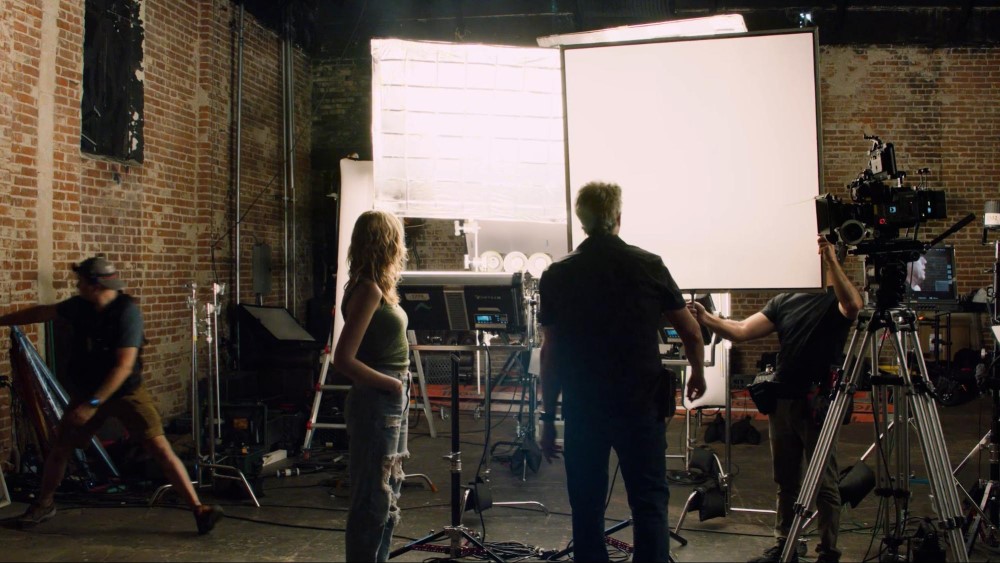
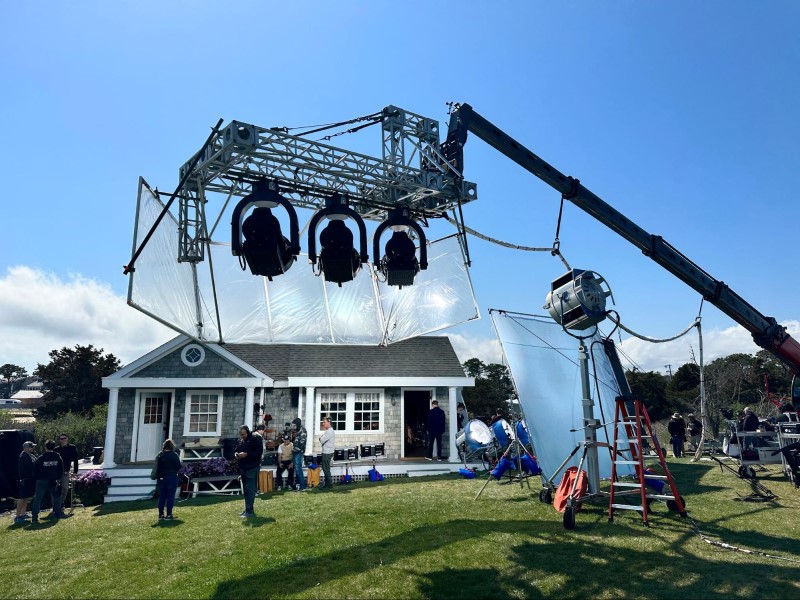
You’re on set, trying to light a large interior. The director wants to see the bright, beautiful exterior through the windows, but the room itself is falling into shadow. You know you need a massive amount of power to balance that interior exposure with the sun.
You call for the big guns: two, maybe three 18K HMIs, and blast them through the windows.
You’ve solved the exposure problem, but you’ve created a new one — a director’s nightmare. Your talent now has three distinct, ugly nose shadows. The gaffer is pulling their hair out. The illusion of a single, natural source (the sun) is completely shattered.
So, how do you get the power of three 18Ks but the quality of one?
In his Cinematic Light Quality Masterclass, cinematographer Shane Hurlbut, ASC, breaks down a simple but ingenious solution he uses on set.
“What if I have 3 18Ks, and I need to be able to make it feel like it’s one source?” he asks. “This gives me the ability to create one shadow with three lights.”
The secret isn’t just diffusion. It’s directional diffusion.
YOU WILL LEARN:
|
More Lessons on Cinematic Light Quality:
- Cinematic Light Quality: Batten Lights
- Light Quality Lab: DMG Maxi & Depron Dome for Soft Light
- Cinematic Lighting with Shane Hurlbut, ASC: Xenon Light
- Silver Bounce: Cinematic Light Quality
THE “MAGIC GEL”: ROSCO OPTI-SCULPT
Shane introduces a very unique tool he uses to join massive lights: the Rosco Opti-Sculpt.
At first glance, it might look like other diffusion, but it has a “secret.” Like brush silk, the Opti-Sculpt has visible “strands” embedded within it.
These strands are designed to catch and reshape the light beam in a very specific, controllable way.
And here’s the trick: the direction of the strands is inverse to the direction of the light beam.
THE OPTI-SCULPT RULE |
| When the strands are horizontal, the light beam is stretched vertically. |
| When the strands are vertical, the light beam is stretched horizontally. |
This ability to change the shape of the light is the key to solving the 3-shadow problem.
THE TECHNIQUE: TURNING THREE HEADS INTO ONE BAND
In the masterclass, Shane demonstrates this concept in real-time.
First, his team fires up just one light behind the Opti-Sculpt.
1. |
They hold the gel so the strands are horizontal. As predicted, the light on the wall becomes a tall, vertical band. |
2. |
They rotate the gel 90 degrees, so the strands are now vertical. The light instantly flattens into a wide, horizontal band. |
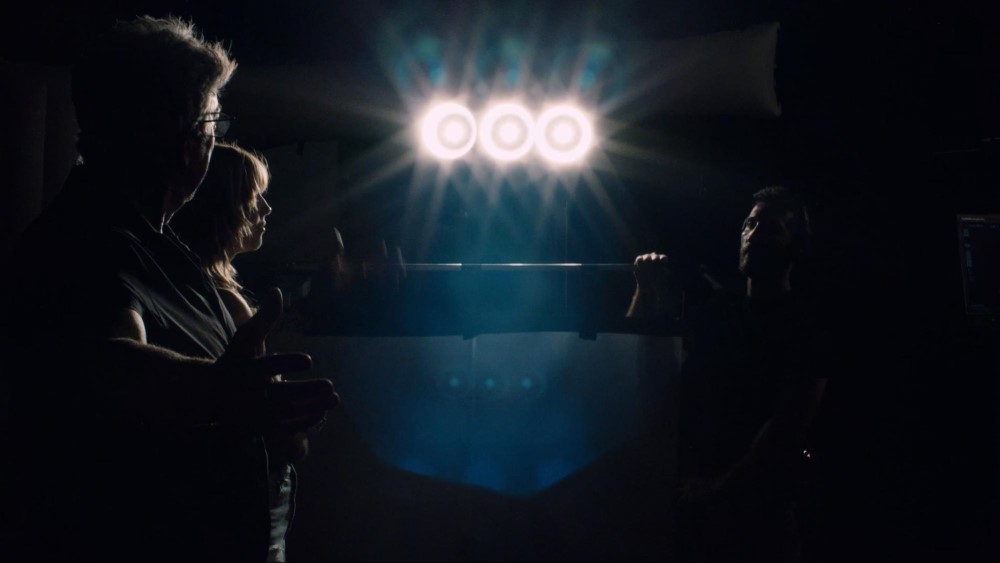
This is the “aha!” moment. Now, they fire up all three 18Ks, side-by-side.
With the gel oriented to create a vertical beam, the result is terrible.
“You can really see the three individual lights,” Shane notes, pointing to the distinct, separated sources.
Then, the magic.
His team rotates the Opti-Sculpt 90 degrees, making the strands vertical. The light from all three 18Ks instantly stretches horizontally, merging together to bridge the physical gaps between the lamps.
 |
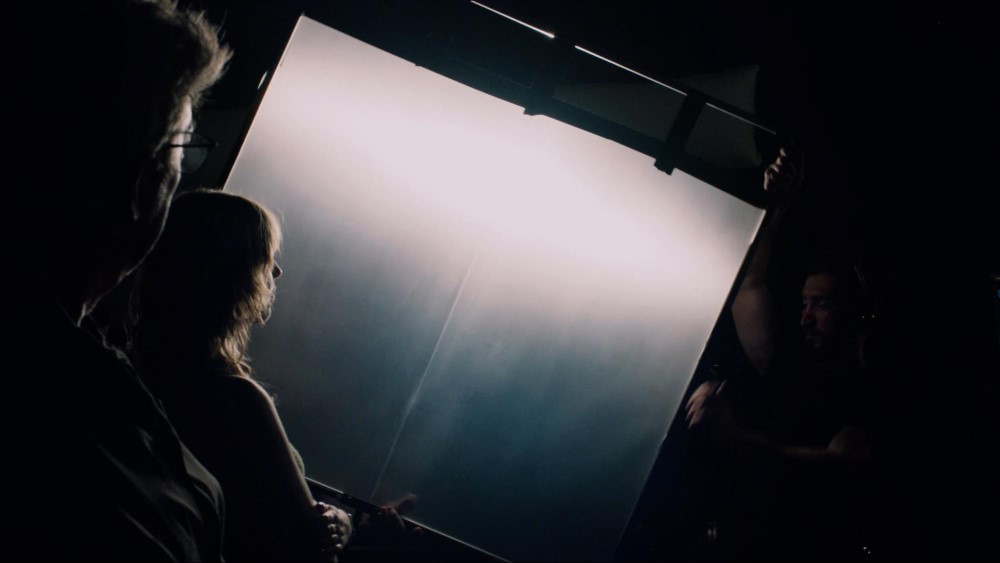 |
“It’s taken all three of those heads and turned them into a perfect band of light,” Shane explains. “It now becomes one line of light and one source.”
Looking at the talent, the three nose shadows have vanished, replaced by a single, soft, and believable shadow. They have successfully sculpted the output of three massive, separate lights into one cohesive source.
THE BOTTOM LINE:
This technique is a fundamental lesson in problem-solving and the physics of light. It’s the difference between just making a scene bright and crafting a believable image.
When you’re on set, you’re fighting for realism as well as exposure. A-list cinematographers know that the quality of light — its shape, softness, and, most importantly, its singularity — is what sells the shot.
Thanks to tools like Opti-Sculpt and techniques from masters like Shane Hurlbut, filmmakers can now get the best of both worlds: the colossal power needed for modern digital sensors and the nuanced, natural quality that makes an image feel real.
GET THE FULL MASTERCLASS!
This exploration of silver bounce and foam lighting is just a small part of the Cinematic Light Quality Masterclass. To unlock the full power of cinematic lighting and learn from detailed, on-set demonstrations, purchase the complete masterclass today!
You’ll gain the knowledge and skills to transform your lighting from ordinary to extraordinary and to tell stories with light in a way you never thought possible.
More Lessons on Cinematic Light Quality:
- Cinematic Light Quality: Batten Lights
- Light Quality Lab: DMG Maxi & Depron Dome for Soft Light
- Cinematic Lighting with Shane Hurlbut, ASC: Xenon Light
DOWNLOAD FILMMAKERS ACADEMY APP
For the best experience, download the Filmmakers Academy app from your favorite platform!