Super 8 Film vs. 16mm Film vs. 35mm Film
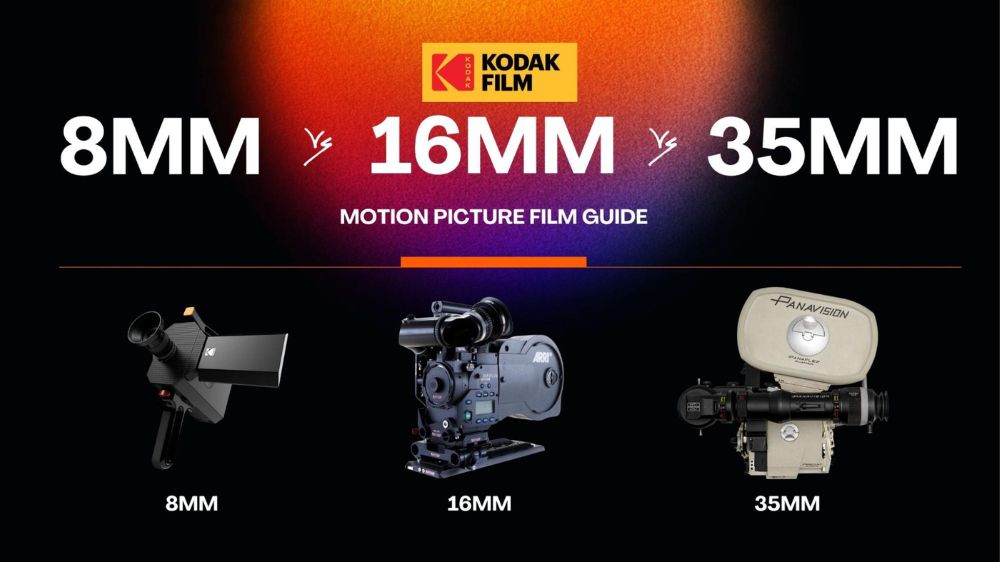
In the digital world, we often talk about sensors in terms of technical specs: resolution, dynamic range, and low-light sensitivity. But when you shoot on celluloid, you are selecting a capture format as much as you are selecting a personality. The gauge you choose — Super 8, 16mm, or 35mm — acts as a subconscious narrator, instantly signaling to the audience how they should feel about the images on screen.
Are you telling a story of fragmented memory?
The chunky grain of Super 8 might be your tool.
Maybe you’re crafting a gritty, cinema verité drama.
The texture of 16mm is unmatched.
Or, are you painting a sweeping epic?
The pristine resolution of 35mm is the gold standard.
Not all film is created equal. In this guide, we break down the “Big Three” formats, comparing their aesthetics, workflows, and budgets to help you match the gauge to your story’s emotional needs.
(This article complements our Exposing Motion Picture Film Masterclass. To learn the technical science of exposing these stocks, click the banner below!)

What You Will Learn in This Article |
|---|
|
1. SUPER 8: THE DREAMSCAPE
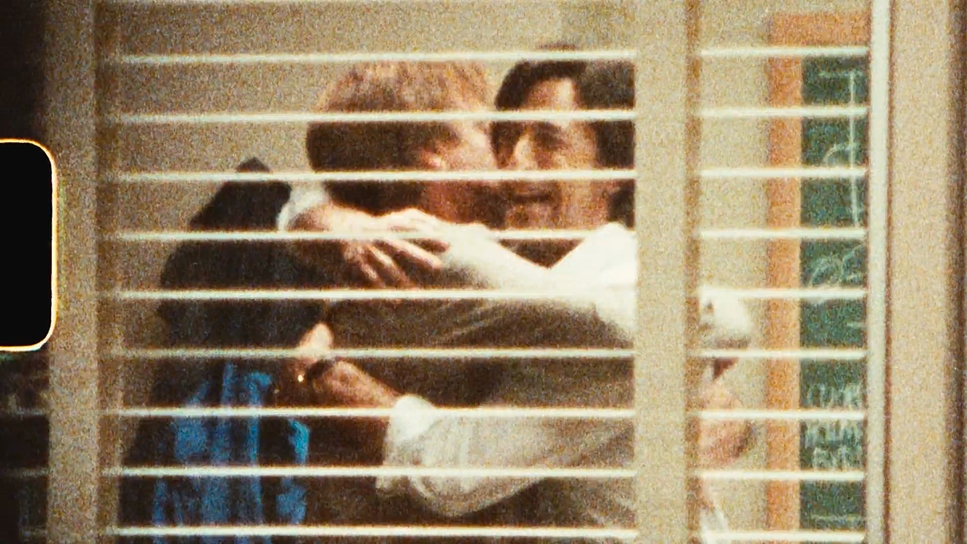
Winning Time: The Rise of the Lakers Dynasty (Season 1, Episode 9) | HBO
- The Aesthetic: Nostalgia, Memory, Intimacy, Chaos.
- The Grain: Heavy, pronounced, and soft.
- The Aspect Ratio: Typically 1.33:1 (4:3), though modern scans can crop to 16:9.
Super 8 is the gateway drug of analog filmmaking. Originally introduced by Kodak in 1965 for the home movie market, it has evolved into a beloved aesthetic for music videos, dream sequences, and flashbacks. Because the negative is tiny (about 8mm wide with a single perforation), the image has a low resolution that feels impressionistic rather than realistic.
Why Choose Super 8?
Choose Super 8 when you want to evoke a sense of the past or a fleeting memory. It breaks the “fourth wall” of perfection and feels handmade. It is imperfect, jittery, and deeply emotional.
|
THE WORKFLOW & COST |
|
| CAMERAS | Highly accessible. You can find decent cameras (Canon 814/1014, Beaulieu) on eBay or through specialty houses like Pro8mm. |
| STOCK | Comes in convenient 50-foot cartridges (approx. 2.5 to 3 minutes of footage at 24fps). |
| BUDGET | This is the most affordable entry point. The camera costs are low, and the “all-in” bundles (stock + process + scan) offered by many labs make the logistics simple for first-time users. |
2. 16MM / SUPER 16: THE INDIE SPIRIT
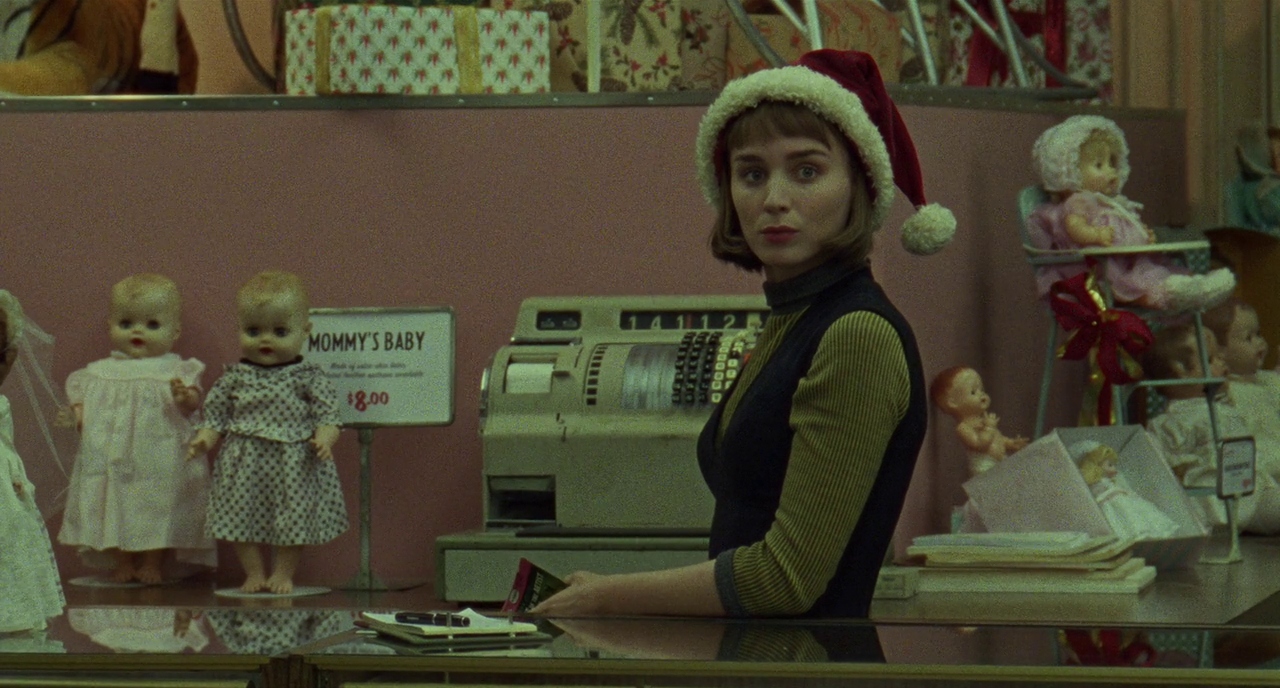
Carol (The Weinstein Company)
- The Aesthetic: Grit, Realism, Texture, “The New Hollywood.”
- The Grain: Visible and organic, but sharp enough for theatrical projection.
- The Aspect Ratio: Standard 16mm is 1.37:1. Super 16 (single perf) is 1.66:1, easily croppable to 1.85:1 or 16:9.
If Super 8 is a memory, 16mm is a documentary. Historically used for news gathering and independent cinema (think Clerks, Pi, or The Texas Chain Saw Massacre), 16mm strikes the perfect balance between economy and quality. In recent years, it has seen a massive resurgence in high-end productions like Carol, Black Swan, The Fabelmans, and HBO’s Euphoria.
Why Choose 16mm?
Choose 16mm (specifically Super 16) when you want a cinematic look that feels grounded and textured. It creates a psychological closeness to the characters. It feels “lived-in.” And it separates the audience from the hyper-reality of digital 4K, providing a layer of artistic abstraction without sacrificing detail.
|
THE WORKFLOW & COST |
|
| CAMERAS | Industry workhorses like the Arriflex 416, Arri SR3, or Aaton XTR Prod. These are professional tools that require a skilled AC to load. |
| STOCK | Comes in 100ft daylight spools or 400ft cores. |
| BUDGET | The “Goldilocks” zone. It is significantly more expensive than digital but roughly half the cost of 35mm stock and processing. It allows indie productions to shoot film without a blockbuster budget. |
3. 35MM: THE PRISTINE CANVAS
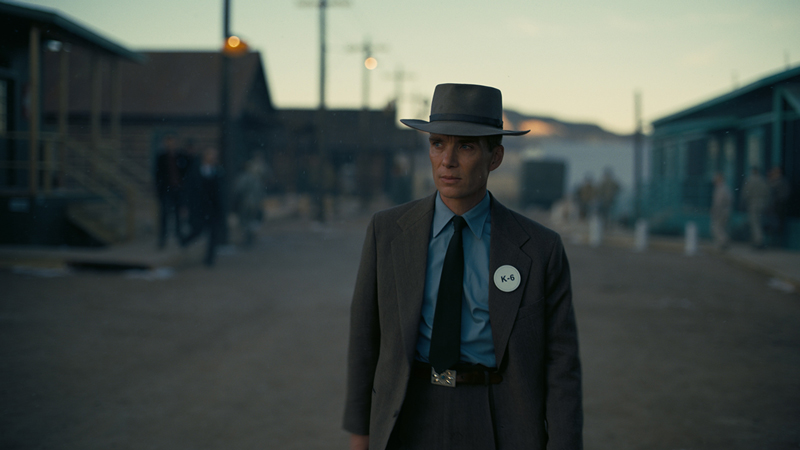
Oppenheimer | Universal Pictures
- The Aesthetic: Epic, Glossy, Timeless, “The Standard,” “The Blockbuster.”
- The Grain: Fine, tight, and incredibly sharp.
- The Aspect Ratio: Versatile. 4-Perf (Anamorphic scope), 3-Perf (1.78:1/1.85:1), and 2-Perf (Techniscope).
This is the format that built Hollywood. From The Wizard of Oz to Oppenheimer (which mixed 35mm with IMAX), 35mm film offers a resolution and dynamic range that rivals and often exceeds the best digital sensors. It captures roughly 6K to 8K worth of data. The grain is present, but it serves as a subtle texture rather than a dominant feature.
Why Choose 35mm?
Choose 35mm when you want the ultimate visual fidelity with the organic soul of celluloid. It offers superior highlight roll-off, incredible latitude, and a depth of color that feels rich and three-dimensional. It tells the audience they are watching a “Movie” with a capital M.
|
THE WORKFLOW & COST |
|
| CAMERAS | Heavy-hitters like the Panaflex Millennium XL2, Arricam LT/ST, or Arri 435. |
| STOCK | 400ft or 1000ft magazines. |
| BUDGET | High. 35mm eats through stock much faster than 16mm (since the frame is larger, you get less time per foot). It requires a disciplined shooting ratio and a budget that prioritizes image quality above all else. |
4. 65MM/IMAX: THE ULTIMATE SPECTACLE
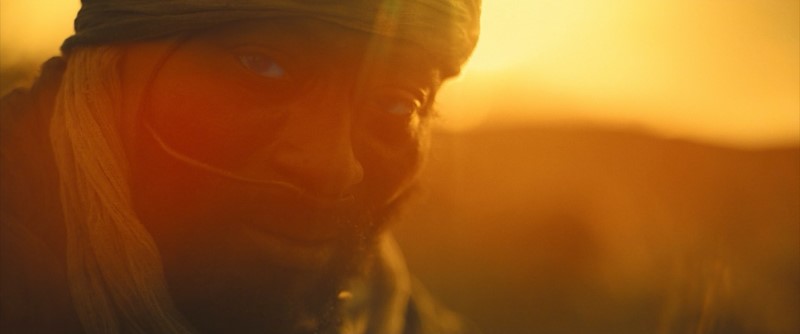
Dune: Part 1 (2021) | Legendary Entertainment
- The Aesthetic: Immersive, Hyper-real, Grandiose.
- The Grain: Virtually invisible; unmatched clarity.
- The Aspect Ratio: 2.20:1 (Standard 5-perf) or 1.43:1 (15-perf IMAX).
If 35mm is the gold standard, 65mm is the platinum. This is the format of Lawrence of Arabia, 2001: A Space Odyssey, and more recently, Dune: Part Two. It uses a massive negative area (roughly 3-4 times larger than standard 35mm) to capture images with unparalleled resolution, sharpness, and color depth.
Why Choose 65mm?
Choose 65mm when you need absolute immersion and scale. It creates an image so detailed it feels like looking through a window rather than at a screen. It demands attention and is typically reserved for landscapes, massive set pieces, or emotional close-ups where every pore matters.
|
THE WORKFLOW & COST |
|
| CAMERAS | Extremely heavy, rare, and loud. Models like the Panavision System 65, Arriflex 765, or IMAX MSM 9802 are scarce and require specialized crews. |
| STOCK | Uses the same emulsion as 35mm but on a much wider base. |
| BUDGET | Astronomical. The stock is expensive, the cameras are expensive, and the processing/scanning workflow is highly specialized (often limited to specific labs like FotoKem). This is strictly the domain of high-budget studio features. |
THE BOTTOM LINE: MATCH THE MEDIUM TO THE MESSAGE
There is no “best” format. There is only the right format for your story.
- Super 8 for the dreamers and the memory-makers.
- 16mm for the realists and the indie rebels.
- 35mm for the epic storytellers and visual purists.
However, choosing the gauge is only the first step. To truly harness the power of film, you must know how to expose it. You need to understand how light interacts with the silver halide crystals, how to use a light meter, and how to manipulate the chemical process.
Ready to Stop Guessing and Start Measuring?
Join the Exposing Motion Picture Film Masterclass on Filmmakers Academy. In partnership with KODAK, Shane Hurlbut, ASC takes you on a deep dive into the science of exposure for all three of these formats. Learn the craft that digital can’t teach you.
|
YOU CAN ACCESS THE FULL MASTERCLASS IN TWO WAYS |
|
| BECOME A PREMIUM ANNUAL MEMBER | Get unlimited access to this masterclass, plus our entire library of hundreds of courses, monthly live coaching, and an exclusive community of filmmakers. |
| A LA CARTE PURCHASE | Buy the standalone masterclass for a one-time fee of $129.99 and own it forever. |
Forget “fast.” Choose timeless. Master the process.
This masterclass was produced in collaboration with Kodak.