The “Tony Scott” Look: ND & Color Grads
In the digital age, we have become accustomed to fixing exposure problems in the color grading suite. If a sky is too bright, we simply draw a Power Window, track it, and bring down the highlights.
But when you are shooting on film — or even pushing a digital sensor to its limits in a backlit scenario — relying on post-production can be a fatal mistake. If you blow out the clouds on your negative, that detail is gone forever. It’s clipped. There is nothing to bring back.
To solve this problem in-camera, we turn to one of the most powerful tools in the analog cinematographer’s kit: Graduated Filters (Grads).
(This article is a deep dive into a lesson from the Exposing Motion Picture Film Masterclass. Learn how to control contrast without a monitor in the full course!)

What You Will Learn in This Article |
|---|
|
THE “GRAD MEISTER”: TONY SCOTT
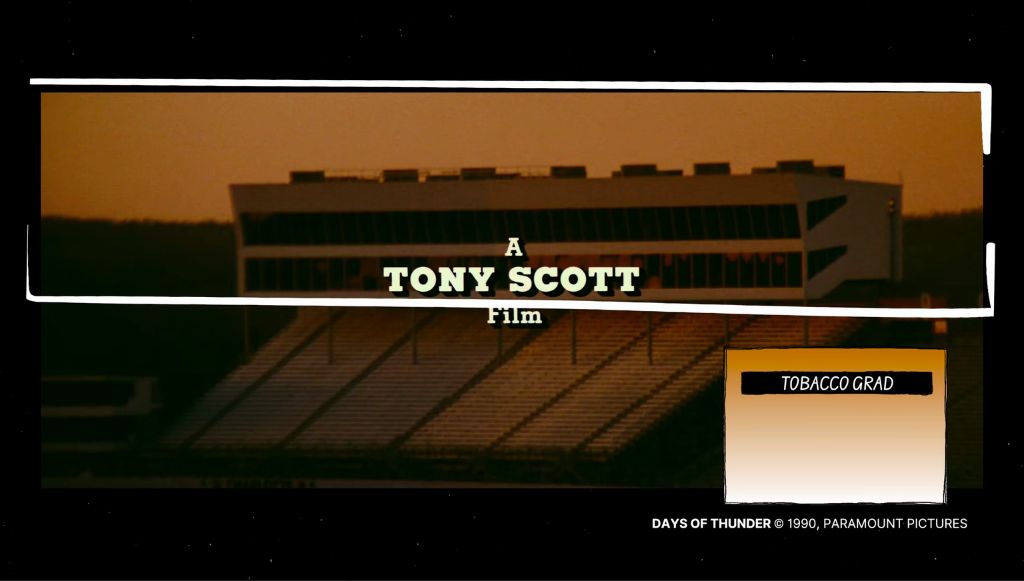
If there was one filmmaker who defined the use of graduated filters, it was Tony Scott. From Top Gun to Man on Fire, he was the “Grad Meister.” He didn’t just use them to balance exposure; he used them aggressively to paint the frame with color and contrast. He was experimental and fearless — he didn’t care if you saw the filter line during a pan or a tilt. For him, the artifact was part of the aesthetic.
While you may not want to be as extreme as Tony Scott in every film, understanding the tools he mastered is essential for controlling exposure on celluloid.
1. THE HARD GRAD: PRECISION CONTROL
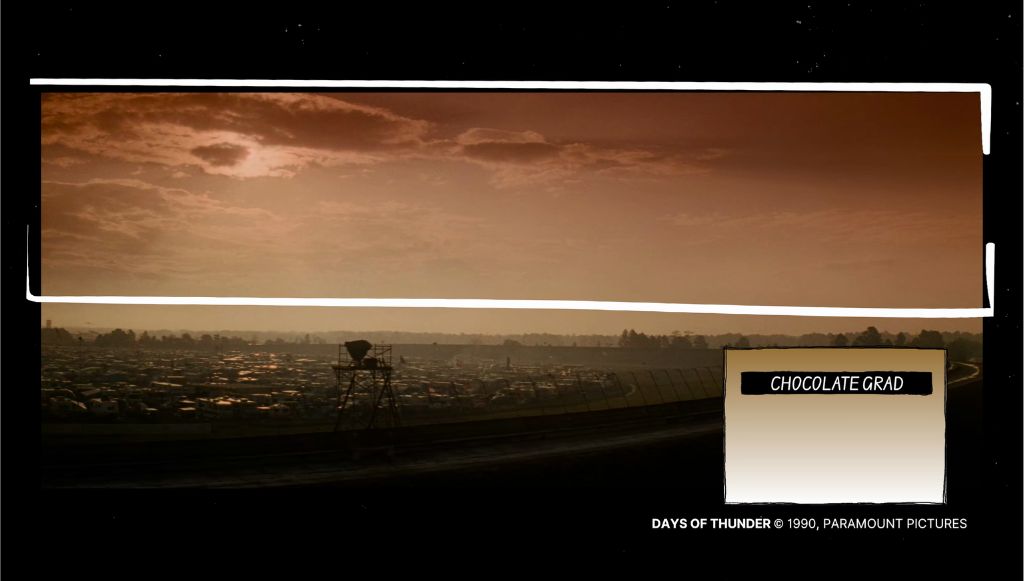
The first type of graduated filter is the Hard Grad. As the name suggests, this filter has a sharp, defined transition line between the clear glass and the tinted (ND or Color) section.
The Look:
It creates a hard edge in exposure. You can clearly see where the effect starts and stops.
The Tony Scott Signature:
Tony’s favorite was the “Tobacco” Hard Grad filter (seen famously in Top Gun). It turned boring white skies into a rich, menacing orange-brown, adding immediate drama and heat to the image.
|
WHEN TO USE IT |
|
| Defined Horizons | When you have a distinct, flat horizon line, such as in an ocean scene or a desert. |
| Cityscapes | When you have a row of buildings that are all roughly the same height. |
| Flat Hillsides | Where there isn’t much undulation to reveal the straight line of the filter. |
2. THE SOFT GRAD: SEAMLESS BLENDING
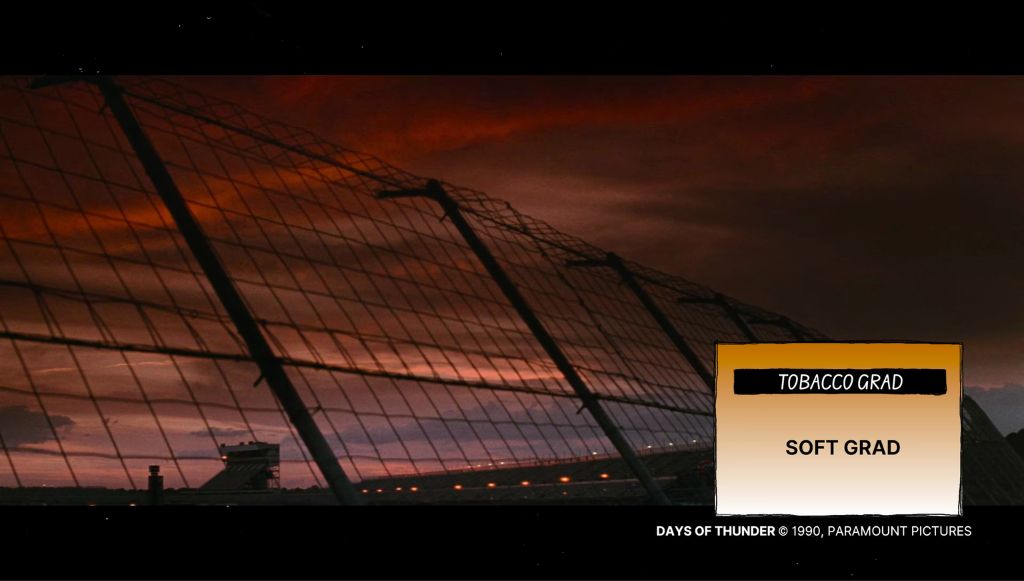
If the horizon is uneven or you need a more subtle touch, you turn to the Soft Grad.
The Look:
This filter features a very gradual, feathered transition from clear to dense. There is no harsh line. Instead, the tint slowly “dives” into the deeper tones of the image.
The Benefit:
It is much easier to hide. It allows you to darken a bright sky without darkening the top of a mountain, a tree, or an actor’s head that might cross into the upper part of the frame.
|
WHEN TO USE IT |
|
| Uneven Terrain | Mountains, forests, or city streets with varying building heights. |
| Dynamic Shots | When the camera is moving, and a hard line would be too obvious. |
3. THE “BEAUTIFUL DANCE”: THE GEARED MATTE BOX
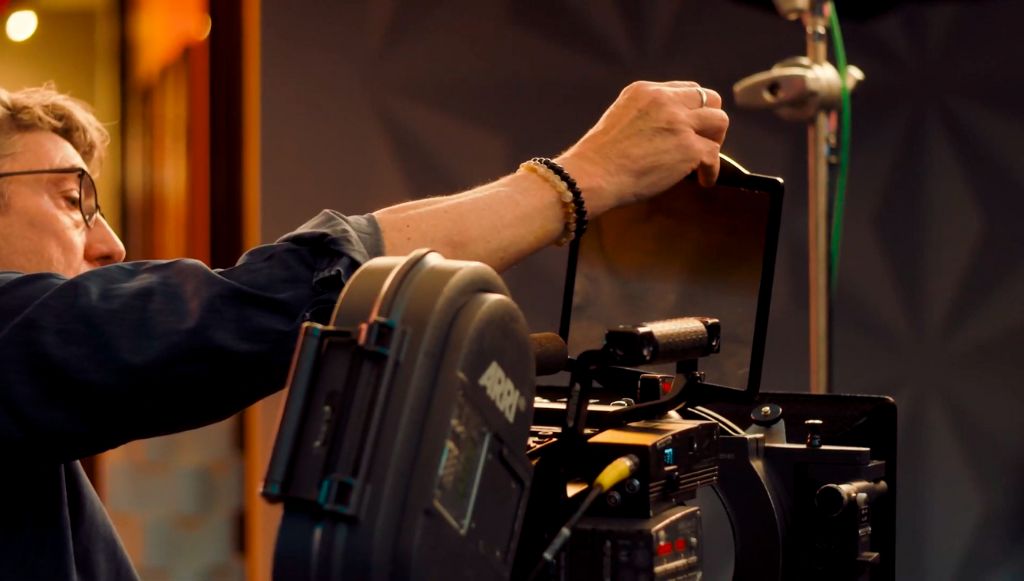
Using a grad filter on a “lock-off” (static) shot is easy: you slide the filter down until the line sits on the horizon, and you leave it.
But what happens if you need to tilt?
If you tilt the camera up without adjusting the filter, the dark part of the grad will remain static in the matte box, effectively wiping down over your subject’s face or the middle of the frame. It looks like a mistake.
To solve this, you need a Geared Matte Box and a skilled 1st AC.
|
THE TECHNIQUE |
|
| 6×6 Filters | We use larger 6×6 glass filters (instead of the standard 4×5.65) to give us a more vertical range of travel. |
| The Gear | The filter tray has a gear track on the side. |
| The Whip | The AC attaches a long focus whip to the filter tray gear. |
| The Dance | As the operator tilts the camera up, the AC must simultaneously crank the whip to raise the filter tray. |
It is a synchronized performance. The goal is to keep the transition line of the grad “pinned” to the horizon in the image, even as the camera moves physically. When done correctly, the audience never knows a filter was used. They just see a perfectly exposed sky and a perfectly exposed subject.
THE BOTTOM LINE:
Digital sensors have incredible latitude, but they still clip. Film has incredible highlight retention, but it still needs help to see into the shadows. Graduated filters bridge that gap. Whether you are using a Tobacco Hard Grad to channel Tony Scott or a Soft ND Grad to save a cloud formation, these pieces of glass allow you to paint the image before the light ever hits the emulsion.
Ready to Master the Analog Workflow?
Understanding filters is just one piece of the puzzle. To truly shoot film, you need to master the light meter, understand stock personalities, and know how to manipulate the chemical process itself.
In the Exposing Motion Picture Film Masterclass, Shane Hurlbut, ASC takes you through every step of this journey.
|
YOU CAN ACCESS THE FULL MASTERCLASS IN TWO WAYS |
|
| BECOME A PREMIUM ANNUAL MEMBER | Get unlimited access to this masterclass, plus our entire library of hundreds of courses, monthly live coaching, and an exclusive community of filmmakers. |
| A LA CARTE PURCHASE | Buy the standalone masterclass for a one-time fee of $129.99 and own it forever. |
Forget “fast.” Choose timeless. Master the process.
This masterclass was produced in collaboration with Kodak.