The Cinematography of Wake Up Dead Man
In modern cinematography, there is a pervasive tendency to attribute the “look” of a film to the tools used to capture it. We talk about the “color science” of a specific camera brand or the “magic” of a specific film stock as if they are ingredients that simply need to be bought and mixed.
Steve Yedlin, ASC (Knives Out, Star Wars: The Last Jedi, Looper) rejects this notion entirely.
A cinematographer who is equal parts artist and scientist, Yedlin has spent his career dismantling the superstitions of the industry. He doesn’t just light sets; he writes code. He doesn’t just pick LUTs; he builds mathematical pipelines to render images exactly how he envisions them.
In a recent conversation with Finding the Frame, Yedlin opened up about his 30-year collaboration with director Rian Johnson, his controversial stance on the “Film vs. Digital” debate, and the custom technology he built for the upcoming Knives Out mystery, Wake Up Dead Man.
This episode is proudly sponsored by Nanlux-Nanlite Lights, B&H and Hollyland.
Watch the Full Episode
THE MYTH OF THE “MAGIC” SENSOR:
Perhaps the most defining aspect of Yedlin’s philosophy is his rejection of brand allegiance. In his view, a camera is a data-gathering device, not a paintbrush. The art comes from how you process that data.
When asked the age-old question—”If you want the film look, why not just shoot film?” — Yedlin offers a perspective that shifts the paradigm from shopping for a look to authoring one.
“The word ‘just’ is doing a lot of heavy lifting there,” Yedlin explains. “There is a confusion between a developer and a user. It’s like saying to the person who designs the iPhone, ‘Why don’t you just use Android?'”
Yedlin argues that shooting on film relies on the R&D of thousands of engineers from the past century. When you shoot film, you are largely accepting a look that was engineered by Kodak or Fuji. When Yedlin shoots digital, he isn’t accepting the default look of the camera manufacturer; he is using his own proprietary algorithms to transform that data into a specific aesthetic.
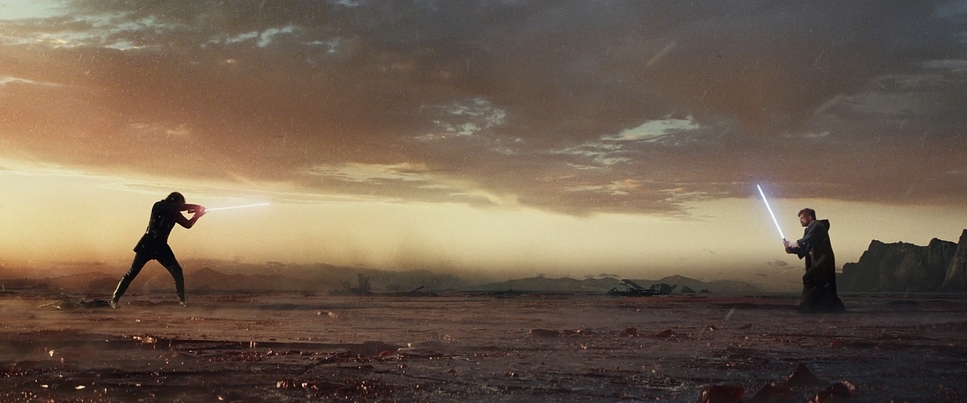
Star Wars: The Last Jedi | Disney
This approach was put to the ultimate test on Star Wars: The Last Jedi, where Yedlin shot roughly half the movie on 35mm film and half on digital. Through his rigorous color pipeline, he matched them so seamlessly that audiences couldn’t tell the difference.
“I’m advocating for people to be authors instead of shoppers,” Yedlin says.
By understanding the math behind the image, cinematographers can stop relying on the “superstition” of camera brands and start taking control of their own visual fingerprint.
A 30-YEAR SHORTHAND: COLLABORATING WITH RIAN JOHNSON
Yedlin’s career is inextricably linked to director Rian Johnson. The two met when Yedlin was a high school senior and Johnson was a freshman at USC. They bonded over student films and weekend shoots, developing a language that has spanned from the indie grit of Brick to the polished whodunnits of Benoit Blanc.
“Working with Rian always feels like the comfort of family,” Yedlin shares.
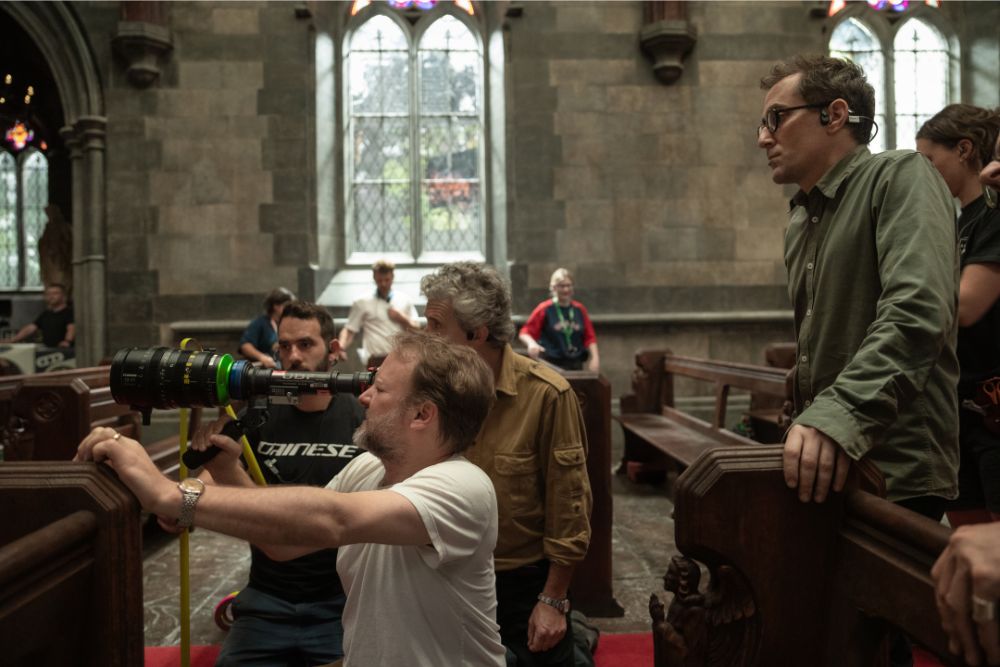
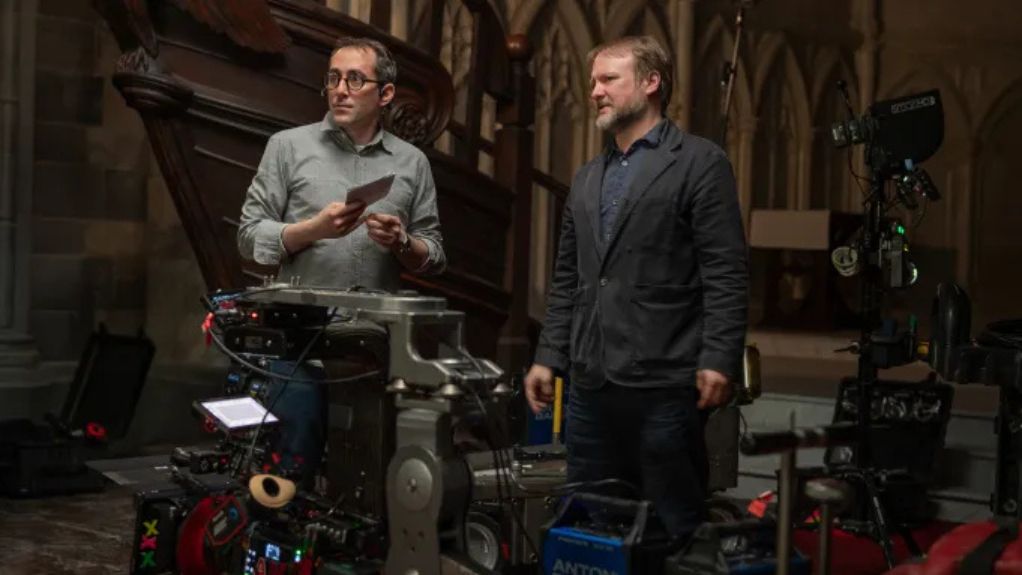
Steve Yedlin, ASC with Rian Johnson Behind the Scenes of “Wake Up Dead Man” | Courtesy of Steve Yedlin, ASC
Their dynamic is built on a clear division of labor and immense trust. Johnson is a master of shot design. He knows exactly what he wants the camera to do and how the blocking should work. However, he does not micromanage the lighting or the technical execution.
“He knows what he wants up to his part… and then he trusts me to make that a reality,” Yedlin says.
This allows Yedlin to use his prep time effectively. Instead of spending weeks trying to figure out what the movie is, he spends that time engineering exactly how to achieve the specific, ambitious visuals Johnson envisions.
WAKE UP DEAD MAN: A GOTHIC EVOLUTION
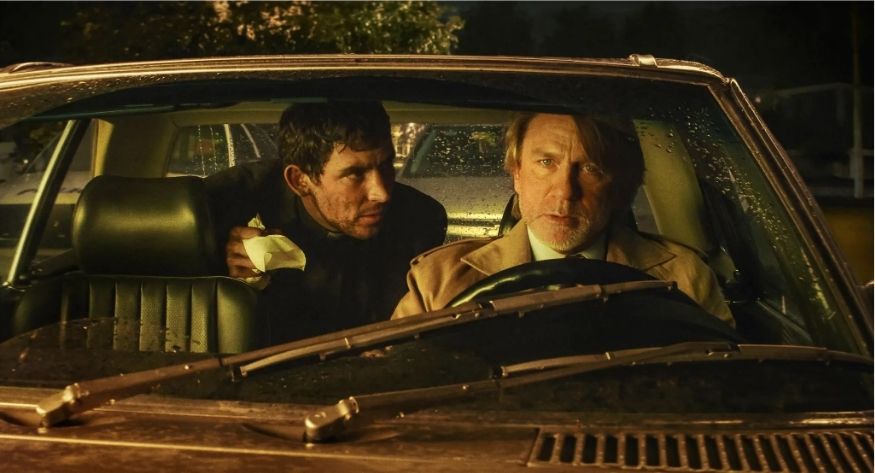
For the third installment of the Knives Out franchise, Wake Up Dead Man, the duo is taking a sharp visual turn. If Knives Out was an autumnal New England mystery and Glass Onion was a sun-soaked Mediterranean romp, the new film is pure Gothic atmosphere.
“It’s a totally different story,” Yedlin notes. “This is a much more Gothic story that even has horror-type elements.”
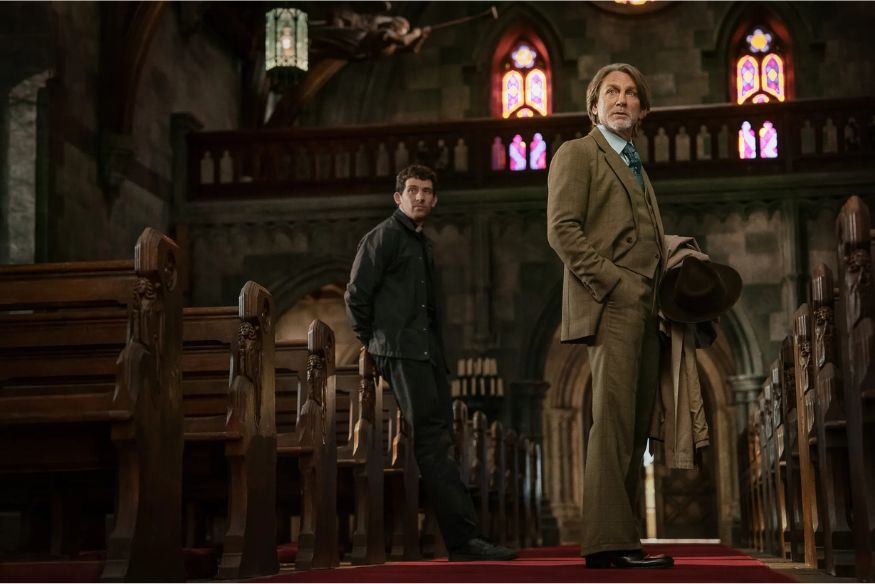
Wake Up Dead Man: A Knives Out Mystery | Netflix
One of the centerpieces of the film is a massive church set designed by Rick Heinrichs. To tackle the complex lighting requirements — which included shifting from sunny days to overcast gloom to dusk within the same location — Yedlin utilized a blend of old-school stagecraft and cutting-edge tech.
Instead of using a digital LED volume for the views outside the church windows, the production used massive painted backdrops.
“It was amazing to see the artistry of the scenic painter, Steve Mitchell,” Yedlin says.
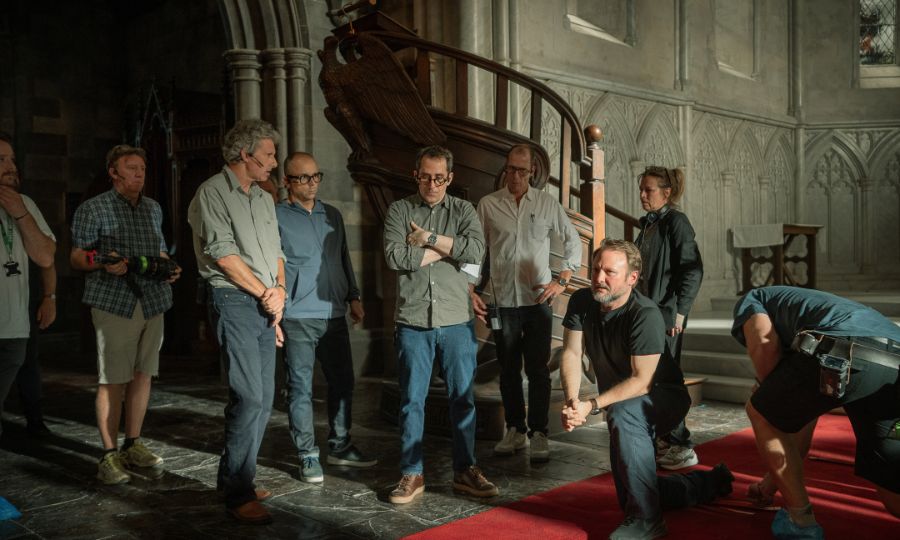
Rian Johnson and Steve Yedlin, ASC Behind the Scenes of “Wake Up Dead Man” | Courtesy of Steve Yedlin, ASC
By lighting the painted backdrop separately from the set, Yedlin could control the time of day physically. He could silhouette the trees against a deep blue for night, or blast the sky with light to create a blown-out day look. It was a tactile, theatrical approach that fit the film’s heightened reality.
INVENTING THE TOOLS:
Yedlin’s “author, not shopper” mentality extends to his on-set tools. For Wake Up Dead Man, he utilized custom software (currently a “Frankenstein prototype” he is developing) to gain unprecedented control over lighting.
Wake Up Dead Man: A Knives Out Mystery | Netflix
Making Dumb Lights Smart
On a massive set like the church, renting hundreds of high-end, color-controllable movie lights would have broken the budget. Instead, they used cheap LED ribbons to build softboxes.
However, cheap LEDs usually have terrible color controls. Yedlin’s system allowed him to treat these “dumb” strips like high-end fixtures, using data sets to force them to output precise chromaticities.
Controlling the Practicals
In modern movies, screens are everywhere. Phones and tablets usually blow out or look too blue on camera. Yedlin integrated the on-set phones into his lighting system.
“I can change the brightness and color remotely from my station,” he explains.
If a phone screen looked too magenta, he could dial it out instantly without stopping the take to dive into the phone’s settings menu.
The “Fire in the Eyes” Trick
Yedlin also revealed a brilliant hack for creating realistic reflections. In scenes featuring fire, rather than waving a flag in front of a light, he fed footage of fire (shot at 200fps for a slow, roiling look) into monitors placed off-camera.
“We use the luminance from the photography… and then we set the color on set,” he says. This allowed him to create the perfect, dancing reflection of fire in an actor’s glasses or eyes, with total control over the shape and intensity.
THE BOTTOM LINE:
In an age of streaming content and AI generation — which Yedlin dismisses as a “fuzzy search engine” and a “mash-up machine” — his advice to upcoming cinematographers is simple: Don’t try to fit in.
“If you’re trying to have a job that is creative and unique, there needs to be something specific about you that’s not an interchangeable cog,” Yedlin advises.
Steve Yedlin’s career is proof of that concept. By refusing to accept the default settings of the industry, he has carved out a visual niche that is entirely his own. He doesn’t just capture the image; he engineers it.
FINDING THE FRAME PODCAST AND FILMMAKERS ACADEMY:
This article is based on an interview with Steve Yedlin, ASC on the Finding the Frame Podcast, a valuable resource for filmmakers seeking insights from industry professionals. The podcast, hosted by Chris Haigh, provides a platform for in-depth conversations with cinematographers, directors, production designers, and other key figures in the film industry.
Filmmakers Academy offers a comprehensive online learning platform for aspiring and established filmmakers. Filmmakers Academy provides the knowledge and skills needed to succeed in the industry with courses covering all aspects of filmmaking, from cinematography and lighting to editing and color correction.
JOIN FILMMAKERS ACADEMY AND SAVE $50!
Ready to take your filmmaking skills to the next level? Join the Filmmakers Academy community and gain access to exclusive content, expert mentorship, and a network of passionate filmmakers. Use code FABL0G50 to save $50 on your annual membership!