Motion Picture Film For Beginners
In 1888, photography underwent a revolutionary transformation. American entrepreneur George Eastman introduced flexible celluloid film, replacing the heavy, fragile glass plates that had dominated the art form for decades. This innovation was a transparent, flexible base coated with a light-sensitive emulsion, making photography more accessible. In fact, it made the very concept of motion pictures possible.
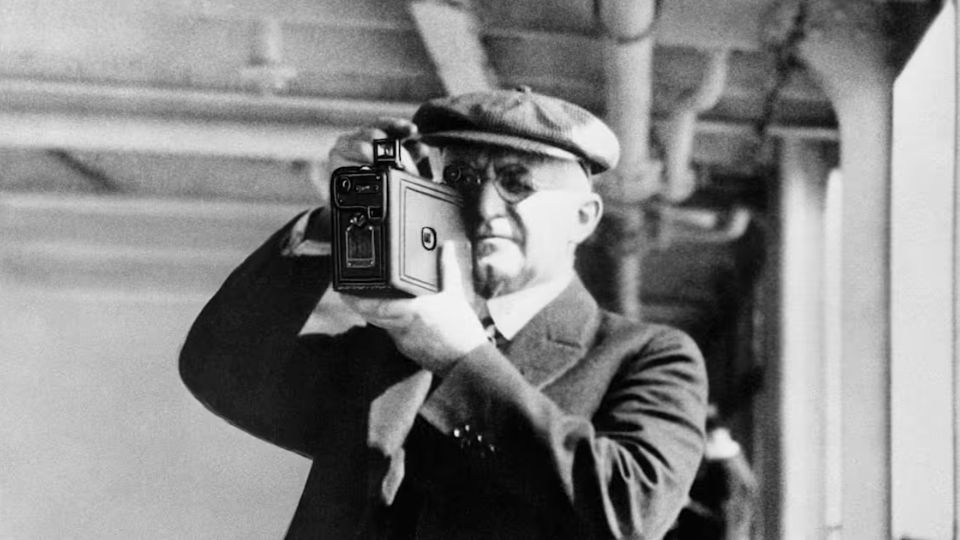
George Eastman | Bettmann Archive
Without this flexible medium that could be wound through a camera, advanced frame by frame, and projected in rapid succession, the moving image would have remained an impossible dream. This single breakthrough opened the door to an entirely new art form. And it was one that would reshape human storytelling forever.
Before diving into the technical craft, it’s essential to understand why this education is so vital and why Filmmakers Academy is dedicated to bringing it to a modern audience.

WATCH THE INTRO LESSON:
THE ENDURING LEGACY OF CELLULOID:
For over a century, motion picture film has been the backbone of cinema. It has shaped how movies are made and how we see and understand the world itself. The masters who defined the art form — filmmakers like Stanley Kubrick, Vilmos Zsigmond, Agnès Varda, and Martin Scorsese — all crafted their visions through the unique artistry of celluloid.
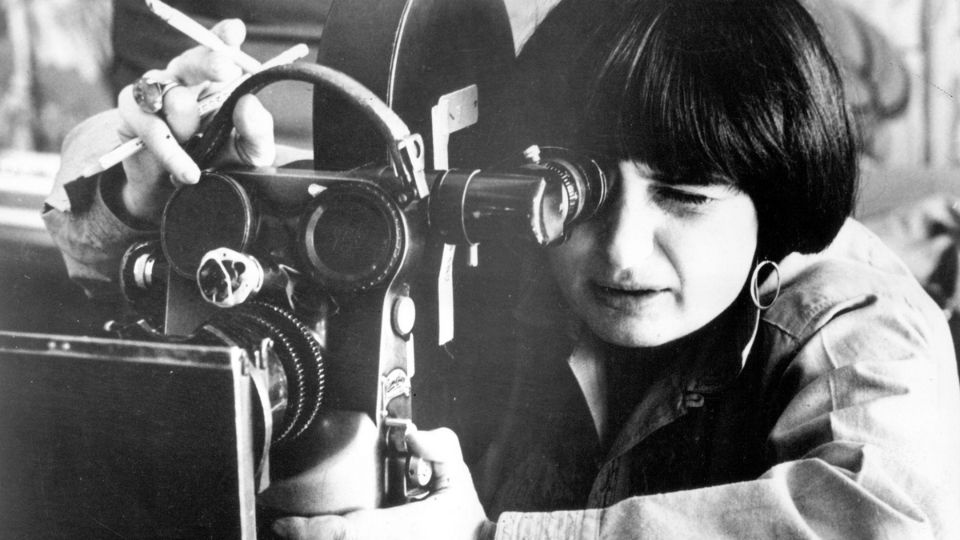
Agnès Varda | Courtesy Academy Museum of Motion Pictures
Today, that tradition burns brighter than ever. Contemporary auteurs like Paul Thomas Anderson, Lynne Ramsay, Christopher Nolan, and Quentin Tarantino don’t just prefer film; they’ve made it their cornerstone, often refusing to work with anything else.
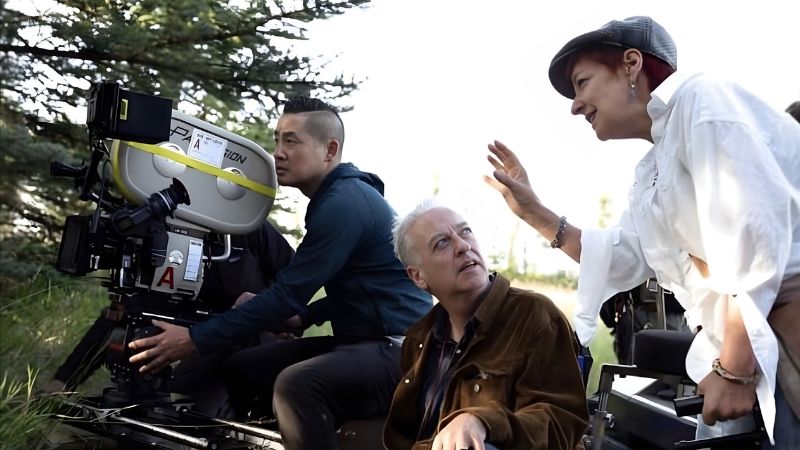
Lynne Ramsay | Photo Credit: Kimberley French
A new generation of filmmakers is discovering this medium daily, yet quality, practical education about it remains frustratingly out of reach for most.
HOW FILM TRANSFORMS THE CREATIVE PROCESS:
For Brendan Sweeney, CEO of Filmmakers Academy, working with motion picture film was a transformative experience. It’s a completely different creative process from digital. It forces a filmmaker to be more intentional and more collaborative on set. It also connects the creator to something tangible.
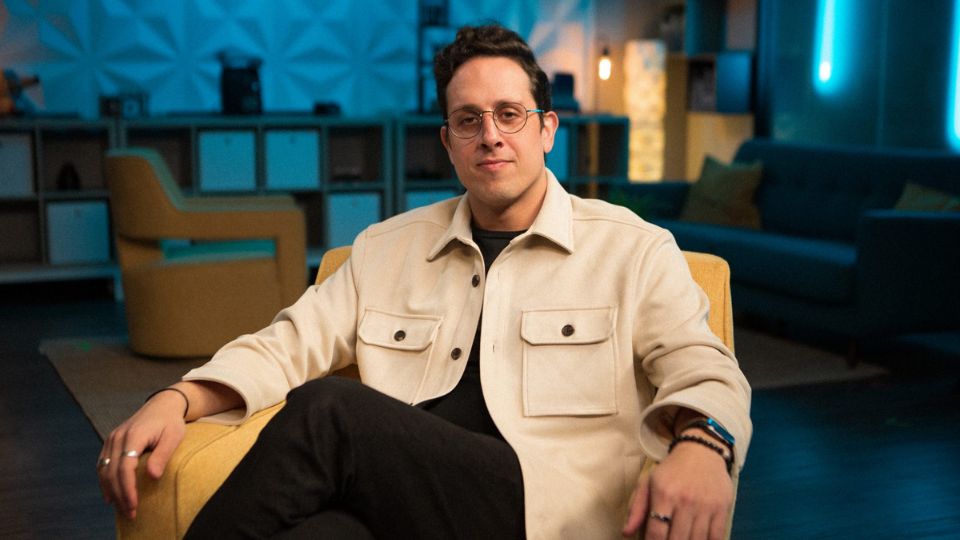
Brendan Sweeney | Photo Credit: Steven Napolitano
All in all, celluloid creates analog, adrenaline-fueled moments when the camera rolls. The filmmaker knows that everything must be perfect because there’s no “delete” button. This process demands a level of discipline, preparation, and trust in your team that digital capture, for all its conveniences, simply does not.
THIS IS THE DNA OF FILMMAKING:
In this course, Brendan Sweeney guides filmmakers through cinema’s most enduring tradition, showing them how to understand film and make it accessible for their own work.
Here’s the most important takeaway: whether a filmmaker is shooting film today, next year, or remains devoted to digital, understanding this medium will make them a better filmmaker.
When a filmmaker understands how film sees light, how it renders color, and how an emulsion captures a “real” image, they gain a foundational knowledge of light, exposure, and texture.
This knowledge translates directly to their digital work. It allows them to make better, more intentional choices on any camera, in any format, for the rest of their career.
Understanding Film’s DNA: The Chemical Magic of Celluloid
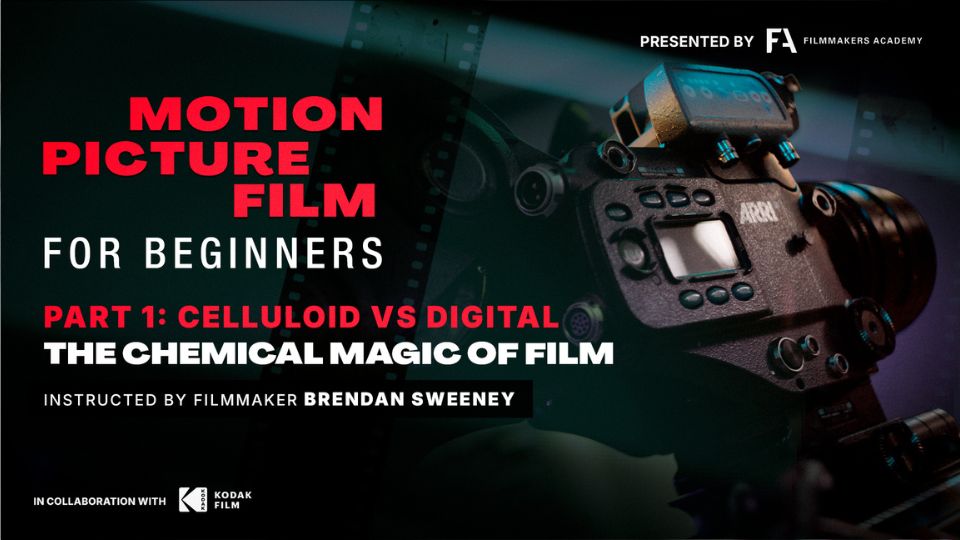
In an age of digital pixels and AI-driven imagery, motion picture film remains a marvel of chemical engineering. This lesson peels back the layers of celluloid to reveal why it still serves as the gold standard for cinematic storytelling.
You will learn that film is a “chemical canvas” comprised of a stable plastic base and a light-sensitive emulsion. Suspended within this emulsion are millions of silver halide crystals — the true architects of the film look.
KEY TAKEAWAYS |
|
| The Personality of Grain | Unlike the rigid, uniform grid of digital pixels, film grain is organic and random. The size of the silver halide crystals determines the film’s sensitivity (ISO) and texture, creating a “breathing” image that feels alive. |
| Logarithmic vs. Linear | Digital sensors respond to light linearly, often leading to harsh clipping. Film responds logarithmically — much like the human eye — allowing it to naturally compress highlights and roll off gently into shadows for superior dynamic range. |
| The Latent Image | Photons physically alter the chemical structure of the crystals, creating an invisible “chemical footprint” that is only revealed during development. |
| The Camera as a Delivery System | In the analog world, a 40-year-old camera can produce the same image quality as a brand-new one. The magic lies in the lens and the stock, not the sensor technology of the body. |
Click the button below to get the first lesson for FREE!

Whether you are an analog purist or a digital shooter looking to understand the roots of your craft, this lesson provides the essential theory behind the “film look” that digital cameras have spent decades trying to emulate.
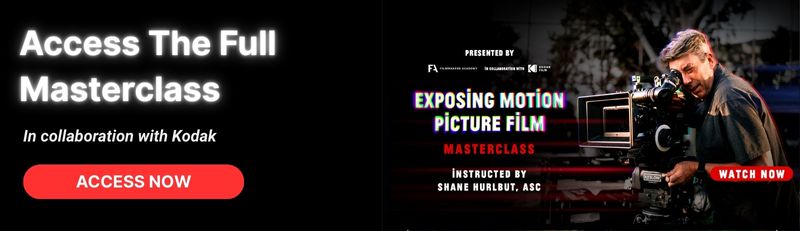
Exposing Motion Picture Film Masterclass
In an age of digital “fixes” and false color, the true, hands-on craft of exposing celluloid has become a rare and vital skill. This is the definitive masterclass on film exposure, the kind of “brick-and-mortar” education you simply cannot find anywhere else online.
Presented by cinematographer Shane Hurlbut, ASC and in collaboration with Kodak.
This course is a deep dive into the art and science of shooting on 35mm, 16mm, and Super 8. Drawing from his experience on over 23 feature films, Shane demystifies the entire analog process. He teaches you how to be both a scientist and an artist.
You will learn to stop relying on a monitor and start trusting your most essential tools: the light meter and the spot meter. Shane provides a complete playbook for mastering the analog workflow…
| Film Stocks | Understand the unique personalities of Kodak’s color negative and reversal stocks. From 50D to 500T. |
| Essential Filters | Master the critical concept of “filter factor.” Learn to use essential glass like the 85, 80A, 81EF, and Color Enhancing (Didymium) filters. This creates your look in-camera. |
| Controlling Contrast | Learn to use graduated ND filters (the “Tony Scott” way) and attenuators to tame bright skies and balance any scene. |
| Real-World Scenarios | Go on location with Shane to master high-contrast backlit scenes, side lighting, and the precise techniques for extending the “magic hour” at twilight. |
This is your exclusive guide to mastering the craft of film exposure from one of the industry’s most experienced DPs.