How to Extend “Magic Hour” on Motion Picture Film
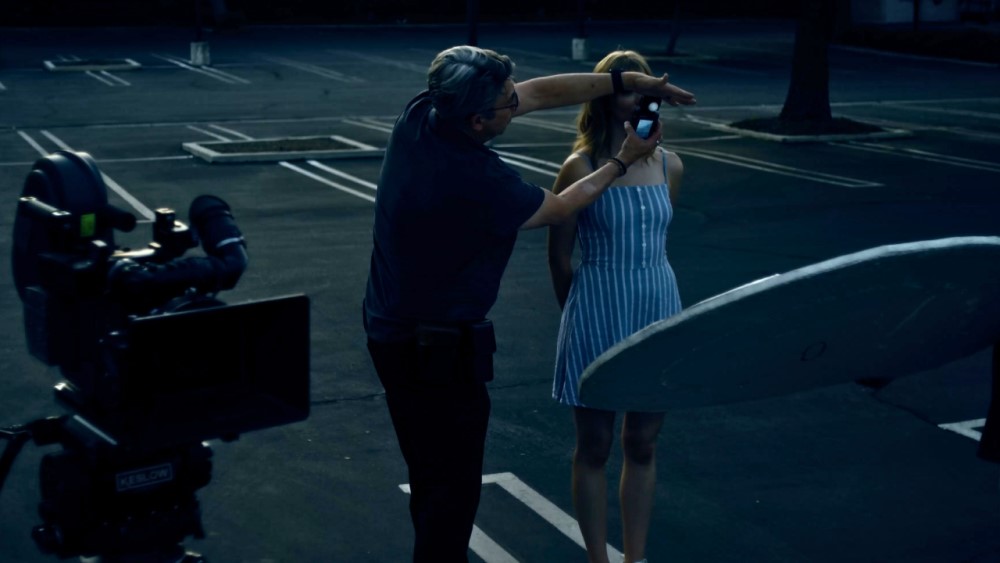
Every filmmaker loves “Magic Hour.” That fleeting window just after sunset provides the most flattering, ethereal light known to cinema. But when you are shooting on film, this time of day is terrifying. As the sun dips below the horizon, your light levels plummet by the second. On a digital camera, you might just crank the ISO. On film, you have to be smarter.
In this excerpt from the Exposing Motion Picture Film Masterclass, we extend a 15-minute window of twilight into a 40-minute shoot.
(Watch the first 6 minutes of Exposing Motion Picture Film Masterclass for free.)

What You Will Learn in This Article |
|---|
|
VIDEO LESSON EXCERPT: HOW TO EXTEND MAGIC HOUR
THE CHALLENGE: THE BLUE SHIFT
When the sun sets, the color temperature of the world shifts dramatically. The warm sun disappears, and you are left with the ambient light of the sky, which skyrockets to a very cold 8800 Kelvin or higher.
If you are shooting on standard daylight film, your footage will look aggressively, unnaturally blue. If you are shooting on tungsten film (which expects orange light), it will look even bluer.
-
THE FILM STOCK STRATEGY (500T)
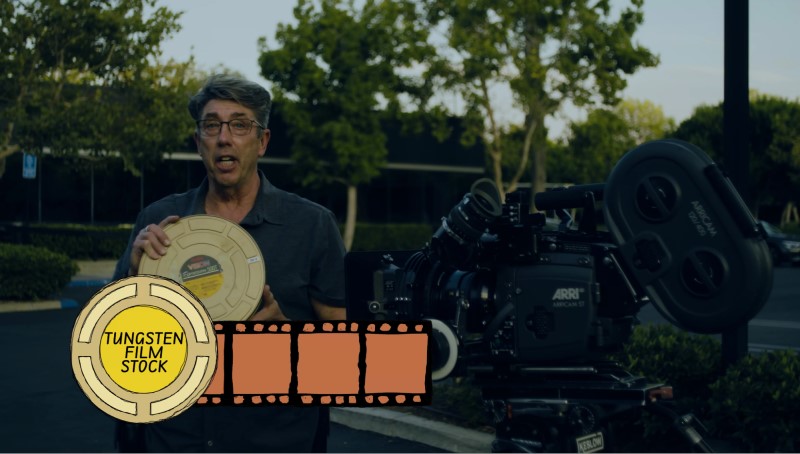
To combat the dropping light levels, we need speed. I always choose the highest speed stock available: Kodak Vision3 500T (5219).
Why 500T?
“T” stands for Tungsten (3200K). This stock is designed for indoor artificial light. This seems counterintuitive for an outdoor shoot, but 500T is the most sensitive stock Kodak makes. We need that sensitivity to see into the dark.
-
THE FILTER STACK (THE “WARM-UP”)
Because we are shooting Tungsten film outdoors, we need to correct the color temperature.
| 1. | 85 Filter | This is our baseline correction. It converts the outdoor light to match the tungsten film. |
| 2. | 81EF Filter | This is our “secret sauce” for twilight. Since the ambient sky light is so cold (8800K), a standard 85 filter isn’t enough; the image would still feel cold. The 81EF adds an extra layer of warmth (about 0.7 stops worth). |
The Exposure Formula
With these filters in place, we are losing light. To compensate, I rate my light meter to 160 ISO (overexposing the 500T stock by roughly 2/3 of a stop) at 24 fps. This ensures a thick negative that captures rich color even as the light fades.
-
EXTENDING TIME WITH GEOGRAPHY
Most filmmakers wait for the sun to hit the horizon to start their “magic hour” clock. That gives you 15 minutes, tops.
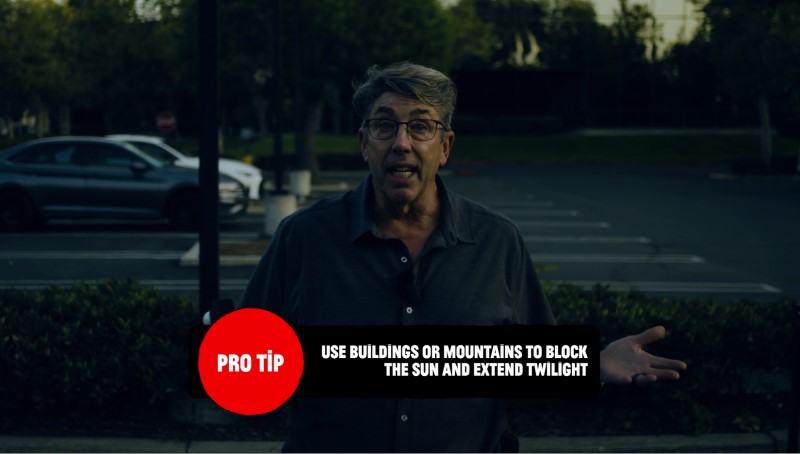
| PRO TIP: Block the sun early. Find a location with a large building, a mountain range, or a dense tree line to the West. Position your talent in the shadow of this object while the sun is still up. |
By using a building to block the sun, we create “artificial dusk” 20 minutes before actual sunset. This simple location choice doubles our shooting window, giving us 40 minutes of usable soft light instead of 20.
-
THE SILVER BULLET (REFLECTORS)
As the light levels drop, a white bounce board becomes useless. It simply doesn’t have the punch to reflect the weak ambient light.
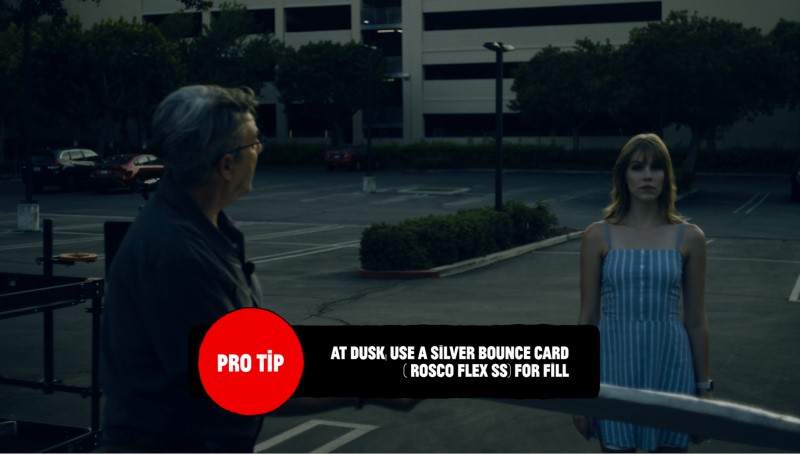
Switch to Silver.
We bring in a Silver Reflector (or shiny board) to catch the remaining blue sky ambiance and redirect it into the talent’s eyes.
-
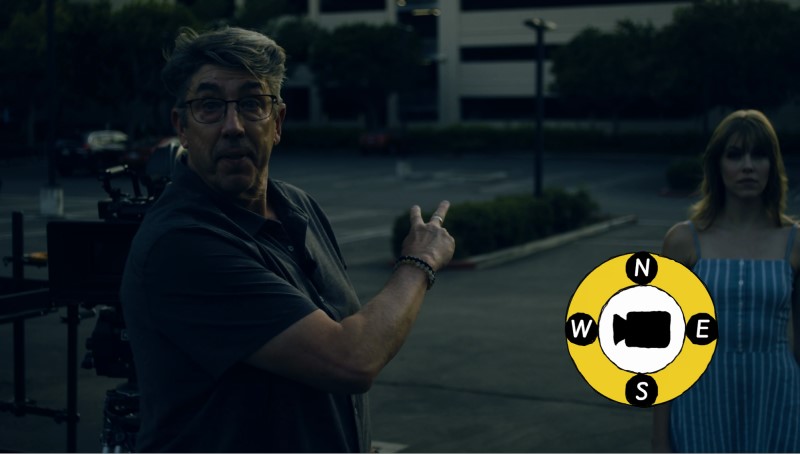
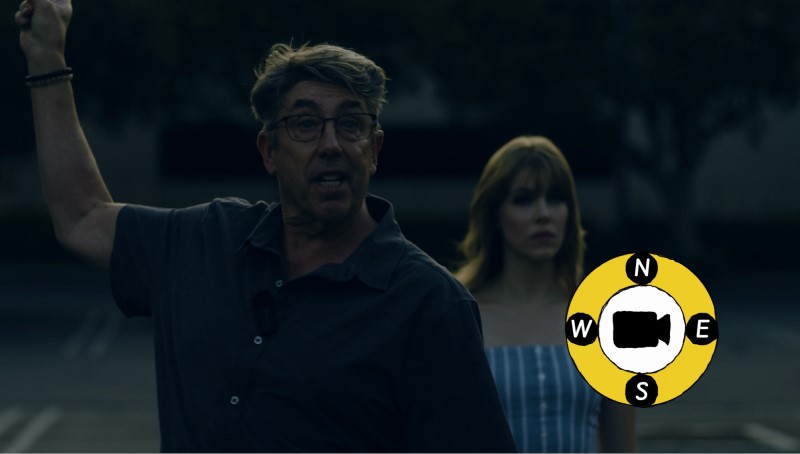
THE “WEST-FIRST” SHOOTING ORDER
This is the most critical logistical rule of twilight photography. You must shoot your coverage in a specific order to survive the fading light.
 |
 |
Shoot WEST First (Camera facing East).
Why? Because the “source” of your light is the setting sun in the West (behind the camera). The Western sky is the brightest thing in the universe right now.
| Shot 1 (Facing East) | The hot Western sky is behind the camera, acting as a massive softbox illuminating the talent’s face. You get a beautiful reading (e.g., f/2.5). |
| Shot 2 (Facing West) | Once the light drops further, then you turn around and shoot toward the sunset. Even though the subject is now backlit and darker (e.g., f/1.5), you have the bright, colorful twilight sky in the background to create a silhouette or moody separation. |
If you shoot the silhouette first, by the time you turn around to shoot the face, the “softbox” in the Western sky will be gone, and your actor will be in the dark.
THE BOTTOM LINE:
Shooting motion picture film at twilight is all about logistics. By choosing the fast 500T stock, stacking warming filters, blocking the sun early, and shooting West-first, you can squeeze every photon out of the day.
UNLOCK THE FULL MASTERCLASS
Understanding filters is just one piece of the puzzle. To truly shoot motion picture film, you need to master the light meter, understand stock personalities, and know how to manipulate the chemical process itself.
In the Exposing Motion Picture Film Masterclass, Shane Hurlbut, ASC takes you through every step of this journey.
JOIN FILMMAKERS ACADEMY AND SAVE $50!
Ready to take your filmmaking skills to the next level? Join the Filmmakers Academy community and gain access to exclusive content, expert mentorship, and a network of passionate filmmakers. Use code FABLOG50 to save $50 on your annual membership!