10 Iconic Film Frames Inspired by Master Paintings
Before the whir of a camera or the click of a shutter, there were brushstrokes. For centuries, artists used paint to frame life, capturing its drama, stillness, shadow, and light on canvas. Paintings were our original “images”—carefully composed scenes that froze time, gave feeling form, and, in doing so, taught us how to see.
It’s no wonder, then, that some of the most powerful and memorable frames in cinema weren’t born solely from a viewfinder, but from this same rich artistic tradition. These iconic movie moments didn’t happen by accident. They echo the masters who came before: van Gogh, Magritte, Vermeer, Goya.
This article is a love letter to that enduring lineage—a conversation between the canvases of old and the silver screen of today. Join us as we explore ten breathtaking examples where cinema paid homage to art, proving that true vision transcends time and medium.
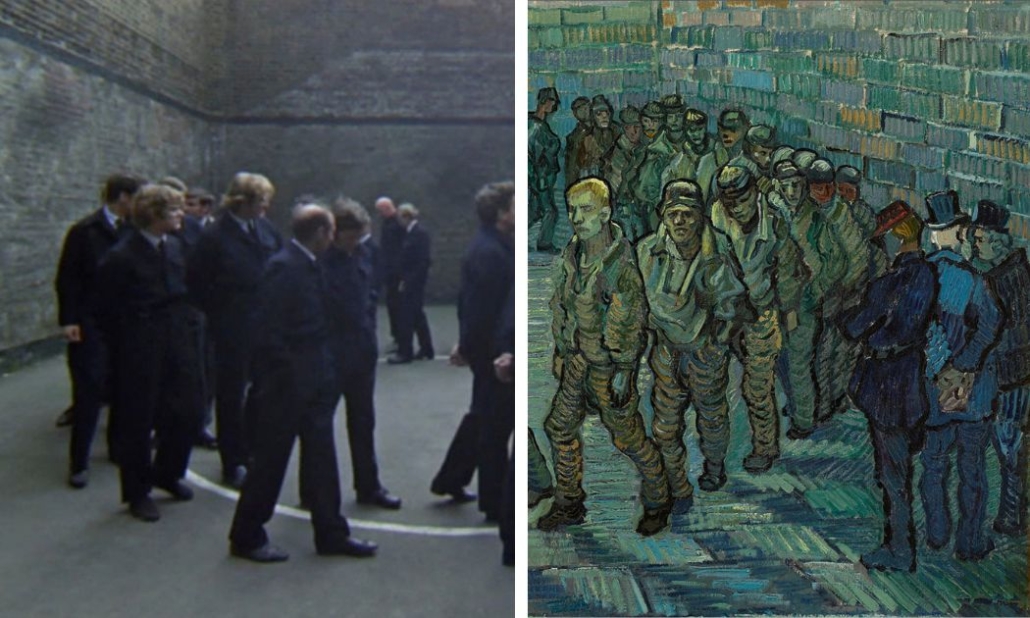
1. A Clockwork Orange + Vincent Van Gogh’s Prisoners’ Round

Stanley Kubrick, a master of visual storytelling, often drew from art history. The chilling, repetitive nature of Alex’s “treatment” in A Clockwork Orange finds a striking parallel in Van Gogh’s Prisoners’ Round.
Both depict figures trapped in a cyclical, inescapable torment, emphasizing themes of dehumanization and the futility of escape. The confined, almost claustrophobic compositions create an immediate sense of dread.
2. The Exorcist + René Magritte’s L’Empire des Lumières
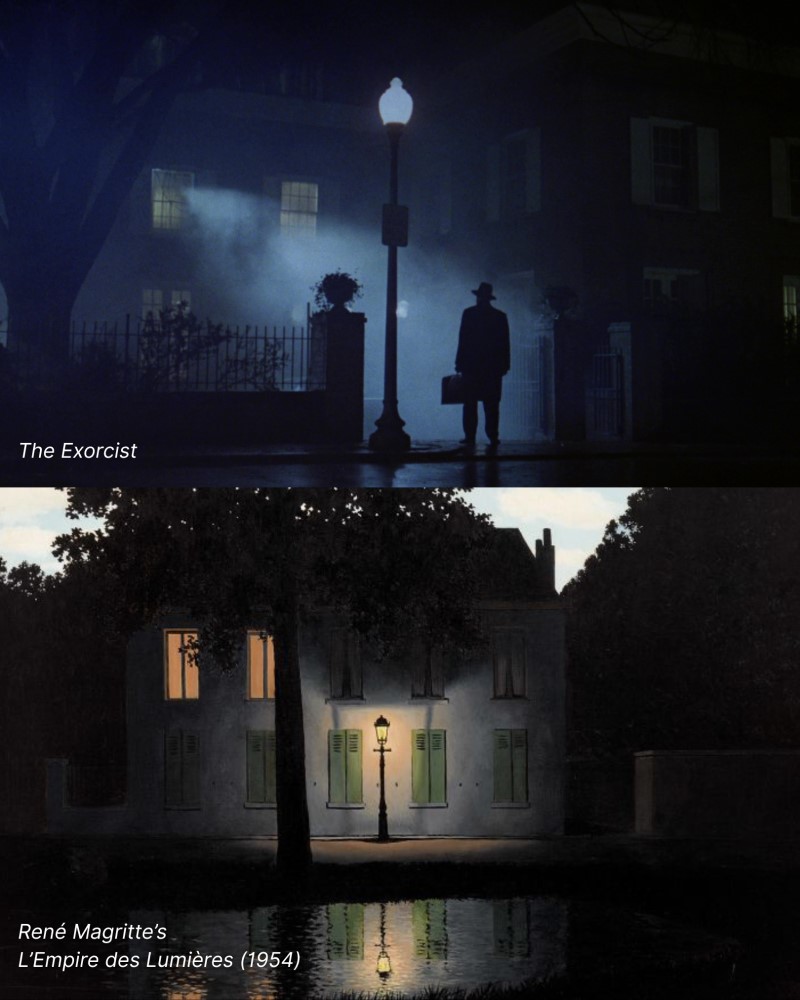
The iconic poster and arrival scene from William Friedkin’s The Exorcist perfectly capture the surrealist unease of Magritte’s Empire of Light. Both images present a profound paradox: a house bathed in the artificial glow of night, yet set against a bright, daylit sky.
This impossible combination of night and day creates a deeply unsettling atmosphere, suggesting a world where the natural order is broken—a perfect visual metaphor for the supernatural evil that has invaded a suburban home.
3. The Lighthouse + Sascha Schneider’s Hypnosis
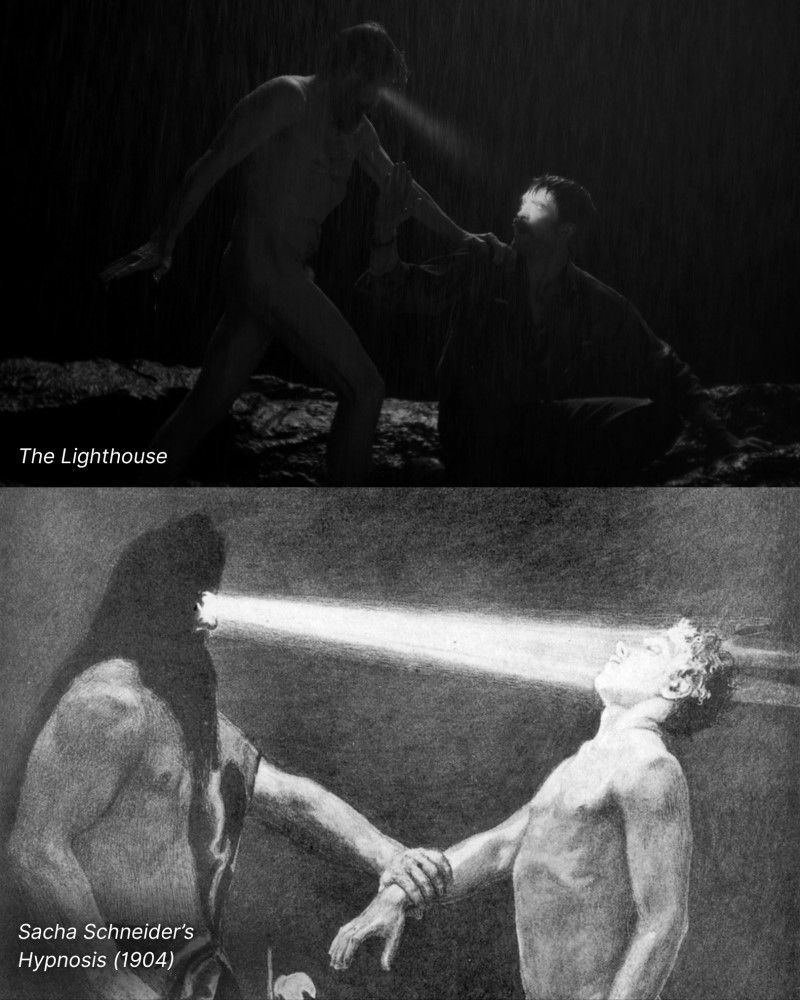
Robert Eggers’ psychological thriller The Lighthouse is steeped in mythological and artistic references. The mesmerizing, almost terrifying power of the lighthouse’s beam over Robert Pattinson’s character directly mirrors the composition and theme of Schneider’s Symbolist painting, Hypnosis.
Both feature a powerful, almost divine force emanating from above, captivating a mortal figure below. The stark, high-contrast lighting and the themes of madness, obsession, and subjugation to a higher, unknowable power are powerfully linked.
4. Girl with a Pearl Earring + Vermeer’s Girl with a Pearl Earring
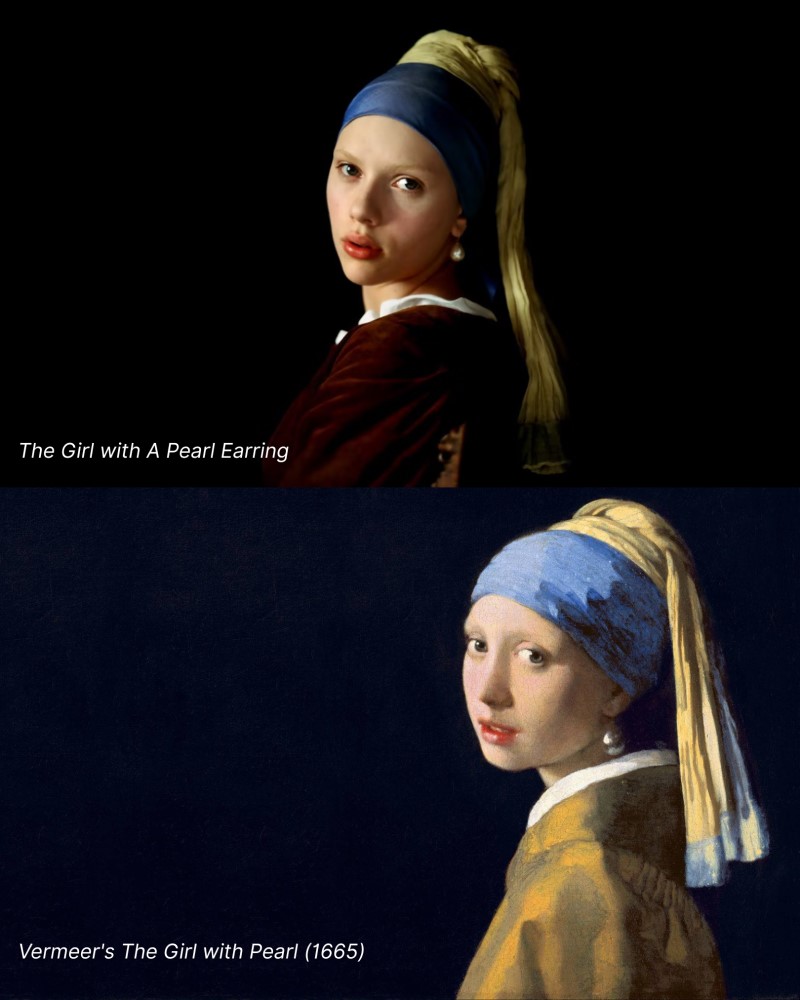
Girl with a Pearl Earring is perhaps one of the most direct and beautifully realized homages in cinema. Director Peter Webber and cinematographer Eduardo Serra didn’t just reference Vermeer’s masterpiece; they built their entire visual language around his signature use of light.
The film meticulously recreates the composition, the soft, directional light from a single source, the rich textures, and the enigmatic expression of the original painting, bringing the world of the Dutch Golden Age painter to vivid, breathing life.
5. Nosferatu + Caspar David Friedrich’s Wanderer Above the Sea of Fog
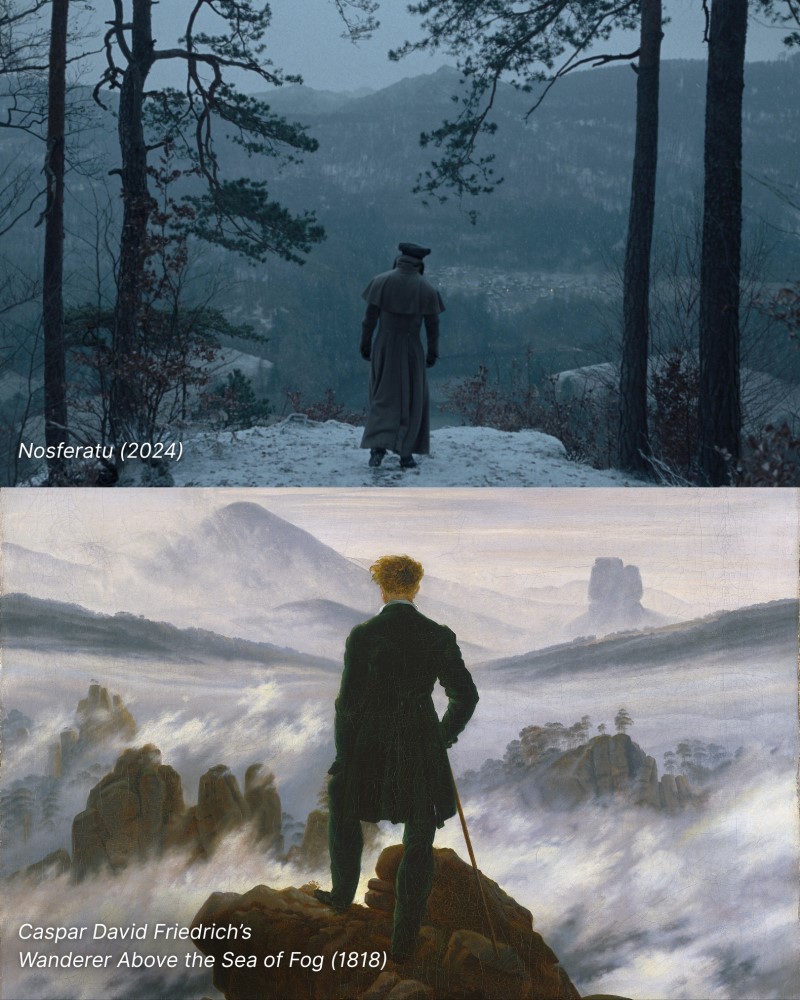
In Nosferatu, Robert Eggers places his vampire count in a pose that directly evokes Caspar David Friedrich’s quintessential Romantic painting. Friedrich’s work often explored themes of the sublime, the terrifying beauty of nature, and man’s smallness in the face of it.
By placing the monstrous Nosferatu in this iconic stance, Eggers aligns his creature with these same elemental, almost divine forces of nature, suggesting a being that is both ancient and powerful, a lord over a desolate, fog-shrouded domain.
6. The Dark Knight + Francis Bacon’s Head VI
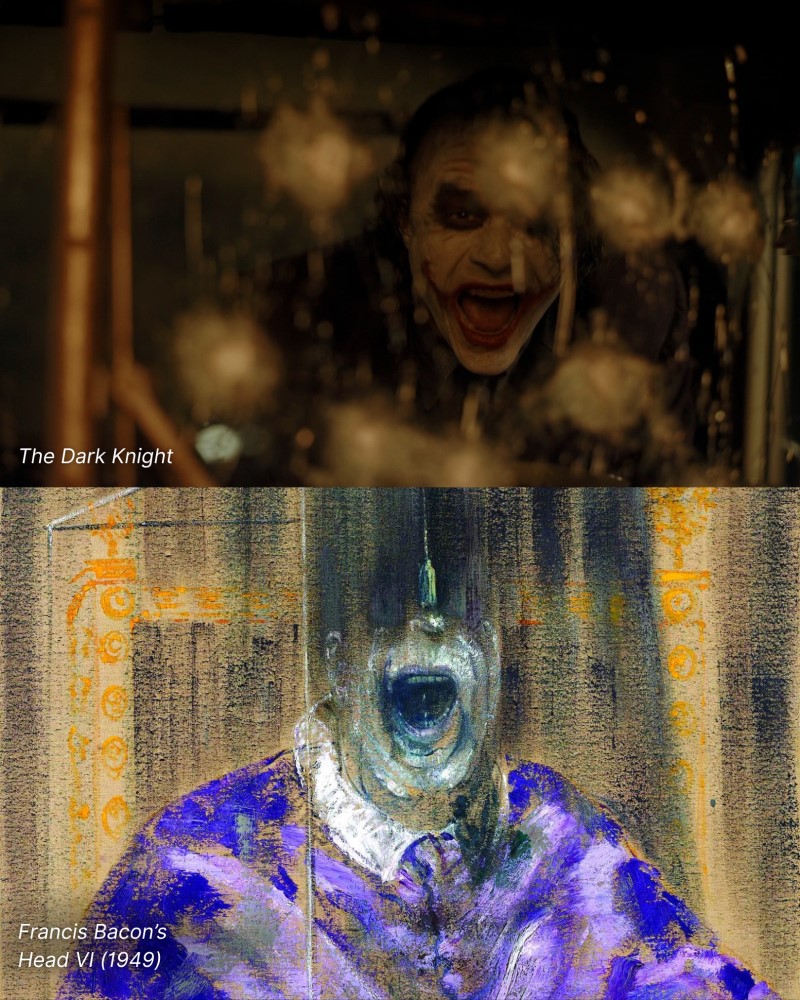
Christopher Nolan cited Francis Bacon’s unsettling portraits as a key visual influence for Heath Ledger’s Joker in The Dark Knight. Bacon’s Head VI, a distorted and haunting take on a Velázquez portrait, captures a figure trapped in a glass box, mouth open in a silent scream.
This feeling of visceral terror, psychological decay, and constrained chaos is perfectly translated into the Joker’s smeared makeup, his unsettling mannerisms, and the moments where his anarchic rage is barely contained beneath a veneer of control.
7. Inherent Vice + Leonardo da Vinci’s The Last Supper
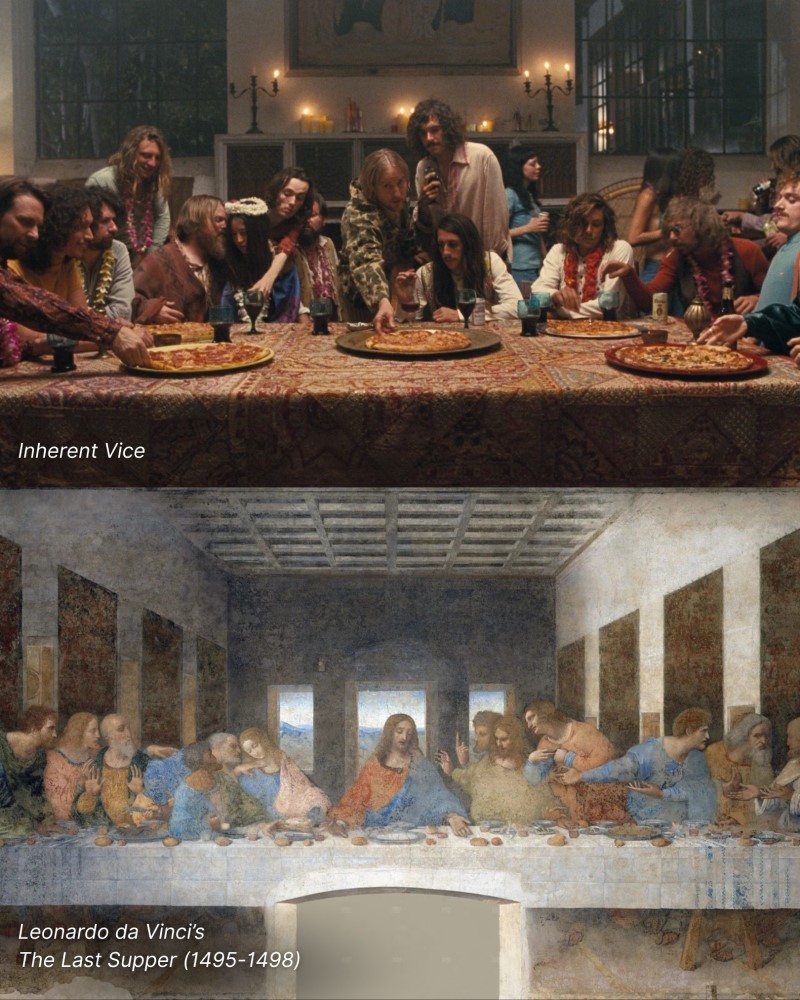
Paul Thomas Anderson masterfully stages a scene in Inherent Vice that playfully yet pointedly recreates Leonardo’s iconic composition. By arranging his eclectic cast of characters at a long table in a similar formation to Jesus and the Apostles, Anderson creates a moment of surreal, darkly comic reverence.
The scene, like the painting, is about a central figure and his followers, but in Anderson’s hazy, paranoid version of 1970s Los Angeles, the themes are of betrayal, fractured loyalty, and the search for meaning in a chaotic world.
8. Carrie + Gustave Moreau’s Study of Lady Macbeth
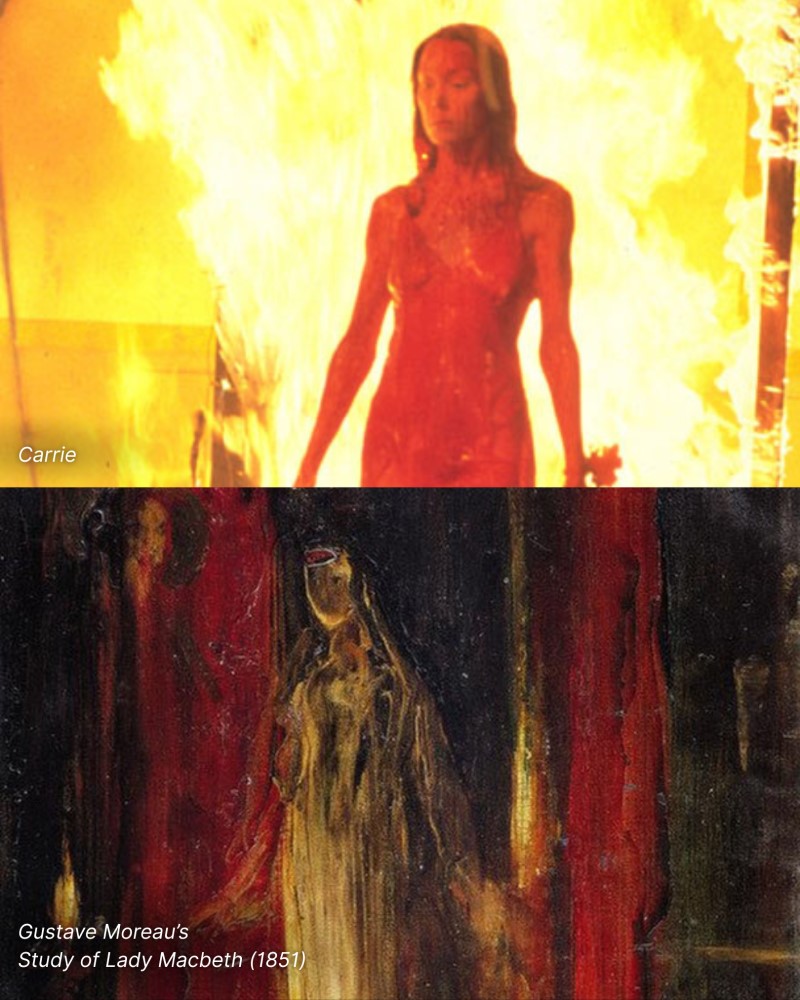
Brian De Palma captures the haunting aftermath of the prom massacre in a shot that mirrors the composition and mood of Moreau’s Study of Lady Macbeth. Sissy Spacek as Carrie, drenched in blood and staring blankly, holds the same haunting, post-traumatic pose as Moreau’s depiction of the guilt-ridden queen.
The images convey a sense of profound psychological horror, capturing a woman who has become both a victim and a perpetrator of immense violence, lost in the horror of her own actions.
9. Pan’s Labyrinth + Francisco Goya’s Saturn Devouring His Son
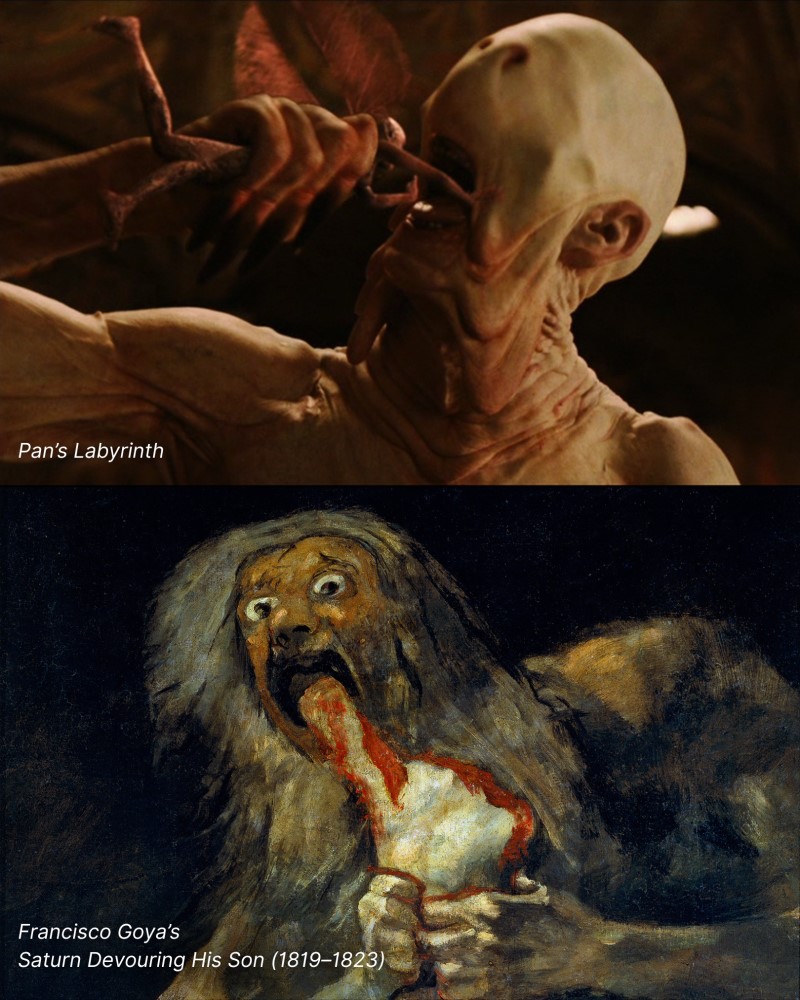
Guillermo del Toro is a master of weaving art history into his dark fantasies, and the terrifying Pale Man from Pan’s Labyrinth is a direct homage to Goya’s masterpiece.
The creature, with its sightless eyes-in-hands and grotesque appetite for children, embodies the same primal, cannibalistic horror as Goya’s depiction of the Titan Saturn. Both are unforgettable images of monstrous power and the consumption of innocence, tapping into deep-seated mythological fears.
10. 28 Years Later + Vasily Vereshchagin’s The Apotheosis of War
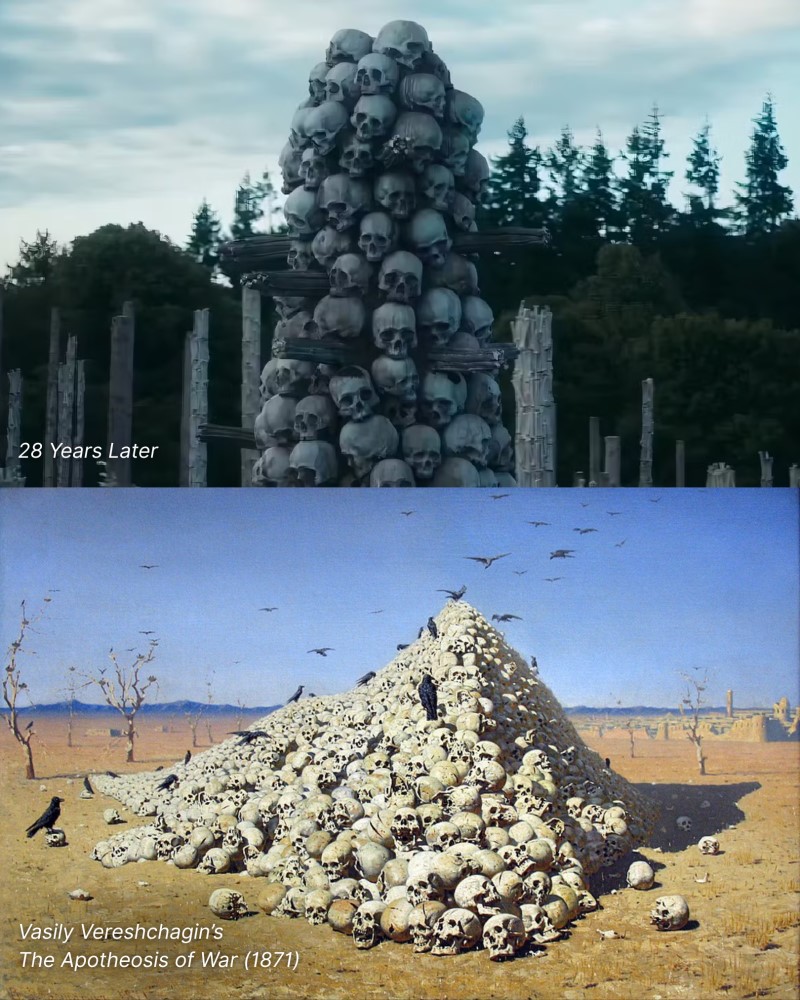
In 28 Years Later, a lone figure stands before a mountain of skulls, a direct and chilling recreation of Vereshchagin’s anti-war painting. Vereshchagin dedicated his work “to all great conquerors, past, present, and to come,” and the painting is a stark, brutal monument to the human cost of conflict.
By placing this image within the context of their post-apocalyptic zombie world, the filmmakers suggest that the devastation is on the scale of a great war, a grim demonstration to humanity’s destructive potential.
THE BOTTOM LINE:
From Stanley Kubrick’s circular torment echoing van Gogh to Guillermo del Toro’s Goya-inspired monster, these ten examples reveal a profound and ongoing dialogue between the canvas and the camera. These homages are far more than clever visual nods and serve as a way for filmmakers to tap into a shared cultural consciousness, infusing their scenes with the pre-existing power, emotion, and symbolism of masterworks.
By looking to the past, directors and cinematographers enrich the present, creating images that feel both original and timeless. This enduring lineage inspires us, as filmmakers and film lovers, to always look deeper. The next time you are struck by a powerful cinematic frame, consider the centuries of art that may have informed its creation.
JOIN FILMMAKERS ACADEMY AND SAVE $50!
Ready to take your filmmaking skills to the next level? Join the Filmmakers Academy community and gain access to exclusive content, expert mentorship, and a network of passionate filmmakers. Use code FABLOG50 to save $50 on your annual membership!
This video is proudly lit exclusively by Nanlux-Nanlite Lights and sponsored by B&H and Hollyland.