A&B Rolls
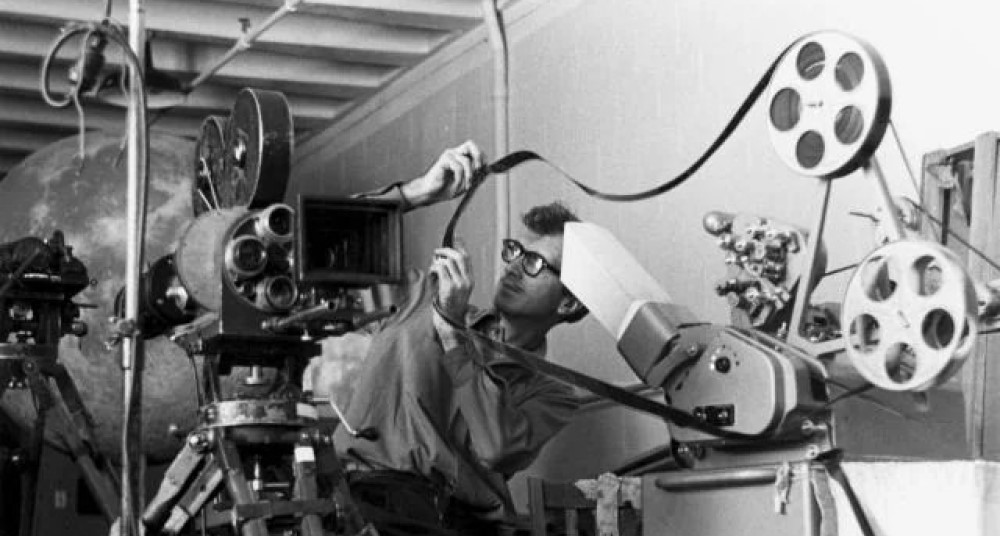
A&B roll editing is a traditional film editing technique. It was a crucial part of the photochemical post-production process for 16mm film. Filmmakers used this method to create seamless transitions like fades and dissolves. These effects were impossible to achieve with a single roll of film negative. The process involves meticulously preparing two or more rolls of the original camera negative, labeled “A,” “B,” and so on. These rolls were then used by the film lab to create the final, composite print.
The “Checkerboard” Assembly
The core of A&B roll editing is the “checkerboard” assembly. After an editor finalized the film’s cut using a workprint, a negative cutter would conform the original camera negative. They would carefully match every edit from the workprint.
To create a dissolve, the editor would arrange the shots in a specific way. Shot 1 would be placed on the A-roll. The corresponding section on the B-roll would be filled with opaque black leader film. Then, Shot 2 would be placed on the B-roll. The corresponding section on the A-roll would now be filled with black leader. This created a checkerboard pattern between the picture and the black leader across the two rolls.
Creating Transitions in the Lab
This careful preparation allowed the film lab to create smooth transitions. The lab would load a new, unexposed roll of print stock into the printer. First, they would expose it to the A-roll. The black leader on the B-roll prevented any light from hitting the corresponding sections of the new print.
Next, the lab would rewind the print stock. They would then run it through the printer a second time, this time exposing it to the B-roll. The black leader on the A-roll protected the already-printed shots. Where the editor planned a dissolve, the end of the shot on the A-roll would fade out. Simultaneously, the beginning of the shot on the B-roll would fade in. This double exposure created a clean, seamless dissolve on the final print. The same process could create fades to and from black or superimpose titles over a scene.
The Modern Meaning of “B-Roll”
The process of A&B roll editing is now obsolete. Digital non-linear editing (NLE) systems create dissolves and fades with the click of a button. However, the legacy of this technique lives on in modern terminology.
Filmmakers and editors have completely re-appropriated the term B-roll in the digital age. It no longer refers to the second roll in a checkerboard edit. Instead, “B-roll” is now a general term for all supplemental or cutaway footage. This includes establishing shots, close-ups of objects, or any footage used to enrich the visual narrative. We now commonly refer to the main interview or dialogue scenes as the A-roll. This modern usage is a direct, though evolved, descendant of the classic photochemical A&B roll system.
« Back to Glossary Index