How to Build a Directing Career: A 5-Year Plan from Rob Spera
For aspiring directors, the path forward can seem shrouded in mystery. We’re often told to just “write a great script” and hope it gets discovered. But what if that script sits on a hard drive for years? How do you build momentum, gain experience, and create a sustainable artistic life in an industry that feels unpredictable?
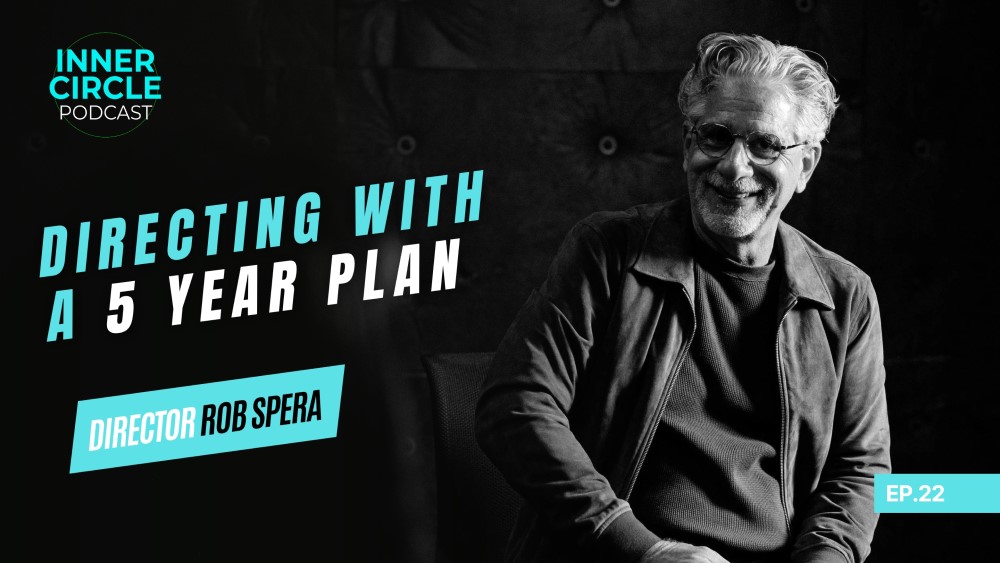
In a recent, must-listen episode of the Inner Circle Podcast, film and television director and AFI professor Rob Spera sat down with hosts Shane Hurlbut, ASC, and Lydia Hurlbut. He shared a powerful, practical framework that has guided his entire career: the 5-Year Plan. This is a concrete strategy for taking control of your career, and it starts by shifting your focus from just writing scripts to consistently creating products.
This article breaks down the core tenets of Rob Spera’s philosophy, offering a clear guide to building a plan that fosters growth, creates opportunities, and sustains you for the long haul.
(This is a deep dive into the 5-Year Plan. To hear Rob’s full insights on directing actors, the “silent take,” and on-set leadership, listen to the complete Inner Circle Podcast episode!)
What is the 5-Year Plan? Shifting from Scripts to Products
“What’s your plan?” Rob asks his students. The answer is often the same: “Write a great script, get into Sundance, and never stop working.”
While a great goal, it relies on external validation. Rob’s 5-Year Plan hits differently. It’s an internal strategy built on a crucial distinction: a screenplay is a step to a product; it is not the product itself. The product is a finished film—something you can show, learn from, and use to demonstrate your growth.
The plan requires you to map out your next five years, focusing on tangible outcomes. It acknowledges that you can’t wait for a studio to call. You must spend your days actively working on your craft. This means part of your day is spent writing, part is spent actively reaching out to create opportunities, and a crucial part is spent actually shooting.
Whether it’s a two-minute exercise, a short film, or a micro-budget feature, the goal is to be consistently creating.
As Rob puts it, “A world-class violinist is playing 8 to 10 hours a day… We’ve got to meet them somehow, some way, so that we’re doing the job.”
Building Your Artistic Life: Thriving in the Downtime
A sustainable career consists of the projects you’re paid for and how you build your life to support your art. Rob challenges the idea of “downtime” as a negative period. For him, the real downtime is when he’s working on someone else’s project. The time in between is when he is living his artistic life.
“How you treat that time is really the key to success,” Rob explains.
This is the time to enrich yourself, to work on your own projects without external pressure, and, most importantly, to keep your creative “pilot light” lit. He stresses that small, steady bursts of work over a long period are what lead to real growth. Don’t wait for the feature to practice your craft; find ways to shoot, work with actors, and complete small projects weekly. This consistent effort is what keeps the creative fire from dimming.
Directing the Performance: The Power of Action and Subtext
Rob’s approach to directing on set is a showcase in empowering actors and serving the story visually. He believes the most powerful tool a director has is blocking and action, not extensive dialogue about emotion.
The Silent Take
One of Rob’s most unique techniques is the “silent take.” After blocking a scene, he will have the actors run it without any dialogue. This powerful exercise achieves two things. First, it forces the actors to focus purely on their physical actions and intentions, rooting their performance in what they are doing, not just what they are saying. Second, it serves as a litmus test for the director.
“If you run it without dialogue and you’re not interested,” Rob says, “that means you didn’t solve it visually.”
It immediately reveals if the scene relies too heavily on words and lacks a compelling visual narrative.
Informing with Props
To help an actor settle into a difficult emotional state, Rob often uses props to provide a physical anchor. He recounts a scene where an actress playing a lieutenant colonel had to deliver a press conference while uncertain if her husband had been killed. She was playing it stiffly. Just before the take, Rob ran in and put a tissue in her sleeve, whispering, “Just in case.” He didn’t ask her to cry or “be more emotional.” The prop itself—the suggestion of potential grief—was enough to inform the performance, allowing the actress to find the emotion organically.
Leadership on Set: Kindness, Collaboration, and Trust
Throughout the conversation, a central theme emerges: a successful director leads with kindness, respect, and a deep trust in their collaborators.
Be Kind
This is the first and most important rule.
“You can’t sit out on this journey and at the same time treat everyone around you like shit,” Rob insists.
A film set is a mini-society, and creating a positive, respectful environment is not just pleasant; it’s essential for getting the best work from everyone.
Empower Your Team
Rob emphasizes that he doesn’t want to be the smartest person in the room. He prepares meticulously—sometimes creating up to 16 different blocking plans for a single scene—but he does so in order to be completely flexible. He presents his plan as a starting point and invites collaboration, especially from his DP.
“I want to point the direction, and I want you guys to carry me there… I say yes to almost all new ideas, especially the ones I don’t trust.”
This approach empowers the crew, inspires creativity, and often leads to discoveries that are better than the original plan.
Address Issues Privately
When dealing with a difficult actor or a crew member causing friction, Rob’s advice is to pull them aside and have an honest, direct, and private conversation. Public confrontations inflate egos and breed toxicity. A quiet, respectful conversation about ground rules and expectations is far more effective.
The Bottom Line: A Career Built on Purpose and Practice
Rob Spera’s 5-Year Plan is a philosophy. It’s about taking ownership of your career, focusing on consistent work, building a supportive artistic life, and leading with respect and collaboration. By shifting your mindset from “waiting for a job” to “creating a product,” you empower yourself to grow, learn, and build a body of work that will sustain you for a lifetime.
To hear more insights like Rob’s, including more incredible stories about on-set problem-solving, and thoughts on finding your “purpose,” listen to our other episodes of the Inner Circle Podcast.
JOIN FILMMAKERS ACADEMY AND SAVE $50!
Ready to take your filmmaking skills to the next level? Join the Filmmakers Academy community and gain access to exclusive content, expert mentorship, and a network of passionate filmmakers. Use code FABLOG50 to save $50 on your annual membership!
This video is proudly lit exclusively by Nanlux-Nanlite Lights and sponsored by B&H and Hollyland.
Dive Deeper with Rob Spera’s “Film/TV Director’s Field Manual”
Many of the powerful concepts Rob Spera discussed in this podcast—from finding your purpose to his on-set leadership philosophies—are explored in his acclaimed book, FILM/TV DIRECTOR’S FIELD MANUAL: Seventy Maxims to Change Your Filmmaking. This “anti-textbook” distills 70 fundamental core values of filmmaking into powerful, concise tenets designed to inspire questions and elevate your craft.
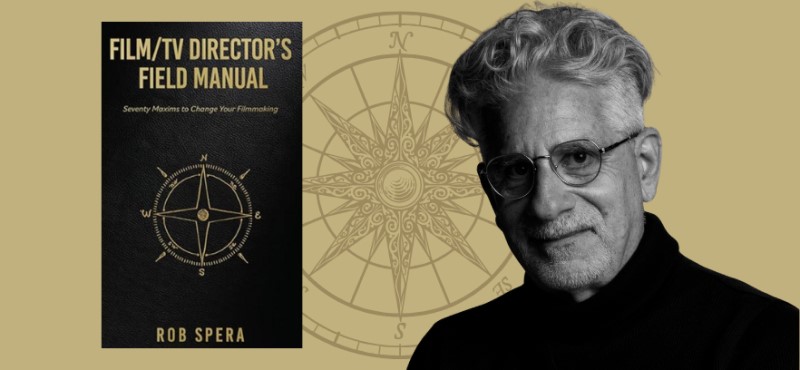
Praised by Oscar-nominated writers and directors like Meg LeFauve (Inside Out) and Billy Ray (Captain Phillips), the manual also includes exercises to help you put these principles into practice. It’s an essential read for any director looking to deepen their understanding of cinematic storytelling and leadership.
TUNE INTO PREMIUM FILMMAKERS ACADEMY PODCASTS