Actuality
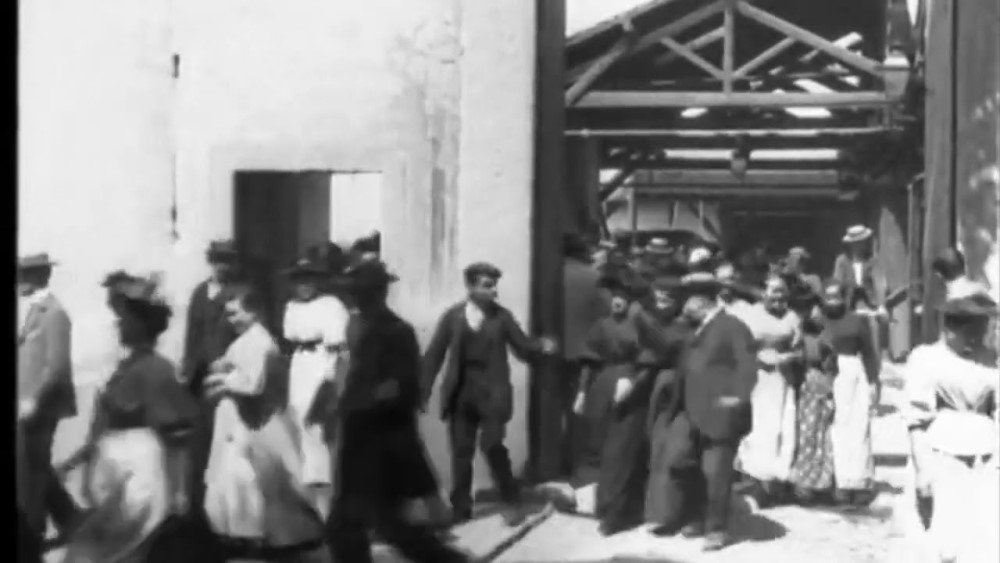
An actuality is a type of non-fiction film. It is a short, silent film that documents a real-life event or scene. The actuality was one of the very first genres of filmmaking. These films recorded actual events without using professional actors, scripts, or narrative storytelling. Their primary purpose was to capture a moment of reality. They presented this “slice of life” to audiences as a form of spectacle and wonder. The actuality is the direct ancestor of the modern documentary film.
The Dawn of Cinema
The actuality genre was pioneered by the first filmmakers in the 1890s. The Lumière brothers (Louis and Auguste) in France were the most famous producers of these films. Their early works are the definitive examples of the form. These films were typically very simple. They consisted of a single, unedited shot from a locked-down camera. The Lumière brothers would simply set up their cinematograph camera. They would then record whatever happened in front of it for the duration of the film roll.
Famous early actualities include Workers Leaving the Lumière Factory (1895). This film simply shows a crowd of workers leaving their workplace. Another famous example is The Arrival of a Train at La Ciotat Station (1896). Legend says that early audiences panicked at the sight of the train. They feared it was coming directly toward them. These films captured the magic of seeing real life reproduced on a screen.
Characteristics of the Actuality Film
Actuality films share several key characteristics.
| Non-Fiction | They always document real events. There are no fictional stories or characters. |
| Lack of Narrative | An actuality does not tell a story in the traditional sense. It simply presents an event as it unfolds. |
| Short Length | Early film cameras could only hold about a minute’s worth of film. Therefore, most actualities are very short, often under 60 seconds. |
| Observation | The filmmaker acts as a passive observer. They do not intervene in the events they are recording. |
The subjects of actualities were diverse. Some captured mundane, everyday scenes. Others recorded newsworthy events, like parades or royal ceremonies. Travelogues were also very popular. Filmmakers would travel to faraway places. They would bring back moving images of exotic locations to show to domestic audiences.
The Legacy of the Actuality
As cinema evolved, filmmakers began to explore its narrative potential. The simple actuality film quickly gave way to more structured forms of non-fiction. Newsreels, for example, combined several actualities to report on current events. Later, filmmakers like Robert J. Flaherty began to shape their non-fiction footage into compelling narratives. This led to the development of the feature-length documentary film.
While the original actuality form is a relic of the past, its spirit lives on. The principles of observational filmmaking are central to the cinéma vérité and direct cinema movements. Raw, unedited news footage and even user-generated videos on the internet share a direct lineage with these first, simple films. The actuality represents the birth of cinema’s power to document and present the real world.
« Back to Glossary Index