Blow-Up
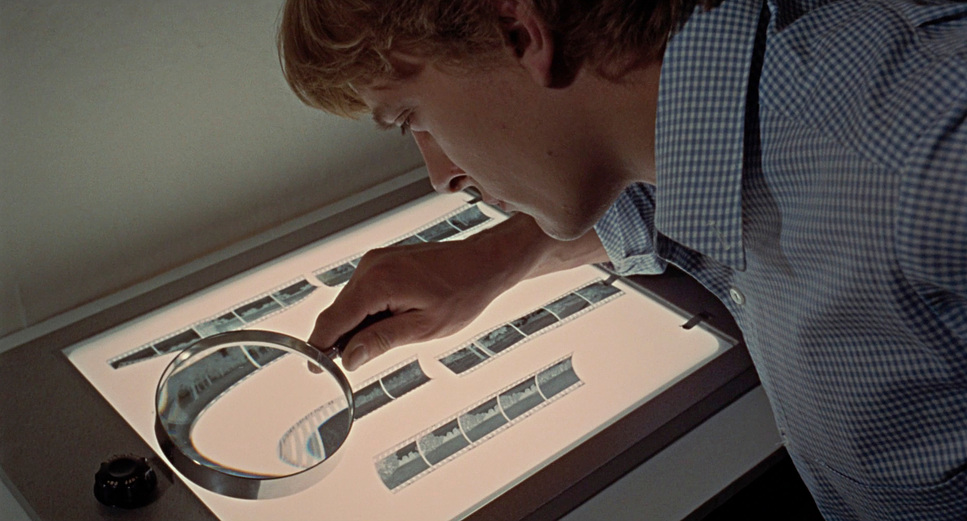
A blow-up is the process of enlarging a film frame. Filmmakers enlarge the image from a smaller format to a larger one. This technique has both historical and modern applications. It was originally an optical process. Today, it is mostly a digital one.
The Traditional Optical Blow-Up
In the analog film era, a blow-up was a photochemical process. It used a machine called an optical printer. This machine was essentially a projector and a camera combined. A lab technician would project the smaller film gauge, like 35mm. A camera would then re-photograph this projected image onto a larger film stock, like 70mm.
Studios often did this for prestige “roadshow” releases. This allowed a standard 35mm film to be shown on massive 70mm screens. This created a more spectacular, immersive experience for the audience. However, this process had trade-offs. Enlarging a film frame always magnified its limitations. The resulting 70mm print would have larger, more visible film grain. It would also appear softer and less sharp than a true, native 70mm film.
The Modern Digital Blow-Up (Up-Scaling)
Today, the term “blow-up” usually refers to digital up-scaling. This process happens in post-production. An editor or colorist uses software to enlarge a digital image. This is also called “up-resing” (short for up-resolution). For example, a production might shoot in 2K. The studio might then create a 4K “blow-up” for a theatrical release.
This technique is also essential for archival work. A filmmaker might use old 16mm film or Standard Definition video in a 4K documentary. The editor must blow up this older, smaller footage. This makes it fit the modern, high-resolution timeline. Modern software uses sophisticated algorithms. These algorithms enlarge the image while trying to add sharpness. They also try to minimize digital artifacts.
Creative Use: The “Punch-In”
Filmmakers also use a blow-up as a creative tool in post-production. This is often called a punch-in or a digital zoom. A director might shoot a wide master shot. In the edit, they can digitally enlarge a part of that frame. This can simulate a close-up or a camera move. This technique is very common. It gives the editor more flexibility. They can re-frame a shot or emphasize an actor’s performance without needing a separate, dedicated shot. However, this also has limitations. Punching in too far on an HD or 4K image can make it look soft, pixelated, or noisy.
Cultural Reference
The term was famously used as the title for Michelangelo Antonioni’s 1966 film, Blow-Up. The film’s plot itself is a perfect metaphor for the process. The protagonist is a photographer. He takes a picture in a park. He then “blows up” his photographs, making them larger and larger. In this process, he discovers details he could not see before. This includes what appears to be a murder. This film perfectly captures the idea of a blow-up. It shows how enlargement can both reveal hidden details and create more ambiguity.
« Back to Glossary Index