Grip vs Gaffer: Power Distribution Partnership
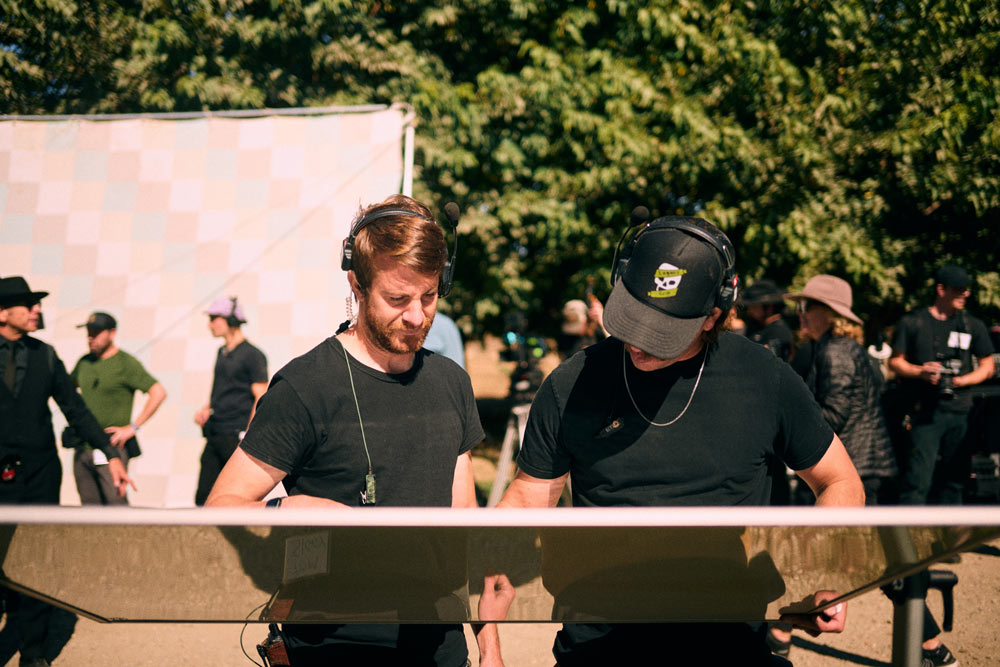
For all of the departments that exist on a film set, all of them rely on one department for a fundamental need. That need is power. The set lighting department—my department—is responsible not only for providing power for the lights that we use on set, but we’re also responsible for powering other departments, like camera, wardrobe, HMU, production, VTR, Audio, DIT, SFX—and the list goes on and on. So, how does the Gaffer vs. Grip partnership play into this equation, especially in terms of power distribution?
It’s easy to see why any gaffer and best boy electric must work together and have a tight-knit plan for how power is dispersed and shared on set. If you’re working on a stage, you will most likely get your power from a service panel. If you’re on location, whether it’s in the middle of the desert, a house on a hill in Laurel Canyon, or the arts district of DTLA, chances are you’ll be working with a tow plant generator, either diesel or a battery. Well, this is just the start. Keep reading to
| For a deeper dive into filmmaking terminology, be sure to explore the comprehensive Filmmakers Academy Glossary. |
MY WORLD: FROM THE GENERATOR TO THE DISTRO BOX
As a gaffer, my domain is the electron. My team and I are responsible for bringing power to the set and shaping the light that hits the actors. On location, that starts at the source: the generator. Whether it’s a traditional diesel generator or a modern battery generator that powers everything from Nanlux lights to huge 18K HMIs, my first job is to ensure we have clean, stable, and safe electricity. This is where generator etiquette is a non-negotiable set of rules.
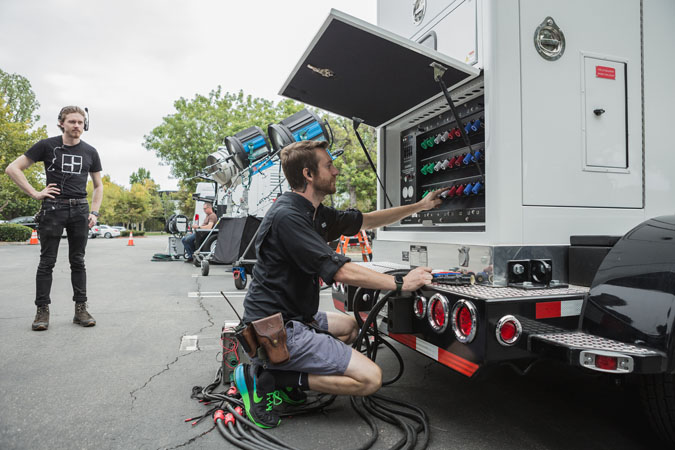
There are lots of factors to consider when shooting on location. The first thing I think about is the surrounding areas where I want to put the tow plant. If I’m using a diesel generator, for example, I’m looking to avoid potential fire risks. Next up, I’m going to try and place the generator as close to set as possible, without risking noise if we are rolling sound. The closer you are to set, the less cable you need to run. That means less equipment and also less line loss from your tow plant to set. It will also save a bit of time on set, which is always precious when you’re setting up for your first shot.
 |
 |
My Best Boy Electric and I are constantly doing the math. We’re planning the entire power distribution, running cable from the generator to our main distro box. From there, we’re breaking out smaller cables to power everything from the 18K HMI to the video village monitors. It’s a massive web, and if one connection is faulty, the whole system is at risk.
The real game is load balancing…
On a three-phase generator, I have three “legs” of power, and I need to keep the amperage draw on each one as even as possible. If I have two HMIs on the red and blue legs, my black leg is sitting idle. That imbalance can cause the generator’s engine to strain, create voltage drops, and, in the worst-case scenario, shut down the entire set during a take. This is why understanding voltage control and how to manage the massive power draw of an HMI is one of the most critical skills I possess.
Go Deeper: The Rules of On-Set PowerThis is where theory meets reality. To truly command the source of power, the Generator Etiquette Masterclass provides a deep dive into the protocols that every professional gaffer lives by. Shane Hurlbut, ASC, and I break down the science of load balancing, voltage control, and the etiquette for both diesel and battery generators so you can walk onto any set with total confidence. |

WHY MY KEY GRIP IS MY BEST FRIEND?
I can design the most brilliant lighting plan in the world, but without an exceptional key grip, it’s just a diagram on a piece of paper. The grip department, led by the key grip, builds the world that my lights live in. They are the masters of rigging, support, and shaping.
While my team runs the cables, the grips are the ones flying the truss that will hold my distro box. When I need to place a 20K Tungsten light on a rooftop, they are the ones building the rigging to do it safely. Their understanding of physics, knots, and hardware is what ensures that a 200-pound fixture rigged above the cast and crew is perfectly secure. This is where electrical safety becomes a shared responsibility.
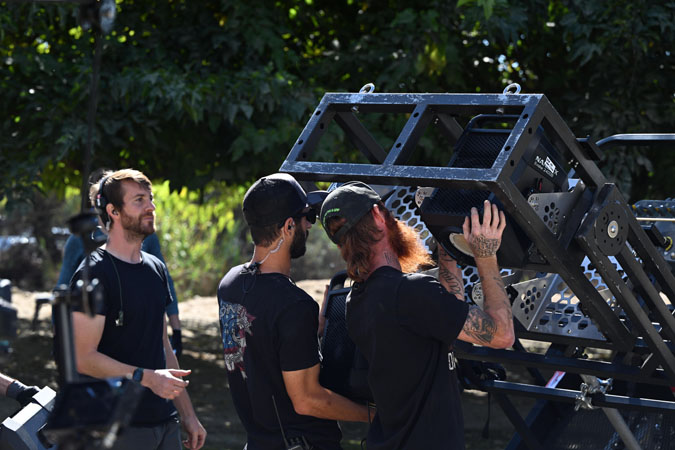
Photo by: BETINA LA PLANTE
But their most artistic contribution is shaping the light after it leaves my fixture. They are the ones who masterfully fly in a silk for diffusion, cut the light with a flag to create a dramatic shadow, or add a bounce to fill in the shadows. Their work is what elevates a simple lit scene into a beautifully sculpted cinematic image.
HOW WE WORK TOGETHER
HERE’S A SNAPSHOT OF A TYPICAL SETUP:
|
This entire process is a constant dialogue. I’m communicating with my team about which leg to plug into, and my key grip is communicating with their team about the safest way to rig the next light.
MASTERING THE SYSTEM TO MASTER YOUR CAREER:
Whether you are a gaffer or a grip, understanding this entire system is what separates the day players from the department heads. A grip who understands why a gaffer needs to balance a load is more valuable. A gaffer who understands the rigging challenges of a grip can design a more effective and safer lighting plan.
Photo by: BETINA LA PLANTE
This comprehensive knowledge is the foundation of a long and successful career in filmmaking. This goes far beyond your specific job. This is about understanding the flow of energy—both electrical and creative—that brings a film to life.
Become the Indispensable On-Set Pro
This article is your foundation, but to truly become the on-set power expert, you need the complete playbook. The Power Distribution Bundle combines the Generator Etiquette Masterclass with nine additional premium lessons covering the entire electrical workflow. You’ll master everything from checking in your distro equipment and tying into set power to building a gack pack. This is the definitive knowledge that gets you hired and keeps you working.
Grip & Electric Premium Courses:
- How To Be a Film Grip
- On Set Power Distribution
- Lighting Techniques
- Replicating Light Sources: Beginner
- Lighting Basics
- How To Recreate The Sun
- How to Be a Film Electrician
- DIY Lighting Tips and Tricks
- Lighting Theory
- How To Light a Horror Movie
- Replicating Light Sources: Advanced
- Film Production Rigging: Fly Swatter Moonbounce
- Film Production Rigging: Condor Boom Lifts
THOMAS SIGURDSSON

Thomas “Siggy” Sigurdsson is a gaffer and Chief Lighting Technician with IATSE Local 728. His expertise in creating emotionally resonant atmospheres is evident in his work on productions like Música, The Perfect Couple, and Way of the Warrior Kid. As the owner of Northern Lighting, LLC., he provides both creative leadership and technical solutions for projects across all genres.