Bookends
Bookends are a powerful narrative technique in filmmaking and screenwriting. The term describes a pair of scenes that occur at the beginning and end of a film.
These opening and closing scenes intentionally complement each other. They act as a framing device for the main story. This structure provides a sense of closure and thematic unity. The beginning scene poses a question or establishes a situation. The ending scene then answers that question or shows the outcome. This technique effectively wraps the entire narrative in a cohesive frame.
The Purpose of a Framing Device
Writers and directors use bookends for several important reasons. A framing device can establish a specific point of view. For instance, a story might be told entirely as a flashback. The opening bookend introduces an older character. This character then begins to recount their past. The film’s conclusion returns to this character in the present day. This provides emotional context for the events we just witnessed. Bookends also help to unify a complex or sprawling story. They give the audience a clear entry point and a satisfying exit point. This makes the narrative feel complete and intentional.
How Bookends Work in Practice
Bookend scenes connect to each other in various ways. Sometimes the connection is literal and direct. The opening and closing shots might take place in the same location. This visually reinforces the story’s journey. For example, the film Forrest Gump (1994) uses a feather as a bookend. A feather floats down to Forrest at the beginning of the film. This same feather floats away from him at the end. This simple visual motif frames the entire story. It beautifully represents themes of destiny and chance.
 |
 |
In other films, the connection is thematic or emotional. The opening scene might show a character in a state of despair. The closing scene then shows them in a state of hope. This contrast powerfully highlights their character arc. The dialogue, setting, or action in the closing scene will often mirror the opening scene. However, a crucial element will have changed. This change demonstrates the impact of the story’s events.
Classic Examples of Bookends
Many classic films use the bookend technique effectively.
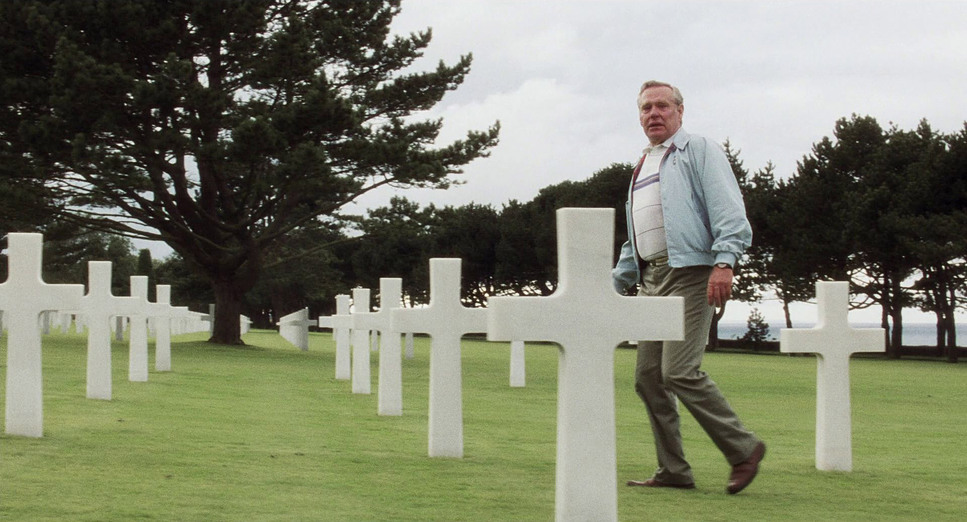
| Saving Private Ryan (1998) | The film opens with an elderly veteran visiting a military cemetery. It closes by returning to him at the same gravesite. We now understand the immense personal weight of the story he has remembered. |
| Slumdog Millionaire (2008) | This film begins with the main character being interrogated. The police accuse him of cheating on a game show. The story then unfolds as a series of flashbacks. The end of the film returns to the present. It resolves both the interrogation and his final game show question. |
| The Grand Budapest Hotel (2014) | This film uses multiple layers of bookends. It starts with a girl reading a book. The narrative then shifts to the book’s author. The author then recounts a story told to him by the hotel’s owner. Each layer provides a distinct frame for the central narrative. |
In conclusion, bookends are more than just a tidy way to start and end a film. They are a deliberate structural choice. Filmmakers use them to deepen thematic resonance, provide powerful context, and deliver a more satisfying emotional journey for the audience.
« Back to Glossary Index